VANGUARD ECONOMIC DISCOURSE: How Nigeria can reverse N2.5trn Agric export deficit — Gadain
 SKAiF NewsNG SNN
•Pushes value addition, warns on import dependence
•Calls for investment in processing, export competitiveness
By Our Business Reporters
At the backdrop of food insecurity threatening the vast majority of Nigerians, its agricultural trade deficit is estimated at N2.5 trillion, and expert’s position is that the country must urgently shift from raw agricultural exports to value addition and industrial processing as a key strategy to reverse the deficit.
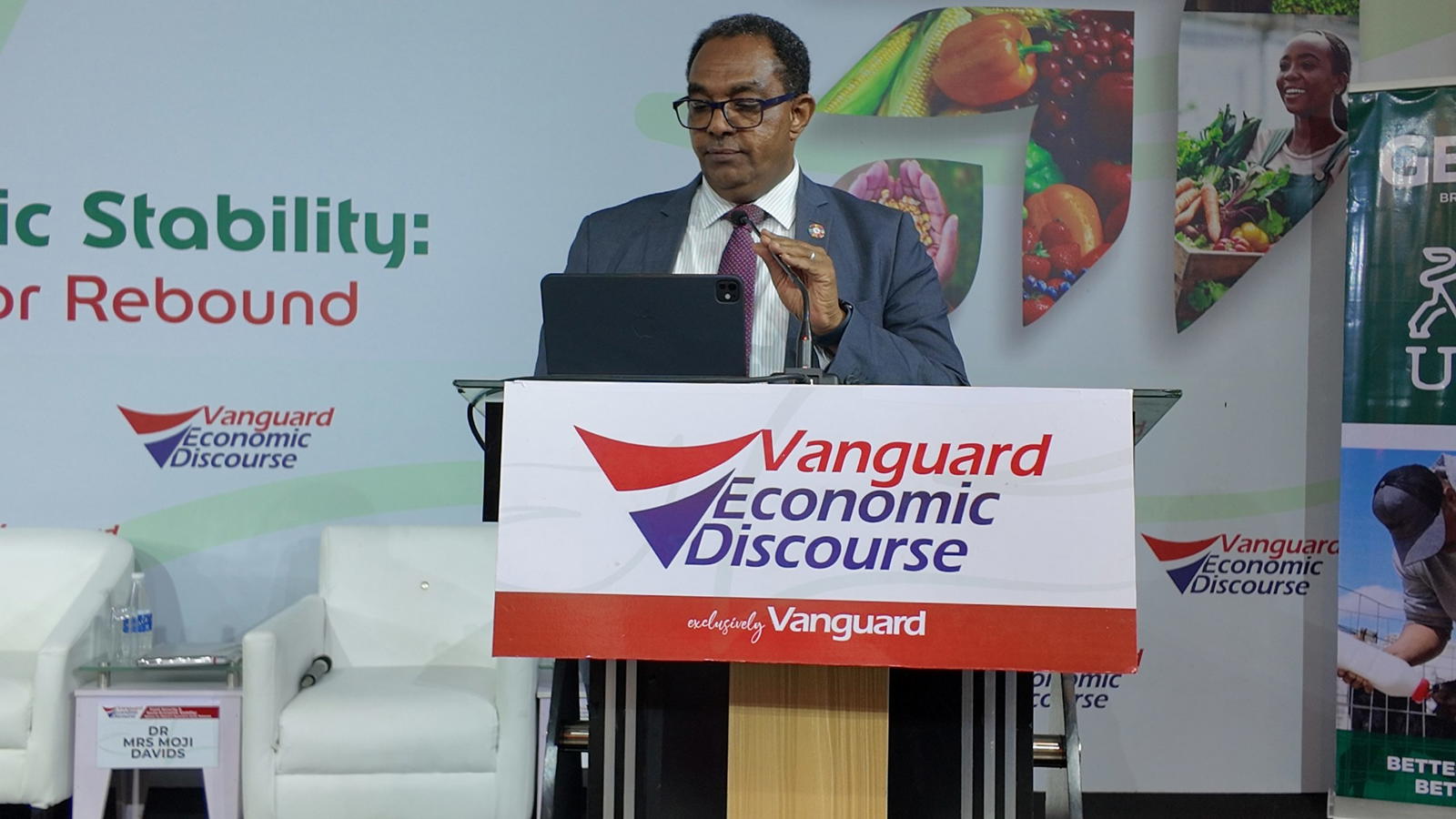
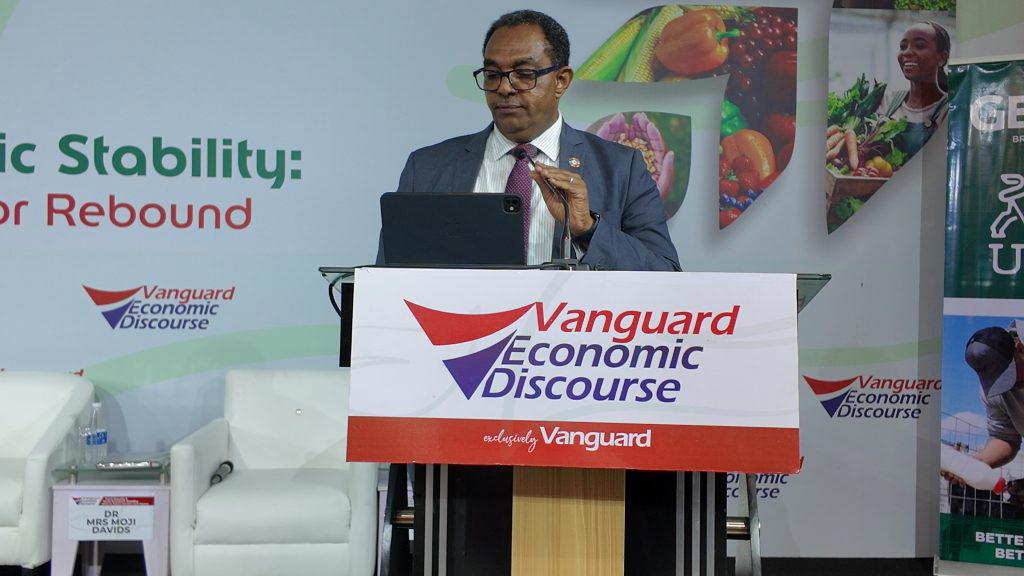
The position was made by Dr. Hussein Gadain, the United Nations’ Food and Agriculture Organisation, FAO, Representative in Nigeria and to ECOWAS, in a keynote speech delivered at the Vanguard Newspaper Economic Discourse held in Lagos last week, themed, “Food Security and Socio-economic Stability: Options for Nigeria’s Agriculture Sector Rebound.”
Among other things, Gadain stressed that Nigeria’s agricultural sector remains structurally strong but commercially weak due to limited investment in processing, storage, and export-ready value chains.
He noted that the country continues to lose significant revenue by exporting primary commodities while importing processed food products that could be produced locally.
He, therefore, called for accelerated investments in agro-processing infrastructure, improved competitiveness of Nigerian agricultural exports, and stronger linkages between farmers, industries, and global markets.
According to him, reversing the deficit will require deliberate policy action that prioritizes value addition, private sector participation, and export diversification across key agricultural commodities.
His full speech is as follows:
Theme and Context
The selected theme for this event, “Food Security and Socioeconomic Stability: Options for Nigeria’s Agriculture Sector Rebound”, provides us with an important opportunity to examine the challenges and opportunities that lie ahead. Food security remains central to Nigeria’s development challenge and is one of the most pressing imperatives of our time. It is the foundation of stability and prosperity.
Food security is far more than an agriculture outcome; it is a pillar of national security, macroeconomic stability, social cohesion, and peace.
In Nigeria, fragile food systems-affected by conflict, climate shocks, and economic pressures—translate into household vulnerability, deepening poverty, rising social tensions, and inflationary pressures in the economy.
FAO’s analyses, including the Cadre Harmonisé process, consistently show how shocks to agriculture quickly affect livelihoods, malnutrition risks, and social stability, especially in rural and peri-urban areas. Conversely, a thriving agriculture sector leads to job creation, rural economic growth, improved nutrition, and increased societal resilience.
Nigeria’s national agriculture outlook: Potential and Contribution
Nigeria’s agricultural outlook is defined by both immense opportunity and significant urgency. Nigeria has a total land area of approximately 92 million hectares, of which about 70 million hectares are classified as agricultural land, including nearly 36 million hectares of arable land. This endowment-combined with diverse agroecological zones and a large domestic market—positions agriculture as a strategic engine for inclusive growth.
Agriculture is already a major contributor to Nigeria’s economy, accounting for about 23 percent of aggregate GDP in real terms in the first quarter of 2025. It is also a cornerstone of livelihoods: over 70 percent of Nigerians engage in agriculture largely at subsistence level, and national data indicate more than 40 million agricultural households, with the majority engaged in crop production (about 36. million), alongside poultry (about 1.45 million) and fish production (about 600 thousand).
At the same time, Nigeria’s population continues to grow at an average annual rate of about 2.1 percent-meaning that food demand, employment needs, and pressure on natural resources will continue to rise.
This is why the rebound of the agriculture sector is not simply a sectoral ambition; it is a national economic and social imperative.
Current challenges in Nigeria’s agriculture sector
Today in Nigeria, the urgency of addressing food security is clear. Climate shocks, violent conflicts-particularly insecurity in farming communities-rising production costs, and disruptions in global supply chains and across value chains are straining our agri-food systems, especially the productivity of smallholder farmers and consumers both at urban and rural levels.
These issues impact the macroeconomic and social systems, and despite Nigeria’s enormous agricultural potential, structural constraints continue to hinder development and need to be given special attention.
Nigeria possesses vast arable land, a youthful population, diverse agroecological zones, and a vibrant private sector.
Nigeria also boasts of an 853-kilometre coastline which supports fisheries, aquaculture, and coastal livelihoods-areas that can significantly contribute to nutrition and job creation if properly developed and protected. FAO’s work across states across Nigeria shows that targeted investments can yield rapid, transformative results, despite the challenges.
These challenges are compounded by structural pressures in trade and competitiveness.
For example, between 2016 and 2019, Nigeria’s cumulative agricultural imports were estimated at about N3.35 trillion-roughly four times higher than agricultural exports of about N803 billion during the same period. This imbalance signals both demand pressures and missed opportunities for domestic value addition, competitiveness, and export growth. Notably, sesame, cashew nuts, and cocoa account for more than half of Nigeria’s agricultural exports, while wheat continues to dominate agricultural imports-underscoring the need to scale local production and strengthen value chains for staples, while also expanding competitiveness in high-value export commodities.
National production snapshot: Crops, Livestock and Fisheries
Despite current constraints, Nigeria’s production base remains substantial.
During the major season of the 2022/2023 agricultural year, for instance, approximately 17.3 million metric tonnes of maize were harvested and about 13.1 million metric tonnes of rice were harvested.
These figures illustrate both the scale of production and the importance of strengthening productivity and value chain efficiency to stabilize prices and improve access.
The livestock subsector is equally significant, with total livestock population estimated at about 273.80 million animals nationally comprising approximately 138.95 million goats, 64.93 million sheep, and 54.81 million cattle-alongside an estimated 683.68 million poultry raised.
These numbers demonstrate the critical role of livestock in livelihoods, nutrition, and rural economies, as well as the need to strengthen animal health systems, feed and fodder value chains, and sustainable rangeland governance to reduce conflict and improve productivity.
Fisheries and aquaculture are among the fastest growing subsectors in the country.
Total fish production per year is close to 1 million metric tons, including about 313,231 metric tons from aquaculture and about 759,828 metric tons from fisheries.
Importantly, Nigeria is the largest fish consumer in Africa and one of the largest consumers globally, with about 3.2 million metric tons of fish consumed annually.
However, annual per capita consumption of 11.3kg is far below the global average of 21kg. This gap between local production and consumption highlights the huge potential for investment in aquaculture expansion, cold chain development, quality assurance, and feed systems-while ensuring sustainability of aquatic ecosystems.
Cassava remains Nigeria’s most widely cultivated tuber crop, engaging approximately 14.6 million households nationwide, far exceeding other tubers such as white yam (7.78 million households) and Irish potato, which involves only about 309,000 households.
This dominance is also evident during the minor season, when cassava continues to lead among tuber crops with 1.96 million households involve in cultivation
These figures underscore cassava’s central role in Nigeria’s national tuber production and household-based agriculture.
However, the country’s participation in international markets remains constrained by limited processing and value addition, underscoring the need to strengthen cassava transformation, agro-industrial development, and quality standards to meet global market demand and unlock greater socio-economic returns.
Finally, it is important to recognize the structure of Nigerian agriculture: more than 80 percent of farmers are smallholder farmers, and they account for about 90 percent of agricultural production.
Any meaningful rebound, therefore, must be designed to work for smallholders—women and men—through improved productivity, risk management, inclusive markets, and strong rural services.
planning, sustainable water and rangeland management, land restoration, and strengthened local institutions.
In this context, the One Health approach, supported by FAO and partners, is critical in linking human, animal, plant, and environmental health to build resilient agri-food systems and safeguard food production against compounding shocks arising from conflict, climate stress, zoonotic diseases, and future pandemics.
Building Governance, Data, and Partnerships for Transformation
A sustainable rebound depends on evidence-based policies, effective coordination, and unwavering accountability.
Reliable data, early warning systems, and food security analyses must guide decision-making, and policy coherence is needed across agriculture, trade, nutrition, climate, and social sectors.
No single actor can do this alone. FAO believes that government leadership must be reinforced by partnerships with the private sector, civil society, research institutions, academia, development partners, and the media.
Role of the Media and Economic Discourse
The media plays a pivotal role in shaping public understanding and political will around food security.
Without their reporting, information would not reach the broader population.
Through informed reporting, constructive critique, and sustained attention, platforms such as Vanguard help to elevate agriculture from a subsistence narrative to an economic and strategic imperative.
This discourse is not just about diagnosis, but about mobilizing action, accountability, and collective responsibility.
FAO’s Commitment
The FAO remains fully committed to supporting Nigeria in its efforts to transform agriculture, achieve food security, and build resilient livelihoods.
We will continue to work with the government of Nigeria, the private sector, development partners, and communities – from policy to practice, and from data to delivery.
Conclusion
In closing, Nigeria’s agriculture sector holds the key to food security, economic recovery, and social stability.
The rebound we seek is within reach if it is intentional, inclusive, climate-smart, and people-centered.
We must seize this moment to turn today’s challenges into tomorrow’s opportunities, ensuring that agriculture once again becomes a driver of prosperity, dignity, and stability for all Nigerians.
The post VANGUARD ECONOMIC DISCOURSE: How Nigeria can reverse N2.5trn Agric export deficit — Gadain appeared first on Vanguard News.