UNGA 2026: Tinubu’s opportunity to reinforce Nigeria’s global voice
 SKAiF NewsNG SNN
By Olufemi Aduwo
Diplomacy is not conducted in isolation. In an era defined by geopolitical rivalry, economic uncertainty, climate emergencies and transnational security threats, nations are judged as much by their engagement with the international community as by their domestic achievements. It is against this backdrop that Nigeria’s participation in the forthcoming United Nations General Assembly (UNGA) assumes exceptional significance.
Read Also: 2027: Why ADC Supreme Court battle may weaken anti-APC coalition
Far more than an annual diplomatic ritual, the General Assembly is the world’s foremost multilateral forum where governments articulate national priorities, forge strategic alliances and shape international consensus on issues affecting humanity. It provides an unparalleled opportunity for countries to influence global discourse, attract investment, deepen bilateral partnerships and reaffirm their commitment to international law.
For President Bola Tinubu, this year’s gathering presents an opportunity to project Nigeria as a confident, responsible and forward looking nation prepared to contribute meaningfully to global governance. Beyond ceremonial appearances, the Assembly offers a platform to advance the country’s economic interests, strengthen diplomatic partnerships and reinforce its leadership role within Africa.
Nigeria has never lacked diplomatic pedigree. From its contributions to United Nations peacekeeping missions to its historical support for decolonisation, conflict resolution and African solidarity, the country has consistently demonstrated a willingness to shoulder international responsibilities. As Africa’s most populous nation and one of its largest economies, Nigeria possesses both the legitimacy and the strategic obligation to remain an influential voice in multilateral affairs.
Encouragingly, recent developments within the United Nations suggest that Nigeria’s diplomatic engagement is beginning to attract renewed international recognition.
A notable example is the election of Nigeria’s Permanent Representative to the United Nations, Dr Jimoh Ibrahim, as Chairman of the United Nations Fifth Committee, the Organisation’s principal Budget and Administrative Committee. The appointment deserves commendation not merely because it elevates a Nigerian to a prestigious office, but because it reflects the confidence reposed in the country’s diplomatic representation by the wider international community.
The Fifth Committee occupies one of the most influential positions within the United Nations architecture. It oversees the Organisation’s financial management, administrative governance and budgetary oversight, responsibilities that demand integrity, intellectual rigour and considerable diplomatic dexterity. Leadership of such a committee is earned through consensus building and credibility rather than political symbolism.
More significantly, the Nigerian envoy secured the position within a relatively short period after assuming his diplomatic responsibilities in New York. Such rapid recognition is rarely accidental. It is ordinarily the product of meticulous preparation, sustained engagement and the confidence of member states. The confidence of the broader UN membership must still be earned through competence, persuasion and constructive engagement.
The outcome therefore illustrates an enduring principle of international diplomacy, while geopolitical advantage may shape negotiations, credibility and professional excellence remain decisive assets.
Equally deserving of acknowledgement is the distinguished academic profile of the Nigerian diplomat. Contemporary diplomacy extends well beyond ceremonial representation. Today’s international negotiations frequently involve highly technical discussions on international law, global finance, climate governance, sustainable development and institutional reform. Intellectual depth has therefore become an indispensable attribute for effective diplomatic leadership.
His academic accomplishments complement his diplomatic responsibilities and reinforce Nigeria’s intellectual presence within the multilateral system.
They also demonstrate that scholarship and public service can successfully intersect in advancing national interests.
This achievement should not merely be celebrated as an individual milestone. Rather, it should be regarded as evidence that strategic appointments, supported by capable representation, can enhance Nigeria’s international standing and restore confidence in its diplomatic institutions.
Ultimately, however, the true measure of any foreign policy lies not in appointments but in national leadership.
The forthcoming address by the Nigerian President should therefore articulate a coherent vision that reflects both national priorities and the aspirations of the African continent. At a time when international institutions face increasing pressure from geopolitical divisions, economic protectionism and regional conflicts, Nigeria must position itself as a principled advocate of dialogue, cooperation and respect for international law.
One issue that deserves particular prominence is international terrorism.
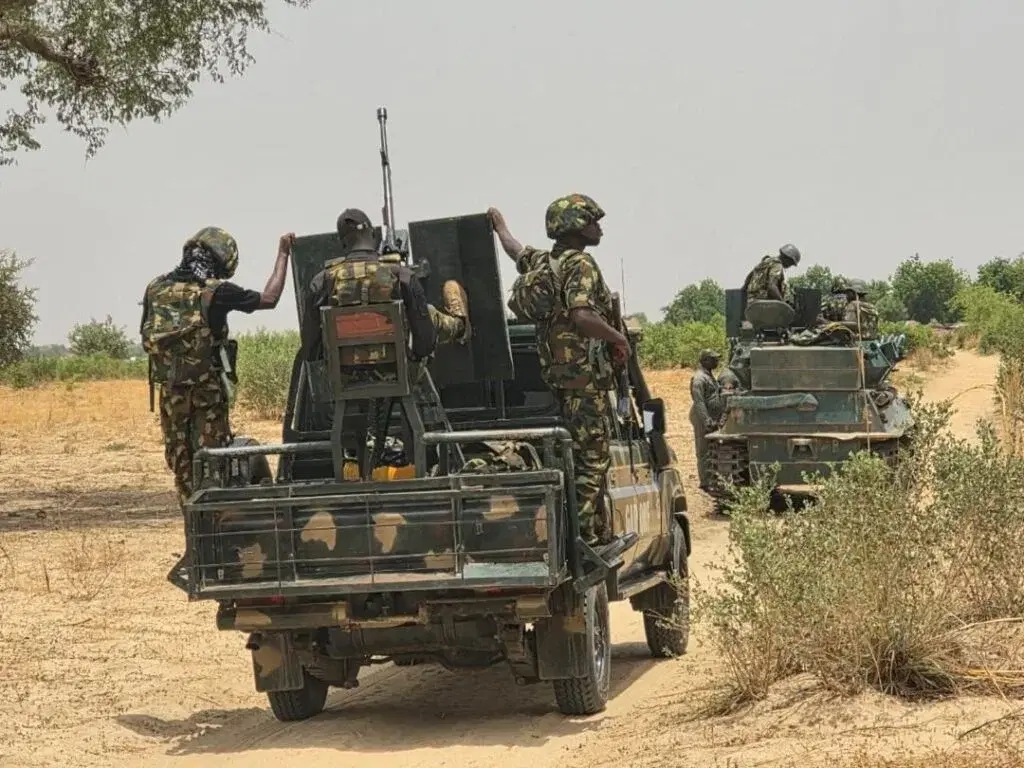
No contemporary security challenge has inflicted greater suffering upon developing countries than terrorism and violent extremism. Across the Sahel, the Lake Chad Basin and other parts of Africa, terrorist organisations continue to undermine democratic institutions, displace civilian populations and frustrate economic development.Nigeria itself has endured years of insurgency, banditry and cross-border criminal activities, with devastating humanitarian and economic consequences.
The country’s intervention at the General Assembly should therefore call for stronger international cooperation in intelligence-sharing, border management, disruption of terrorist financing and prosecution of transnational criminal networks.
Equally important is the need for consistent adherence to international humanitarian law while combating terrorism. Security operations must remain firmly anchored in the rule of law, respect for human rights and accountability.
Lasting peace cannot be achieved solely through military action; it requires good governance, economic opportunity, education and inclusive development.
The international community must also reject every attempt to justify terrorism under political, ideological or religious pretexts. Deliberate attacks against innocent civilians constitute grave violations of international law and should be condemned unequivocally wherever they occur.
As global security becomes increasingly interconnected, collective responsibility must replace selective engagement. Terrorism in one region ultimately threatens peace and stability everywhere.
Another issue that demands equally urgent attention is climate change, perhaps the defining challenge confronting the twenty-first century.
The consequences of climate change are no longer confined to scientific projections or academic debate. They are now evident in the daily realities of millions of people across the developing world. From devastating floods and prolonged droughts to advancing desertification, declining agricultural productivity and the displacement of vulnerable communities, the environmental crisis has evolved into a humanitarian, economic and security challenge of global proportions.
Few regions have experienced these consequences more acutely than Africa. Although the continent contributes only a fraction of historic global greenhouse gas emissions, it continues to bear a disproportionate share of the burden. This imbalance raises profound questions of international equity and responsibility.
Nigeria has not been spared. Recurrent flooding, changing rainfall patterns, coastal erosion, food insecurity and environmental degradation continue to threaten livelihoods, infrastructure and national development. These realities underscore the urgent need for stronger international cooperation in addressing climate-related risks.
The Nigerian leader should therefore use the General Assembly to advocate a more equitable global response founded upon the principles of climate justice and shared responsibility. Industrialised nations, whose economic advancement was largely driven by centuries of carbon-intensive development, have both a moral and legal obligation to honour the commitments they have undertaken under international climate agreements.
Financial pledges should no longer remain aspirational declarations repeated at successive international conferences. They must be translated into practical support through predictable climate finance, technology transfer, capacity building and investment in resilient infrastructure across developing economies.
For many vulnerable countries, adaptation has become just as important as mitigation. Constructing flood defences, strengthening agricultural resilience, expanding renewable energy, protecting biodiversity and improving disaster preparedness require resources that many developing nations cannot mobilise independently. International solidarity must therefore extend beyond expressions of goodwill to measurable and sustained action. Climate justice is not an appeal for charity. It is an appeal for fairness, recognising that those who contributed least to the environmental crisis should not be left to shoulder its heaviest consequences without meaningful international support.
Beyond climate policy, Nigeria should reaffirm its longstanding commitment to comprehensive reform of the international system itself. The structure of the United Nations Security Council continues to reflect the geopolitical realities of 1945 rather than those of the twenty-first century. Africa, home to more than one billion people and over fifty sovereign states, remains without permanent representation on the Council despite its growing strategic importance.
Meaningful reform is therefore essential to strengthen the legitimacy, credibility and effectiveness of the United Nations. An organisation established to serve the international community should evolve alongside the changing realities of that community. Nigeria, working alongside its African partners, should continue advocating a more representative Security Council that reflects contemporary global demographics and political realities.
Economic diplomacy should also feature prominently in Nigeria’s engagement during the Assembly. Today’s international partnerships are increasingly driven by investment, innovation, technological cooperation and sustainable development. The country should present itself as a dependable destination for responsible investment by emphasising ongoing reforms aimed at strengthening regulatory certainty, improving infrastructure and promoting economic diversification.
Equally important are the numerous bilateral meetings held on the margins of the General Assembly. Such engagements frequently produce tangible outcomes through trade agreements, development partnerships, security cooperation and investment commitments. In many instances, these diplomatic conversations prove more consequential than the formal speeches delivered in the Assembly Hall.
Foreign policy succeeds when national interests are pursued with consistency, professionalism and strategic foresight. The credibility of a nation’s diplomacy depends not only upon the quality of its leadership but also upon the calibre of those entrusted with representing it abroad.
The recent emergence of Nigeria’s Permanent Representative as Chairman of the United Nations Fifth Committee offers a positive illustration of what competent representation can achieve within the multilateral system. It demonstrates that intellectual preparation, diplomatic skill and constructive engagement continue to command international respect.
His election should not simply be regarded as a personal accomplishment. It reflects favourably on Nigeria’s diplomatic service and illustrates the dividends that can accrue when merit, experience and scholarship are combined in the pursuit of national interest. It also sends a reassuring message that the country retains the capacity to compete successfully for positions of influence within the world’s foremost international institution. As the forthcoming General Assembly approaches, expectations will naturally be high. The President has an opportunity not merely to represent Nigeria but to articulate a compelling vision on behalf of Africa and the wider developing world.
That vision should rest upon several enduring principles: unwavering opposition to terrorism in all its manifestations; stronger international cooperation against transnational crime; equitable action on climate change; reform of global governance institutions; sustainable economic partnerships; and renewed commitment to international law, peaceful coexistence and multilateral diplomacy.
These priorities are neither abstract aspirations nor diplomatic clichés. They reflect the realities confronting millions of people whose future will be shaped by decisions taken far beyond their national borders. Nigeria’s voice should therefore resonate not only as the voice of a sovereign state but also as that of a nation committed to justice, equity and collective progress.
The United Nations General Assembly remains humanity’s most inclusive diplomatic forum. It offers an opportunity for nations to replace confrontation with dialogue, division with cooperation and uncertainty with collective purpose. At a time when global confidence in multilateral institutions is increasingly tested, responsible leadership has never been more indispensable.
For Nigeria, this moment represents far more than another appearance on the international stage. It is an opportunity to reaffirm its historic role as a champion of peace, democratic values, African solidarity and international cooperation. By presenting a clear, principled and forward-looking agenda, the administration can strengthen the country’s global standing while contributing meaningfully to efforts aimed at building a more secure, equitable and sustainable world.
History often judges nations not by the size of their economies or the strength of their militaries, but by the quality of their ideas and the consistency of their leadership. The forthcoming General Assembly offers Nigeria an opportunity to demonstrate both.
The post UNGA 2026: Tinubu’s opportunity to reinforce Nigeria’s global voice appeared first on Vanguard News.