Umahi defends Ondo Coastal Highway diversion
 SKAiF NewsNG SNN
…Minister cites 100-metre-deep pits, high construction costs behind route change
By John Alechenu, Abuja
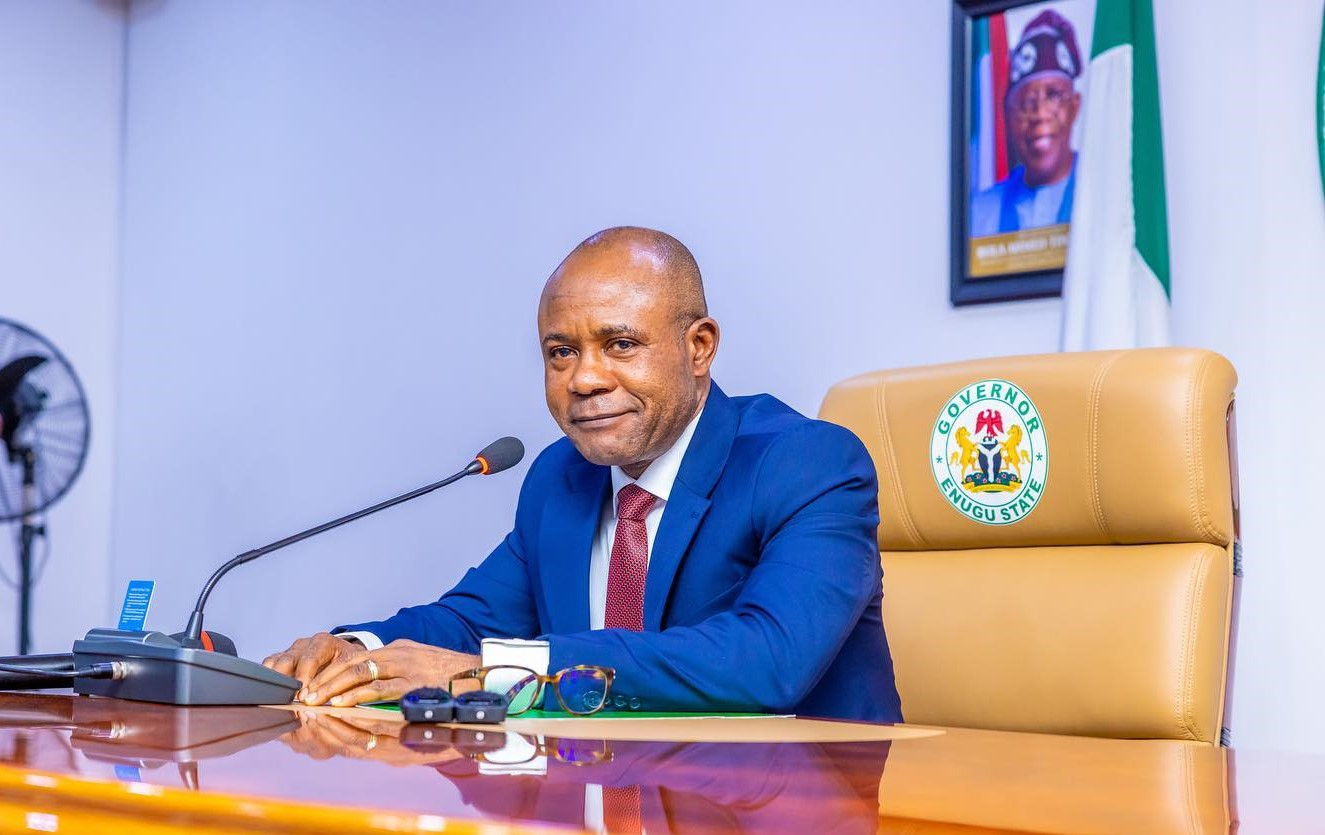
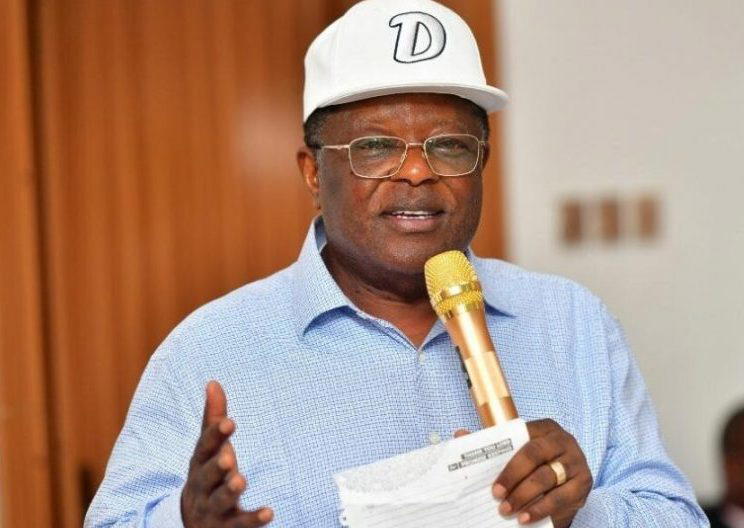
The Minister of Works, David Umahi, has defended the Federal Government’s decision to divert the Ondo section of the Lagos-Calabar Coastal Highway, saying the original route crossed terrain with pits more than 100 metres deep and would have significantly increased construction costs.
Umahi spoke in Abuja while providing an update on President Bola Tinubu’s four legacy road projects, insisting that the diversion was based on engineering considerations and the need to ensure value for public funds.
The minister said he was aware of petitions accusing him of diverting the route in Ondo State but maintained that the decision was justified.
“I am aware of petitions against me saying I diverted the Ondo section. I welcome that. That is how it is supposed to be because we are serving the public. You are subject to public scrutiny.
“But the important thing is whether you are doing the right thing or the wrong thing. We have no regret for decisions taken in Ondo,” he said.
According to Umahi, the original alignment passed through terrain with pits exceeding 100 metres in depth and lacked suitable sharp sand for up to 300 metres, making construction along the corridor considerably more expensive.
“You want me to pass through a terrain that you have over 100 metres of pits deep, and I have no defined sharp sand to 300 metres, and you expect the cost of one kilometre to be the same cost with a road passing through normal terrain?” he asked.
He said the ministry consequently undertook a detour and redesign to avoid the difficult terrain.
“We had to take a very serious engineering decision by making a detour, redesigning it to avoid such route. We are doing filling of over 10 metres, which is 30 feet plus, with sharp sand, and filling is almost concluded,” the minister said.
The diversion affects Sections 4A and 4B of the coastal highway, covering 67 kilometres, comprising 27 kilometres in Ogun State and about 40 kilometres in Ondo State. The section will terminate around the Ondo-Edo axis.
Progress on coastal highway
Providing an update on the wider project, Umahi said Section 1, a 47.47-kilometre stretch from Victoria Island, Lagos, had been completed and was ready for commissioning.
He added that the dual pavement on Section 2, which covers 55 kilometres and terminates at the Lagos-Ogun boundary, would be completed next month.
The minister said the flyovers, overpasses and underpasses on Section 2 had required extensive redesign, particularly around the Dangote Refinery and Lekki Deep Seaport.
He explained that an 86-metre-span bridge, with 43-metre counterforts, had been designed to accommodate refinery trucks and resolve a traffic conflict involving the deep-seaport train, the Dangote tax-credit road and the 25-kilometre Seventh Axial Road linking Epe to the Sagamu Expressway.
“We have redesigned a very beautiful flyover to resolve that conflict,” Umahi said.
At the Calabar end, he said Sections 3A and 3B, covering 65 kilometres, had achieved more than 30 per cent completion.
He added that work was ongoing on Section 5, an 82-kilometre dual carriageway in Akwa Ibom State, alongside an 88-kilometre link from Calabar to Ebidi Beach intended to connect with the Trans-Saharan route.
East-West Road alignment
Umahi also disclosed that Tinubu had directed that the continuation of the coastal highway from Ondo into Edo State should follow the existing East-West Road rather than a new alignment.
Describing the directive as a major development, the minister said the existing road had been constructed without adequate consideration for climate change and rising flood risks.
He cited flooding at Ahoada about two weeks earlier, saying the permanent solution would involve raising sections of the road to protect it from current and projected flood levels.
“The permanent solution is the decision of Mr President to align the continuation through the East-West Road. We now have to raise the road in many locations by two metres to be above present and expected flood levels,” he said.
He put the Ondo-Edo corridor at 104 kilometres, including the 45-kilometre Benin Bypass, which he said would eliminate the need for motorists to pass through Benin City’s urban centre and help ease persistent traffic congestion.
“That is the only solution whereby you don’t have to pass through the urban centre of Benin City. This decision is going to boost the economy,” he said, commending the governors of Edo and Delta states for supporting federal road projects.
Other Niger Delta road projects
The minister said the 129-kilometre dual carriageway from the Edo-Delta boundary to the Delta-Bayelsa boundary was undergoing route surveys and procurement, with construction expected to begin in November.
He also said work was ongoing on the 15-kilometre Eleme Junction-to-Onne section and the 9.7-kilometre Eket Bypass.
On the road linking Akwa Ibom to Calabar through Odukpani, Umahi said Hitech and Sammya Tech had been mobilised for emergency palliative works and full reconstruction of the 82-kilometre dualised stretch.
He explained that the CCECC contract had been descoped because of funding challenges.
Umahi urged residents of the Niger Delta to recognise the Federal Government’s interventions in road infrastructure across the region.
“That is the story about the first legacy project of Mr President, and the people of the Niger Delta need to commend the President very, very highly,” he said.
The post Umahi defends Ondo Coastal Highway diversion appeared first on Vanguard News.