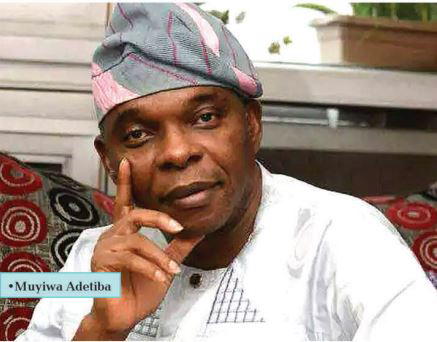
Towards healing a nation’s 60 yr old wound, by Muyiwa Adetiba
 SKAiF NewsNG SNN
This is the sixtieth year – to the week – of the July 1966 coup that has been infamously regarded as a counter-coup. A coup thatunfortunately marked the degeneration of a Nigeria that our fore fathers strove for and tried to build.A coup that subsequently led to a thirty- month Civil War which still leaves a lingering bitter taste in many mouths today. It is called a counter-coup because there had been a coup six months earlier which turned out to be lopsided in its execution if not design.
It has been argued severally, that this was not the plan but the grim reality turned out to be that this original coup wiped out a generation of Northern leaders and many South-western leaders in a gruesome and humiliating manner while sparing the counterpart leaders in the South-east. It also, perhaps inadvertently, upset the country’s delicate balance of power as people of South-eastern descent, subsequently occupied commanding heights across various sectors of the country.
That this coup was largely led by young, indignant – some say ‘nationalistic’- Igbo Officers did not help matters. It was thereafter infamously labelled an Igbo Officers’ coup. The counter-coup could have been called a reprisal coup. Or a Northern Officers’ coup as it was powered by officers of Northern descent who had waited six months for a decisive action from their Commander-In- Chief – who happened to be Igbo – towards holding the executors of the January coup accountable for their actions. Instead, they were met with what seemed like vacillation and foot-dragging.
Now, with the benefit of hindsight, neither of the two groups could have imagined the effect of these earliest of coups on the nation’s economic development, ethnic alignment and cultural cohesion. A friend recently sent me a report which stated that any country with a high Ethno-linguistic fractionalization (ELF), will never achieve its full potentials no matter highly endowed the country is. Broken down in plain English, it means a country that is not homogenous in language, religion, culture and ethos will never amount to much irrespective of its latent potentials. Nigeria has a high ELF. The task before our founding fathers was to see how to work with those differences to achieve a great nation. The potentials have always been there. But because of our high ELF, we are fully engaged in pulling ourselves in different directions because there is no common ethos, let alone a common goal. The two coups, tagged Igbo Officers’ and Northern Officers’ coups had exacerbated the fault lines. Even their constituency, the Military, which was the nation’s guiding light in inclusivity, fell prey to ethnicity and distrust. We are living the consequences of that today, sixty years after.
Nations oftentimes learn from wars. Nationhood had been forged from experiences of civil wars in Europe and even in Africa where Rwanda comes to mind. But we seem to have learnt the wrong lessons in our dear Nigeria. Perhaps because there was, and still is, a lot of denial. A war was fought. And in every war, there are losses and casualties. These casualties are always more with the defeated. They could include property, land and sovereignty. In our case, there were winners and losers despite the rhetoric of the time. The slogan, ’No Victor, no Vanquished’ was to make reintegration easier. It was to make nation building faster. It was, in a way, to understate the fact that the victor of today could be the vanquished of tomorrow.
Nothing after all in life is static. Unfortunately, many of our Igbo brethren came back focused on their losses. They came back with a heightened sense of victimhood. They came back more suspicious and distrusting. This has led to the profiling that ‘the Igbo don’t share well’. This is probably not true on an individual level because I know from personal experience that my Igbo friends are among the most generous. But as a collective, the Igbo seem more insular. And less tolerant of others ethnic groupings. This has led to a mutual distrust which plays out on the political stage.One side claims marginalization. The other side fears vengeance and exclusivity.A pointer is the sheer amount of venom poured out against Yoruba in the social media by people who live and earn their living in Yorubaland. Yet, it can be argued that the West has given more, in land, commerce and general opportunities, to the desired East-West collaboration than the East.An appreciation of host communities anywhere, will lead to more trust, less hostility and possibly less xenophobic reactions.
We have to heal this 60 year-old wound even if we eventually break up due to our high ELF. It starts by acknowledging that no side is blameless in what Nigeria has become for all of us. Without the lopsidedness in the execution of the January coup, the tardiness or reluctance of the AguiyiIronsi’s governance to deal with the coupists, there might not have been a July coup.Without these two, and the reluctance of the then leaders – led by Gowon and Ojukwu – to compromise and make a deal, there might not have beena Civil War. It continues by recognizing that there were acts of humanity and compassion by ordinary folks before and during the war.
There were folks, even in the north, who shielded their Igbo neighbors until they could safely travel. There were Igbo kids who were boarded and educated throughout the period in the South-west. There were properties and businesses that were preserved for their Igbo owners. Recognizing these small acts bring healing because they highlight our shared humanity. I read recently that there were moves by the Ironsi family to recognize the sacrificial act of Col AdekunleFajuyi who put his life on the line for his guest and Commander-In-Chief. That, if true, is a step in the right direction. To intentionally die for someone is the highest sacrifice that anybody can make and recognizing that fact is one way to go in healing the wounds of 1966.
I believe, and may not be popular for saying this, that the Igbo have since gotten their place back and more from the commonwealth except the presidency. Even there, a positive move was made when Dr Alex Ekwueme, a nationalist if there was one, was elected Vice President as far back as 1979, and later when EmekaOjukwu was brought back from exile to the political arena. The rest is now left largely to the individual. Whoever wants to be President, or any form of national leadership, has to cultivate the trust of different nationalities that make up Nigeria. He has to address the prejudices that can affect his electoral success.It is ‘doable’. Simply playing the victim card is retrogressive and will not help. Neither will playing the emil’okan card.
The post Towards healing a nation’s 60 yr old wound, by Muyiwa Adetiba appeared first on Vanguard News.