Tinubu in Three Years: More public revenue, less impact on masses
 SKAiF NewsNG SNN
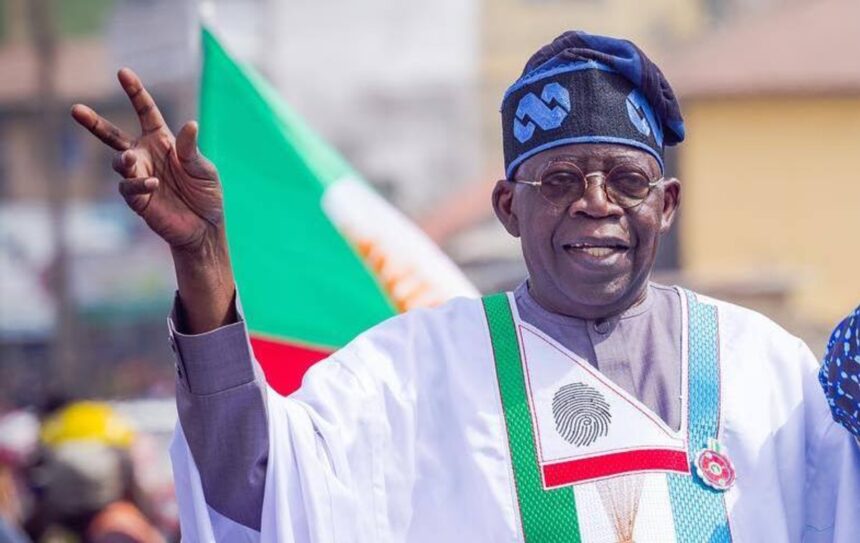
Special report by Dr. Dele Sobowale examines paradox of rising revenue against rising poverty
PARADOXES OF REFORM 2023-2026.
“There are only two families in the world, my old grandmother used to say, the haves and the have-nots.”
Miguel de Cervantes, 1547-1616. VANGUARD BOOK OF QUOTATIONS, VBQ p 87.
Until 2015, there were four families in Nigeria: the rich, the middle class, the lower class and the destitute. Today, May 2026, the middle class has descended into the lower class and the lower class, always the largest group in Nigeria have swollen the number of people living in poverty to 130 million. By contrast, only 40 million Nigerians were classified as poor in 2014.
Paradoxically, Nigeria has been experiencing its most rapid economic growth in nine years since 2023. Yet, the number of people living in poverty keeps rising – while the richest one per cent got richer for a very simple reason – non-inclusive growth. The drivers of Nigeria’s economic growth since 2023—communication, technology, finance — have been capital intensive; labour increasingly has been degraded. Even manufacturing in Nigeria is becoming mostly automated; labour’s contribution is shrinking rapidly, with dire consequences for future employment of workers.
Deregulation of the crude sector and changes made to the allocation of revenue between the three tiers of government dramatically increased the revenue accruing to states and Local Governments. So far the impact on the people has been negligible.
Another paradox confronting us is the simultaneous rise of public sector revenue and debt burden. Nigeria’s debt burden is rising; at the same time aggregate revenue is increasing. Why?
Fortunately, the rising tide of fiscal gloom, anchored on reckless borrowing, has been counter-balanced by the excellent performance of monetary policy. Increasing global investor confidence has been achieved by the best professional management of the Central Bank Nigeria has experienced since Chief Joseph Sanusi, Governor of Central Bank, 1999-2004. Without Cardoso’s insistence on not bowing to pressure, exchange rate stability and banking good governance, as well as strong economic recovery would have continued to elude us. RENEWED HOPE remains a viable dream only because of a strong CBN.
Promotion of Digital Economy and comprehensive Tax reform are indisputably the most positive and successful measures of the Tinubu administration. Today, Nigeria is one of the fastest nations in the adoption of Artificial Intelligence, AI – despite its attendant cybersecurity risks. Nigeria’s media and academia have been experiencing an avalanche of AI-assisted scripts in the last two years; and it is still low tide. Future is uncertain.
These and a few related issues will be analysed in this review of three years of Tinubu’s reforms. Just as the third year was coming to an end, the FG announced that 51 per cent of the shares of the refineries had been sold to the Chinese. The implications are profound and not all of it is financial.
THE PROMISES
Three years of Tinubu’s government have passed by and the promises can be measured against the actual results. The RENEWED HOPE document remains the best reference point, especially as the Federal Government as well as Tinubu’s supporters continue claiming that the government has performed well. Clarity is what characterizes the manifesto released to Nigerians before the 2023 Elections. What follows are the highlights of the contents of the document.
GDP
Since management of the economy is one of the two primary functions of government; and, a strong economy is the surest guarantee of security, this summary starts from there.
Source: RENEWED HOPE DOCUMENT
Other promises made included the following:
NATIONAL SECURITY
“The fundamental responsibility of government is to protect the lives and property of its citizens. We will mobilize the totality of our national security, military and law enforcement assets to protect all Nigerians from danger and from fear of danger.”
RENWED HOPE p 5.
Security of lives and properties rank equally with management of a good economy. Unfortunately, security is difficult to measure; there are few metrics for assessment of insecurity. Consequently, Internally Displaced Persons would serve as yardstick.
How did we get here? Three main factors contributed to the swelling population in IDP Camps nationwide.
Under-funding of the armed forces
“2025: Army gets 7% for security equipment.
“Presidential fleet takes priority over NAF’s aircraft maintenance.”
Daily Trust, April 20, 2026.
This story has not been refuted by the Federal Government till today. Obviously, mobilizing the totality of our military and law enforcement assets remains a promise to be discharged.
Terrorists seeming impunity
“The bandits and all their local collaborators will be fished out and made to face the full wrath of the law.” President Tinubu, May 17, 2026 – two days after school children and teachers were abducted in Oyo State.
Nigerians have heard this statement so many times since 2023. For instance, after the January 4, 2026 attack in Niger State in which 30 people were killed in Kasuwan Daji market; February, after the massacre of 162 villagers in Woro and Nuku in Kwara State; March 2026, after the Palm Sunday slaughter in Angwan Rukuba in Plateau State, as well as abbuduction of wedding guests in Kaduna State. In fact, terrorists’ activities have occurred every month since January this year.
No terrorists have faced the full wrath of the law.
Confusion of goals and means
“Every time you negotiate with terrorists, you become their accomplice.”
Israeli Official, VANGUARD BOOK OF QUOTATIONS, VBQ, p 244
Security requires coordination of efforts by all tiers of governments – federal, states and local governments. Right now, co-ordination is lacking and there is confusion of goals and the means to achieve them.
Neither the FG nor state governments have addressed the issue of negotiations. Victims of terrorism are thus left to determine the response to ransom demands. Transparency is lacking; governments disclaim ransom payments, survivors report large sums were paid before release of captives. Compounding the confusion is uncertainty of outcome even when bandits are paid. Capriciously, bandits still murder the victims after receiving money.
Reasons for granting amnesty to terrorists remain unclear; more baffling still is: who can grant pardon to captured terrorists? Declaring them “repentant” contradicts the promise to make terrorists face the full wrath of the law.
IDPs population might not have reached the peak; and now terrorists have reached the South West and heading for Lagos.
US intervention and consequences
Christmas Day, 2025 changed everything regarding the management of insecurity in Nigeria. US President Trump ordered air strikes in Nigeria. For the first time since the rise of Boko Haram as a terrorist group, a foreign power intervened in Nigeria’s domestic affairs. Tinubu’s government insists there was consultation and approval before the attack. Many Nigerians remain skeptical. At any rate, Nigerians are now divided; some endorse; others oppose foreign intrusion. The government of Nigeria appears to be presented with an offer, ostensibly for assistance, which it cannot refuse – for undisclosed reasons.
Finally, disbursing less than ten per cent of capital appropriations for Defence in 2025 was not just a blunder; it was self-subversive; given the enormity of the problems.
POWER SUPPLY
Every economy runs on energy and electrical power supply is central to the mix. Nigeria’s power supply deficiency remains legendary and baffling to the global community; and an embarrassment to governments and the citizens alike.
Nobody is happy; consumers are routinely duped by the Distribution Companies, DISCOs. Retaliation follows in terms of low payment and sabotage. Candidate Tinubu made promises.
Eliminate Estimated Billing
We will end this unpopular and harmful practice and ensure that all electricity bills are meter-based.” RENEWED HOPE p 30
Support for Domestic Manufacturing of Electric Meters
Our government will reduce import levies on manufacturing inputs and provide other forms of support so that domestic manufacturers are able to compete and meet demand for meters..”
REWNEWED HOPE p 31
“If I don’t give you constant electricity for four years, don’t vote for me”
Candidate Bola Tinubu on December 26, 2022 in the last weeks leading to the 2023 Presidential Elections.
Over 41% of electricity consumers still without meters – NERC
VANGUARD, May 22, 2026.
According to the report, “About 5.1 million consumers, representing about 41 per cent of Nigeria’s 12.31 million active electricity customers were without prepaid meters as of February 2026, according to data released by the National Electricity Regulatory Commission (NERC).”
In reality, the number of consumers without meters exceeds 5.1 million. Several million consumers still operate with old meters, which have seized to function; and estimated billing remains the norm; not the exception. Distribution Companies, DISCOs, have taken advantage of weak enforcement of regulations to continue extorting payments for services not rendered to consumers. In no other nation in the world are consumers compelled to pay for power not proved to have been delivered.
Electricity tariffs have gone up by 300% since 2023. But, regular power supply remains elusive. The former Minister of Power, Adelabu offered an apology recently after frequent grid collapse. It was revealing.
HOPE EVAPORATES ON FUEL AND POWER SUPPLY
“Power generation will improve; transmission will improve, distribution will improve, and that 6,000MW will be achieved before the end of this year.”
Minister of Power Adebayo Adelabu, March 2026, while apologizing to Nigerians.
Mr Adelabu symbolizes everything wrong with the management of the power crisis by the Tinubu administration. He lacks credibility.
Like Reno Omkri and Fani-Kayode, he has either forgotten that this is the age of the internet – which never forgets – or does not give a damn when he contradicts himself.
Contrary to his assurances that Nigerians should expect “improved generation, transmission and distribution by the end of this year”, the Minister, on April 17, 2025, issued a press statement saying: “We have increased our generation to 6,003MW, up by 1,700MW in one and a half years since President Tinubu assumed office.”
That 6,000MW in 2026 cannot be regarded as improvement on 6,003MW claimed in April 2025, is the most obvious falsehood in what was supposed to be an apology. That is not the only reason to distrust his figures.
“Liars ought to have good memories.” Algernon Sydney, 1622-1683.
OIL AND GAS SECTOR
“Goal: Increase crude oil production to 2.6mmbpd by 2027 and 4mmbpd by 2030.
RENEWED HOPE p 36
“Nigeria’s oil exploration declines 41.7% as rig count falls.”
VANGUARD, May 20, 2026
Few things are more dangerous in governance than a plausible illusion. Politicians frequently are aware of the aspirations of the people. Their campaign promises respond to those needs – even if unrealistic. Three Presidents, Jonathan, Buhari and, now Tinubu, have based annual budgets on crude oil production and export projected at 2 million barrels per day, mbpd, since 2014. The goal remains a mirage. In fact, Nigeria has never achieved 2mbpd in any month until now. Since 2023, Nigeria has averaged just about 1.6mbpd crude production. That persistent negative variance, 400,000 per day, at any price, accounts for most of our increasing national debt – now N159 trillion.
Crude oil production is a function of oil rig count. Without additional rig count from 2023, expecting significantly higher crude production was illusory at best. With rig count falling, actual production inevitably declines. The VANGUARD report on May 20, 2026 is a reflection of how far removed the FG is from reality.
China takes over Nigeria’s Refineries
Things are not always as they seem. It is too early to understand the strategic interest the Chinese have in acquiring controlling interest in Nigeria’s, hitherto, moribund refineries. This development is a game-changer. Suddenly, refineries in Nigeria will have to compete with global operators. Sooner or later, Dangote will feel the heat of Chinese competition.
EXCHANGE RATE
Exchange rate stability is undoubtedly the government’s biggest success story. Now hovering around N1400/US$1, it brought an end to eight years of upward escalation of rates brought about by round-tripping and official collusion. At one point in 2023, the exchange rate was within touching distance of N2000/US$1. The CBN at first assumed that it could be brought down to as low as N900/US$1. Reality soon intruded; and the market-determined rate has finally emerged. For more than three months it has moved around N1400/US$1. Stakeholders now have a firm basis for planning and pricing.
TAX REFORM
“During times of economic weakness, increasing tax is counterproductive. Higher taxes drain an already weakened private sector, inviting possible economic contraction and higher unemployment.
Our aim shall be to create a progressive tax regime, plug harmful loopholes, enhance the efficiency of collection and give the people a greater sense of responsibility in relation to their taxes.” RENEWED HOPE p 16.
“FG misses Q1 tax target by N2.2tn.” Report, May 20, 2026
Tax reform, overdue for more than ten years, was another sterling success. Despite the initial problems associated with the implementation and optimum tax revenue collection, the current tax regime is in line with global best practices. It requires only a little bit more time and public enlightenment for its potentials to be realized.
AGRICULTURE
“However, only 35% of arable land in Nigeria is presently cultivated. Our target shall be to increase this number to 65% in four years.” RENEWED HOPE p 26.
“Our goal shall be to grow more than we need so that we may export the excess and alter our balance of trade.” RENEWED HOPE p 27
Commodity Boards
“We shall introduce commodity boards to establish minimum prices for crops such as cashew, cocoa, sesame, soya, cassava, yam, rubber, palm kernels, groundnut and okra (?). This will guarantee minimum income for farmers.” RENEWED HOPE p 27.
Grain Reserves and
Food Storage
We will modernize and expand agricultural production and enhance our strategic grain reserves to strengthen this line of defence against food shortage….”
RENEWED HOPE p 27
“Food inflation spikes above 20% in 11 states.” Report. May 19, 2026.
“SALLAH: Ram price close to N1m, pepper jumps 200% as buyers look for alternatives.”
VANGUARD, May 24, 2026.
After a brief respite from October 2025 to early February 2026, food prices once again ride the escalator going up. Relief cannot be reasonably expected until harvest time in late September to early October. Even then, Nigeria will be far from self-sufficiency. Four major reasons account for our predicament on agriculture generally and food security in particular.
First, insecurity is worst now in rural communities. Second, rural-urban drift accelerates nationwide. Third, the sudden withdrawal of the support provided by the Anchor Borrowers Programme, ABP, despite its flaws, left millions of farmers with no source of credit. Fourth, a President who spent all of his life in cities, at home and abroad, finds it extremely difficult to understand the dynamics of rural life. His “marching orders” to subordinates are akin to a blind man telling others where to go. His good intentions are simply not enough; and he spends too much time abroad to study the people he leads. The results are inevitable.
POVERTY
With the rural areas in the grip of bandits of all sorts, poor people condemned to live there now live at the mercy of merciless gunmen. Deepening poverty, for them, is not a choice. It is inescapable. They farm at the pleasure of bandits and share the harvests with their captors. Until recently, all the harvest was theirs; now, only about half. They were classified as poor before the bandits moved in. That partly explains why cash transfers by the Federal Government are not alleviating poverty. Insufficient funds and excessive borrowing account for why poverty alleviation has proved elusive – despite vastly increased aggregate revenue by governments. Two articles published in the recent past explain the paradox of rising public revenue and deepening poverty in the last three years.
“When N300bn buys nothing” explained why the N300 billion released by the FG for transfer to 25 million families falls short of what can possibly lift recipients from poverty. It comes down to N4100 per person or less than $3 per person for a whole month.
“FG Borrowing to deepen poverty in Nigeria” pointed out that with total debt now N159 trillion, debt-repayment would henceforth claim a higher percentage of earned revenue – resulting in reduced social intervention aimed at poverty reduction. On the contrary, more Nigerians will drop below the poverty line.
“Nigeria can’t sustain devt through borrowing – Oyedele”
Report, May 13, 2026
When the Minister of Finance made that statement in May, he was only stating the obvious. No nation has ever experienced rapid development strictly on borrowing. Unfortunately, he works for a President strongly wedded to “borrow-and-spend” fiscal policy.
Paradoxically, Nigeria’s debt burden has risen fastest in the last three years; simultaneously as more Nigerians have descended into poverty. The reforms undertaken, admittedly necessary and inevitable given what was inherited from Buhari, had made the rich richer and the poor and middle class poorer. Trickle down approach to economic recovery historically eventually produces that effect in any country. The prospects for the next five years are not extremely bright on account of uncertainties surrounding fiscal policies and the rising percentage of revenue going into debt-servicing. Here again, the rich constitute the lenders waiting to be paid.
ANNUAL BUDGETS AND NATIONAL DEBT
“You cannot solve a problem by adopting the mind-set which created it in the first instance.”
Albert Einstein, 1897-1955
No government since 1999 had executed the annual budget submitted to the National Assembly, NASS, for approval. By 2023, the annual budget had become a hollow ritual at the Federal and State levels. The last three years have proved to be the worst. Yet, faithful implementation of annual budgets constitutes the foundation of sustainable development. In reality, military administrations have generally out-performed elected governments in this regard. Right now, some aspects of the 2024 and 2025 budgets are running simultaneously with the 2026. Budgetary indiscipline is a prime precursor of low GDP growth; and subsequently, rising poverty.
Even with only five months spent in the year, the 2026 budget has been consigned to the dust bin. Large negative variances generated from crude production and export, as well as tax revenue, will guarantee another failed budget – the third in a row. Consequently, Nigerians should expect higher budget deficit and more borrowing.
The NASS, which in other countries provides checks and balances, restraining the Executive branch from its excesses, has become an accomplice to fiscal irresponsibility.
Nigeria cannot expect rapid economic growth with the min-sets at the Presidency and the NASS any time soon.
MONETARY POLICY
“Capital importation rises 182% to $3.37bn”
VANGUARD, May 26, 2026
Undoubtedly, most of the economic recovery recorded, so far, can be attributed to the soundest monetary management Nigeria has experienced since 2014. Exchange rate stability is never achieved by accident or luck. Orthodox monetary policy, consistently applied in all matters brought it about.
Without strong monetary policy, the 3.89% growth achieved in the first quarter, Q1, of 2026 would not have been possible without it.
FORECASTS FOR YEAR FOUR
As politics, increasingly violent, assumed priority over fiscal policy management, at best confused, sustaining sound monetary policy management remains the only source of hope against reversal to low GDP growth, more borrowing and increasing poverty.
From now until May 2027, only the CBN Governor will be minding the store. The President and others are on leave.
JUST IN: “Capital projects get only 26% of FG’s N12tn loans.” Report, May 28, 2026.
Obviously, this government is not borrowing to invest in the future; but, for present consumption. We are consuming now and passing the bills to our grandchildren.
Follow me on Facebook @ J Israel Biola
The post Tinubu in Three Years: More public revenue, less impact on masses appeared first on Vanguard News.