The irony of order, when power comes full circle, by Stephaniee Shaakaa
 SKAiF NewsNG SNN
In the university, a former Vice-Chancellor returns to his department to teach under an acting Head of Department with a PhD.

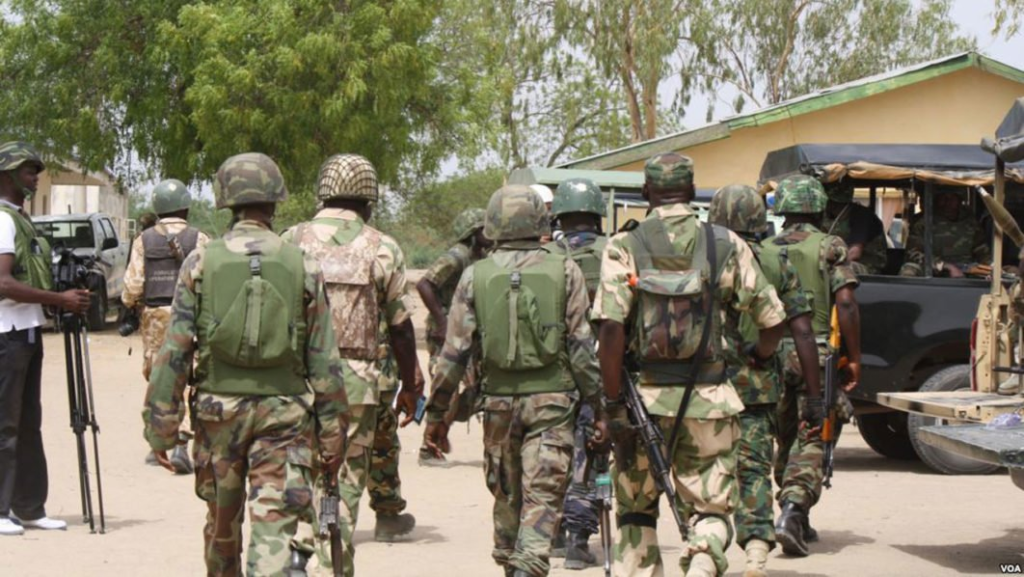
In the barracks, a CDS, CNS, CAS retires because another General below him in hierarchy has been appointed Chief of Army Staff.
That is the irony of two institutions, one a citadel of knowledge, the other a fortress of order.
No arguments. No case. Just the quiet acceptance of structure.
In the military, the law is sacred. When your junior becomes your superior, you pack your bags and salute out of the system. It is harsh, yes, but it protects order. It is brutal, but logical. The uniform does not bow to emotion.
It ensures that authority is not fractured by ego, that respect remains institutional and not personal. The uniform is bigger than the man.
But in the university, the rhythm is different.
In academia, hierarchy is elastic. A professor who once commanded an entire university can return to his classroom, shuffle lecture notes, and take instructions from someone who once waited for his signature. The same man who once controlled budgets, signed appointment letters, and chaired Senate meetings can return to the same department and take instructions from someone who once waited nervously for his approval.
That is academia, where hierarchy bends to knowledge, and intellectual equality triumphs over administrative memory.
Yet, here is where it becomes interesting.
When Vice-Chancellors return to the departments they once ignored, they walk into the ruins of their own making. The leaking roofs, the obsolete equipment, the unmotivated lecturers all greet them every morning. The bureaucracy they once wielded as a shield becomes the same wall that slows them down. The ghosts of unapproved memos and neglected reforms come knocking on their office doors.
There is no need for blame or bitterness. The system they failed to fix has simply kept its promise to outlive every reformer who lacked courage.
It is poetic justice, a silent verdict that no panel needs to pronounce. Not loud, but profound. An aide memoire that time has the patience to expose what power once concealed.
What makes it even more ironic is that successive Vice-Chancellors never learn. Each comes with grand visions, policy blueprints, and slogans of transformation. Each leaves behind a trail of abandoned ideas, bruised egos, and half-done projects. And when they eventually return to the classroom, they sit before the living proof of their unfulfilled tenure.
Perhaps that is what makes academia the most democratic yet the most revealing institution of all. You always return to your footprint. The same corridors that echoed your directives will now echo your silence. The same people you overlooked will now hold the attendance register you must sign. And if you were once arrogant, the walls will whisper it back to you. If you performed exceptionally well the wall will still whisper.
The military, for all its rigidity, at least understands closure. When a leader rises, others step aside. The institution moves on, because continuity is sacred and confusion is costly.
But in academia, we confuse humility with inertia. We watch retired VCs turn into dignified spectators of the chaos they once had the power to correct attending meetings they once chaired, listening to policies they once resisted, enduring the consequences of their own administrative philosophy.
Perhaps that is why the soldiers call us bloody civilians.
There, humility is not an emotional choice, it is an order. The institution values obedience over nostalgia. A general cannot remain when his junior rises above him. He must go, not because he is unqualified, but because discipline demands it. The structure must not bend to sentiment.
We hold no grudges toward the status quo because we have mastered how to survive within it. We normalize dysfunction and baptize it as endurance.
As President Tinubu recently retired a crop of service chiefs and appointed new ones, the nation once again witnessed the power of institutional discipline. No one protested. No one held a press conference. No one went to court. They simply handed over and saluted out. Because in the military, leadership is not a possession, it is a posting. Leadership, after all, is not ownership. It is tenancy. The uniform will outlast the wearer.
In academia, however, leadership is often treated as identity. Many Vice-Chancellors never truly stop being Vice-Chancellors. They return to their departments but struggle to return to reality. Their names still open doors, their shadows still command fear, and their egos still crave relevance. Yet, they now function within the very system they once shaped or misshaped.
In the university, and indeed in the larger civil space, we are still negotiating that truth. We do not leave when our time is up. We simply circle back, rename the office, and call it mentorship. We romanticize recycling as wisdom, even when it is the same old failure wrapped in academic gowns.
The military may be harsh, but it preserves structure. The university may be soft, but it often forgets its own hierarchy of reason.
In the end, both institutions mirror Nigeria itself, brilliant minds and brave men bound by a culture that struggles to let go.
Until we learn that leadership is service and not entitlement, we will keep breeding VCs who return to the ruins they built, and generals who retire for obeying the same command they once gave.
I remember when the current Tor Tiv returned to the university after serving as Vice-Chancellor of the Federal University, Dutsin-Ma. He was once our Vice-Chancellor at the Federal University of Agriculture, Makurdi, before that appointment at Dutsin-Ma. We are talking about a two-time Vice-Chancellor here, a rare distinction in academia.
On that faithful morning, I got to school very early. From the second floor, I looked down and saw the just-stepped-down Vice-Chancellor walking quietly into his office. There was no convoy, no aide, no security detail just him, carrying his laptop bag with the calm grace that only life’s humbling seasons can teach.
I paused and whispered to myself, this is life in all its humility.
I went downstairs, greeted him, and he smiled unbothered, dignified, at peace with himself. Not long after that quiet encounter, he was appointed the Tor Tiv, the paramount ruler of the Tiv Nation.
That moment has stayed with me. Because not many professors or Vice-Chancellors end up that way. Some must sweep the dirt they once ignored. Some must live with the silence of the offices they once filled with power. But a few, like him, remind us that humility is not defeat,it is preparation.
And that is the irony of order that the military, an institution built on force, has mastered the art of graceful exit, while the university, built on enlightenment, has not mastered the art of accountability. The General must retire when hierarchy shifts.
The Professor may stay, even when responsibility demands reflection.
Both systems mirror Nigeria, a place where brilliance and order exist side by side, but rarely intersect. The soldier bows because the law says so, the scholar stays because culture allows it. The result is simple one system enforces renewal, the other recycles.
Perhaps the true difference lies in what each institution fears most.
The military fears disobedience, that is its greatest sin. The university fears irrelevance that is its deepest insecurity.
But both, in their own way, tell the Nigerian story of leaders who rarely learn and systems that rarely evolve. We are a nation where the old refuses to leave, even when the new is ready to lead. A place where tenure does not end at the signing of a letter, but lingers in influence and memory.
And so, the Vice-Chancellor who once ignored cries for better welfare now joins the queue for delayed salary. The professor who postponed promotions now experiences the bureaucracy firsthand. The man who once chaired Senate meetings now listens quietly as his former subordinates debate policies he once shelved. The circle is complete. Power has come full circle.
Maybe that is the true university not the one with classrooms and convocation gowns, but the one life conducts in silence, teaching lessons no curriculum can contain.
The military may operate by command, but it preserves dignity through departure.
The university may celebrate enlightenment, but it often exposes the blindness of its brightest minds.
At the end of the day, every institution is judged not by how it elevates its leaders, but by how it humbles them when the music stops.
And when the final salute is given and the last lecture delivered, perhaps the only true question is this, did we serve the institution, or did we merely serve ourselves?
No arguments. No case.
Just the silent testimony of two worlds one marching in order, the other floating in irony both teaching us that leadership, no matter how decorated, always comes full circle.
The post The irony of order, when power comes full circle, by Stephaniee Shaakaa appeared first on Vanguard News.