The Horizon Estates Development That Challenged the Idea That Lekki Homes Must Be Expensive
 SKAiF NewsNG SNN
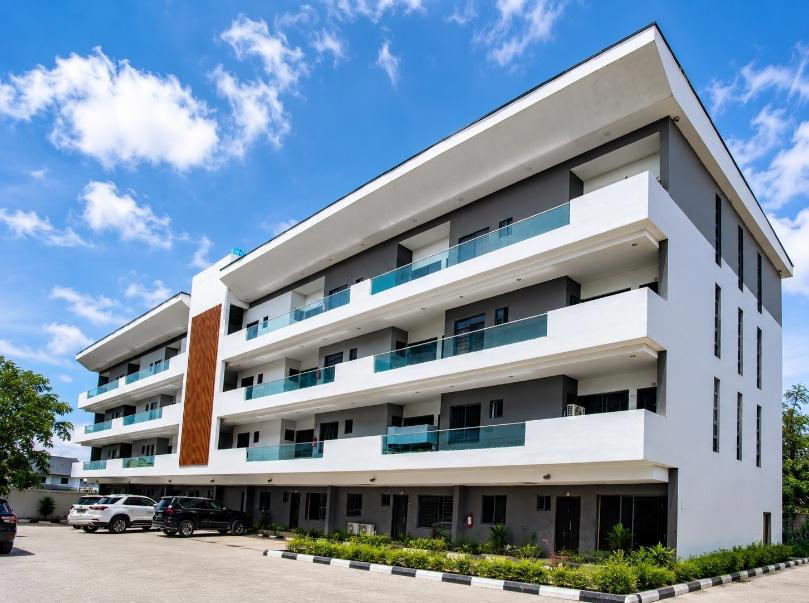
Horizon Heights, Ikate Lekki.
By: Scheme Agatha Happiness
The debate over housing affordability in Lagos has intensified in recent years, as rents continue to outpace incomes, particularly in high-demand neighborhoods such as Lekki Phase 1. Reports by BusinessDay, citing the Lagos Residential Market Report 2025, attribute the surge to a housing deficit of about 3.4 million units, rapid population growth and years of demand outstripping supply.
Against that backdrop, calls for government intervention have grown louder. Yet before policymakers conclude that regulation alone is the answer, it is worth asking whether the problem stems from market failure itself or from longstanding supply constraints, and whether different development choices could improve affordability without distorting the market.
Horizon Estates has already run that experiment, and the results are in.
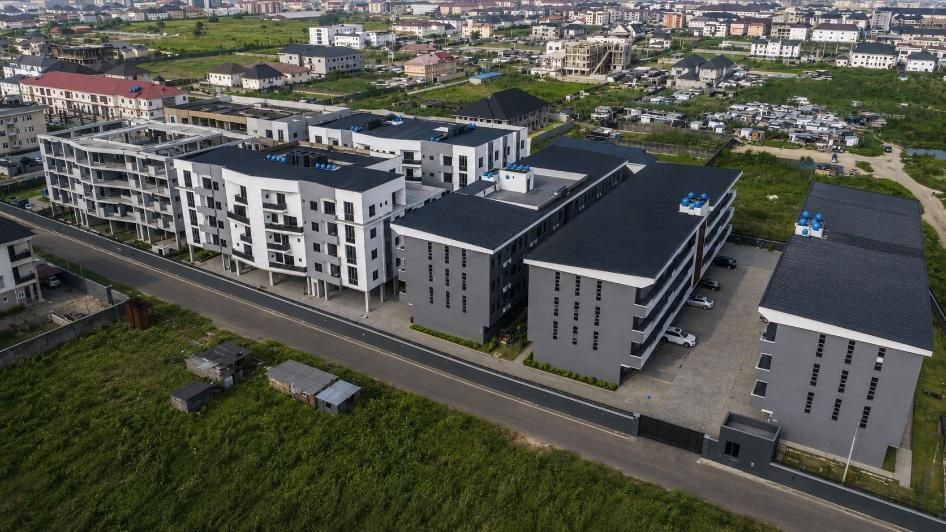
Pearl Heights, Oniru, Victoria Island.
It is known that developers have spent years perfecting the unclear logic of building regular homes, charging more, and calling it luxury. Horizon Estates made a different calculation with their developments, and Horizon Heights is one of the most visible pieces of evidence. Five hundred units on Palmspring Road, Lekki, delivered in 2022, were priced more than 20% below what comparable developments on the same axis charged. Not in a cheaper location or with inferior finishes, but in one of the most sought-after addresses in Lagos, at a price point the market had collectively deemed incompatible with that axis.
For the executives, entrepreneurs, and diaspora returnees who bought there, people who had watched Lekki Phase 1 drift steadily beyond their reach, the development was less a real estate transaction than a correction. A signal that the gap between what they could afford and what the address demanded was not a law of nature. It was a developer’s choice.
“We believe that homes should be priced in a way that people can live in them, and not just to beautify the skyline or the streets. That is why we work hard to beat down prices and guarantee affordability for our customers. We want to continue to enable homeownership by providing great quality homes at affordable prices like we have been doing for over a decade now, says Dr Ifeanyi Nduka, COO, Lekki Gardens Estate, owners of Horizon Estates Limited.
The same pattern can be observed across the Horizon Estates portfolio.
Cyberville, located by Lekki Phase 1 and completed in 2021, was developed as a contemporary urban community where residential comfort meets investment performance. Buyers who entered the project at N20.99 million in 2019 reportedly saw the value of their two-bedroom apartments rise to about N55 million within three years while earning roughly N7 million annually in rental income.
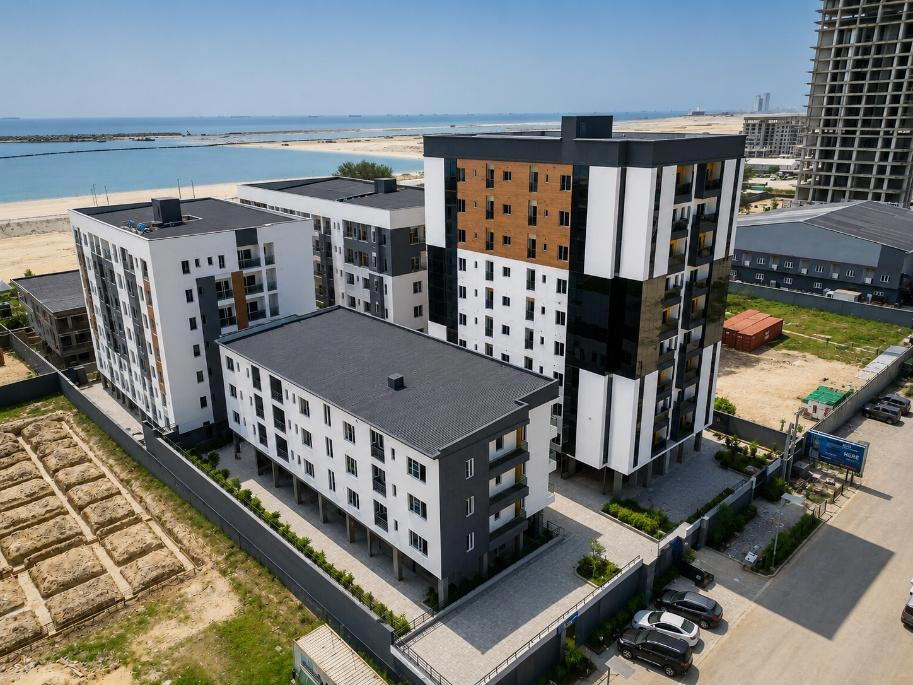
Nearby, Horizonville in Ikate extends that philosophy into another rapidly expanding section of Lekki. Positioned close to the Third Roundabout and Christ Embassy Church, the development benefits from immediate access to one of Lagos’ busiest commercial corridors while maintaining the privacy expected of a gated residential estate.
Since the delivery of its first phase in 2024, units purchased for N26.5 million in 2022 have appreciated to about N82.5 million.
At Horizon II, situated along Meadow Hall Road in Lekki, the emphasis on family living is much stronger. Surrounded by established educational institutions, landscaped environments and recreational facilities, the estate demonstrates how thoughtful planning can create neighborhoods that remain attractive to both homeowners and tenants.
The company’s more recent developments suggest an increasingly ambitious vision.
Pearl Heights, delivered in Victoria Island Extension in late 2025, has added another premium residential community to one of Lagos’ most prestigious addresses. Beyond its luxury apartments, the development reflects a strategy of positioning buyers within locations where limited land availability continues to support long-term value appreciation. Three-bedroom apartments acquired for N37.99 million during construction are now valued at approximately N305 million, just after 5 years.
Government regulation of housing prices is not an inherently bad idea. In markets where developer behavior has become extractive enough to exclude entire productive classes from functional neighborhoods, intervention has a case. Lagos may yet reach that threshold.
But the success of Horizon Heights complicates the narrative that regulation is the only available remedy. Over one thousand families now live around Lekki Phase 1, who, under the pricing logic every other developer in that axis was applying, would not. No policy made that happen. A developer did so by deciding that the margin between what the market would bear and what buyers could honestly afford was not a gap to exploit, but one to close.
That is not a small thing. In a city where the housing conversation has grown increasingly resigned, where affordability and prime location are discussed as permanently incompatible, Horizon Heights is evidence that the incompatibility was always a choice.
The question Lagos should be asking is not only how to regulate the developers who made the wrong one. It is how to produce more of the ones who didn’t.
The post The Horizon Estates Development That Challenged the Idea That Lekki Homes Must Be Expensive appeared first on Vanguard News.