Tegbe: Adebayo Adelabu promised more than that
 SKAiF NewsNG SNN
By Moshood Oshunfurewa
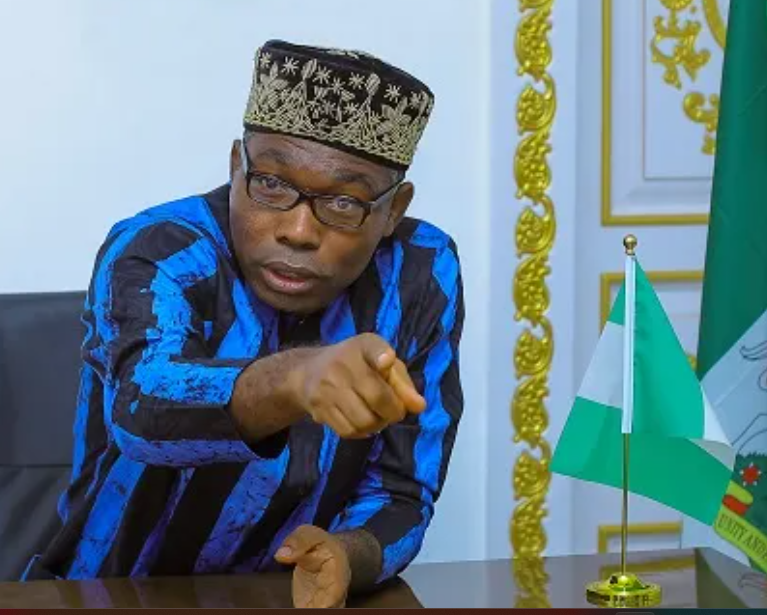
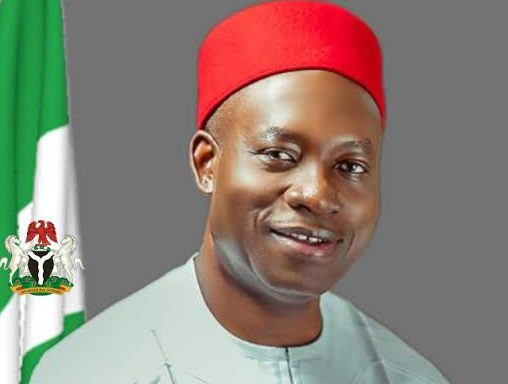
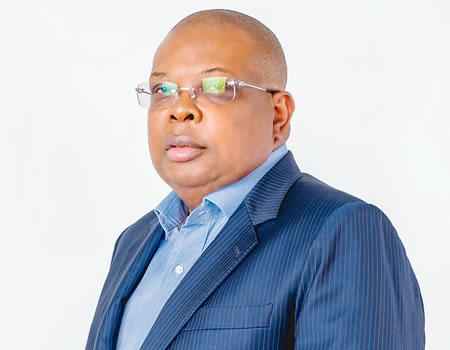
There is a particular cruelty reserved for Nigerians who still dare to dream. Nigerians watch men in tailored agbadas step before cameras, clutch their chests with the fervour of converts, and promise us light. Not the blinding glare of a camera flash, mind you, but the kind that keeps a cold chain vaccine viable in a rural clinic, or a sewing machine humming past 8pm in Aba. Last week, the Senate confirmed Joseph Olasunkanmi Tegbe as the new Minister of Power. He said in 100 days, I will stabilise the grid. If it can’t be fixed in three months, it can’t be fix in six months. I wish him well. But Nigerians refuse to pretend that his predecessor, Adebayo Adelabu, left behind anything but the stale smell of broken promises and the echo of a nation being slowly electrocuted by its own incompetence.
When Adelabu assumed office in August 2023, Nigeria’s grid was already fragile. According to industry reports, installed generation capacity stands at approximately 13 gigawatts (GW), but transmission bottlenecks have historically limited actual wheeled power to between 4,500 and 5,000 megawatts (MW) – a figure that has shown little sustained improvement. The national demand, however, is estimated at 20 GW. Throughout Adelabu’s tenure, grid collapses remained frequent. Data from the System Operator (SO) indicates that between 2023 and early 2026, Nigeria experienced no fewer than a dozen partial or total grid disturbances. In one widely reported incident, the minister issued a public apology after a collapse in September 2024, promising systemic fixes. Yet by Q1 2025, available capacity had shrunk to a baseline of approximately 5,400 MW, according to the Nigerian Electricity Regulatory Commission (NERC) quarterly reports.
The economic cost of this unreliability is substantial. Multiple studies, including a Senate committee analysis, estimate that inadequate power supply erodes between 5 per cent and 7 per cent of Nigeria’s annual GDP. In absolute terms, with a GDP of roughly $400 billion, this represents annual losses of $20–28 billion, more than the entire federal education budget.
One of the most telling metrics of grid failure is the extent to which large manufacturers have abandoned the national grid entirely. Under Adelabu’s watch, this trend accelerated. The Dangote Group, for instance, generates over 1,500 MW of captive power for its own operations, more than one-third of the entire national grid output. Similar investments by conglomerates such as BUA Group and Flour Mills of Nigeria indicate that private capital has lost confidence in the public grid’s ability to deliver reliable supply. This is not simply a matter of corporate convenience; it represents a massive misallocation of resources. Funds that could have expanded production capacity are instead diverted to diesel, gas turbines, and solar arrays for self-sufficiency.
During Adelabu’s tenure, NERC approved multiple tariff adjustments, including a substantial increase for Band A customers in April 2024. According to the National Bureau of Statistics (NBS), average electricity tariffs rose by over 240 per cent for some commercial and industrial users between 2023 and 2025. Yet hours of supply for many of these same customers declined. A survey by the Manufacturers Association of Nigeria (MAN) published in 2025 found that 67 per cent of member companies relied on self-generated power for more than 60 per cent of their operational needs, up from 54 per cent in 2022. The average cost of manufacturing in Lagos, MAN reported, had become 30–40 per cent higher per unit than in comparable West African hubs such as Accra or Abidjan, primarily due to diesel and gas expenses.
Consequently, SME closures in industrial clusters, including Otigba in Ogun State, Nnewi in Anambra, and Ariaria in Aba, have been linked to energy costs. While precise attribution is difficult, the Nigerian Association of Small and Medium Enterprises (NASME) documented the closure of approximately 1,200 manufacturing SMEs in 2025 alone, citing power as either the primary or secondary cause.
Adelabu himself has not been convicted of any financial crime. However, the power sector’s history of corruption is well-documented. Notably, a former Minister of Power from the immediate past administration, Saleh Mamman, was convicted in 2025 of a N33.8 billion fraud, involving inflated contracts for rural electrification and transformer replacements. During Adelabu’s tenure, watchdog organizations such as the Civil Society Legislative Advocacy Centre (CISLAC) raised concerns about contract awards for meter procurement and transmission sub-station rehabilitation. For example, a 2024 contract for the supply of 1.5 million smart meters was reportedly valued at over N120 billion – a unit price significantly above regional benchmark. While no formal charges have been filed against Adelabu personally, the opacity of procurement in the Ministry of Power remains a persistent issue highlighted by the Bureau of Public Procurement (BPP).
The Electricity Act 2023 was enacted to decentralize regulation, empowering states and private players to generate, transmit, and distribute electricity. Under Adelabu, however, implementation lagged. As of May 2026, only four states – Lagos, Kaduna, Enugu, and Ondo, had passed their own electricity laws. The much-touted privatization of the Discos in 2013 had already proven ineffective; many Discos remain undercapitalized, with collection losses exceeding 30 per cent in several franchise areas. The government’s decision to retain the Transmission Company of Nigeria (TCN) as a state monopoly further hobbled progress. Gas-to-power initiatives, including the OB3 pipeline (designed to deliver 2.2 billion cubic feet of gas daily), remained incomplete as of Adelabu’s resignation, with completion now pushed to late 2026.
Consequently, industrialization remains a distant prospect. The World Bank’s 2026 Nigeria Development Update noted that unreliable power reduces manufacturing productivity by an estimated 40 per cent and discourages foreign direct investment in energy-intensive sectors.
Joseph Tegbe now inherits this landscape. His 100-day grid stabilization pledge, while ambitious, must contend with the same transmission bottlenecks, gas supply constraints, and vandalism that defeated his predecessor. He has also promised to enforce payment of electricity bills by all MDAs – a perennial problem, with government agencies reportedly owing Discos over N200 billion in accumulated unpaid bills as of March 2026.
Whether Tegbe succeeds where Adelabu fell short will depend less on personal competence than on systemic reforms associated with failure: completing gas infrastructure, enforcing procurement transparency, reducing Discos’ collection losses, and genuinely empowering private sector participation. As of May 2026, Nigeria’s power sector is pivoting toward renewable mini-grids and captive solar solutions, with the NSIA developing a 10 MW solar farm in Kano and several state-level initiatives underway. But the grid itself remains the backbone of mass industrialization.
•Oshunfurewa, a public affairs analyst writes from Lagos
The post Tegbe: Adebayo Adelabu promised more than that appeared first on Vanguard News.