Tank farm operators, unions responsible for Mile 2–Apapa traffic gridlock — Police
 SKAiF NewsNG SNN
By Efe Onodjae
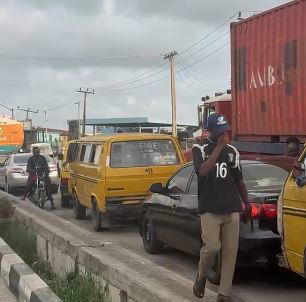
The Ports Authority Police (Western Command) has distanced itself from the persistent gridlock caused by petroleum tankers along the Mile 2–Apapa–Kirikiri corridor, saying the root causes of the traffic congestion lie beyond the powers of the Police.
Speaking in an interview with Vanguard, the Police Public Relations Officer (PPRO) of the command, Assistant Superintendent of Police, ASP Isaac Hundeyin, said the section of the expressway from Mile 2 towards Apapa Wharf does not fall under the operational jurisdiction of the Ports Authority Police.
According to him, the stretch from Mile 2 through Kirikiri to Apapa Wharf is primarily covered by other Police formations, while the Ports Authority Police is responsible for security within the port environment, including the terminals, tank farms, waterfronts and Tin Can Island Port.
He explained that despite the jurisdictional limitations, the command works closely with the Lagos State Police Command, the Nigerian Ports Authority (NPA), the Nigerian Union of Petroleum and Natural Gas Workers (NUPENG) and other stakeholders to ensure traffic is managed and security maintained within the port corridor.
“The traffic was not caused by the police, but part of our mandate is to ensure there is order on the roads. We are collaborating with the Lagos State Police Command, NPA and the unions to manage the situation,” he said.
Responding to concerns that the congestion originates from activities around the ports and should therefore fall under the responsibility of port police, Hundeyin challenged the basis of such claims, urging that attention should instead be focused on the actual causes of the gridlock.
He noted that investigations have consistently identified inadequate truck parks, insufficient loading bays and operational challenges among terminal operators as major factors responsible for the recurring traffic crisis.
“The police cannot provide loading bays or transit truck parks. Those are the responsibilities of the terminal operators and the NPA,” he stated.
According to the police spokesman, officers remain on ground to regulate traffic, prevent disorder and ensure that criminal elements do not exploit the prolonged congestion to attack motorists and other road users.
“Our physical presence is to manage traffic and deter crime. We cannot solve infrastructure problems that belong to private operators,” he added.
On allegations of misconduct and abuse by enforcement personnel along the corridor, Hundeyin denied that the police deliberately contribute to the gridlock.
He maintained that any operational issues linked to truck movements are more likely to involve unions, terminal operators and other stakeholders rather than the police.
“The police would not intentionally create traffic or hardship for members of the public. Whatever disputes exist often involve the unions and terminal operators. What is required is a permanent solution to those issues because the police are also overstretched,” he said.
He further explained that where labour disputes are responsible for operational disruptions, there are legal limits to police intervention, noting that such matters may ultimately require industrial dispute resolution mechanisms.
According to him, the role of the police in such circumstances is to engage all parties, maintain law and order, facilitate dialogue and prevent any breakdown of peace while efforts are made to resolve the underlying issues.
When asked why the police could not establish a special task force to permanently tackle the gridlock, Hundeyin said the suggestion would be forwarded to the appropriate authorities for consideration.
“The suggestions you have raised will be conveyed to the higher authority so that we can forge ahead and make headway,” he said.
The post Tank farm operators, unions responsible for Mile 2–Apapa traffic gridlock — Police appeared first on Vanguard News.