Super Eagles and the curse of white ‘Naija’ jersey
 SKAiF NewsNG SNN
By Douglas Baye-Osagie
The recent World Cup qualification exit has sparked a lot of emotions, and it’s time to take a closer look at the Nigeria Football Federation’s (NFF) role in this debacle. The issue of jerseys and team identity is a crucial part of sports excellence. Tradition dictates that a home team wears a particular color, irrespective of whether it clashes with that of the away team. It’s the away team that should change their colors, not the home team.
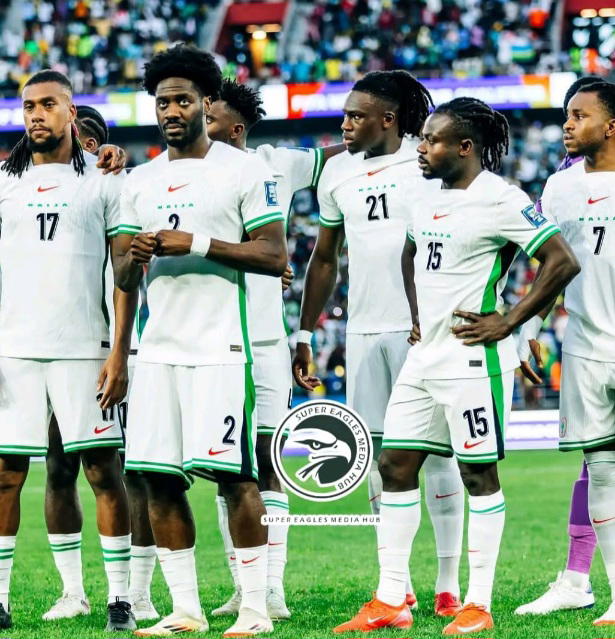
The current Super Eagles players have stopped wearing the traditional green jerseys with “Nigeria” emblazoned on them, opting instead for the nickname “Naija”. This is unacceptable. “Naija” is not the official name of our country; it’s a colloquialism. Nigeria is a name that represents our nation’s history, culture, and identity, dating back to 1960 when we gained independence.
I can’t remember Nigeria playing with white jerseys at home in a qualifying game until the current federation came on board. It’s an affront to our identity, and the players don’t understand the “curse” of the white jersey at home ground. I remember the inquest that followed after we lost the Nations cup finals on home ground in Lagos against Cameroon in year 2000. Some traditional football fans said we lost because we played against ourselves by wearing an away white jersey at home.
Recently, we played with white jerseys against Benin Republic at home, and I’m still wondering who sanctioned it. Against Gabon and DR Congo, Nigeria was meant to be the home team by being the highest-ranked team, but we chose to play with white jerseys in the World Cup playoffs. Who sanctioned this? Was it the federation or the players?
The NFF’s decision to print “Naija” on the jerseys is a travesty. It’s not just about aesthetics; it’s about respecting our national identity. No other team in the world prints their nickname on their jerseys. Can you imagine Brazil or Argentina with nicknames on their chests? Who goes to a serious interview and uses their father’s nickname as their own identity? Would Emeka write “Mekus” or would Babafemi write “Femoo” on an examination sheet? This is how low the football federation has reduced Nigeria’s identity on our football jersey, to “Naija”, on the international stage.
The former NFF president, Anaju Pinnick, introduced this “Naija” nonsense, and it’s time someone called him out. The players are following suit, wearing white jerseys at home, even when green is our traditional color. This lack of attention to detail is embarrassing.
Our past footballers, like Samuel Okwaraji, Stephen Keshi and Peter Rufai, must be turning in their graves seeing “Naija” on the shirts of their successors. The current squad is perpetuating this madness because we seem to have a federation that has failed to read the history of Nigeria and Nigerian football.
The NFF should take a page from other teams who proudly wear their traditional colors at all times. Green is the way to go, and this is part of the lack of patriotic spirit we talk about when we discuss this present set of Super Eagles. Many of the players were born overseas, and it’s not good that the federation introduces the country to them with nicknames.
Our female basketball team, largely made up of American-born Nigerians, are African champions and proudly represent Nigeria on the international stage. We should do the same in football. The current NFF leadership must understand that the nation’s sporting brand should not be casualized. We should go to the AFCON with “Nigeria” on our chests, not “Naija”.
The post Super Eagles and the curse of white ‘Naija’ jersey appeared first on Vanguard News.