State police: Reps pass Bill, scales second reading in Senate
 SKAiF NewsNG SNN
By Henry Umoru & Gift Odekina
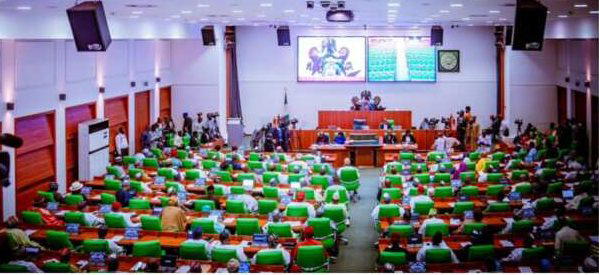
Abuja — The House of Representatives, yesterday, overwhelmingly voted in favour of a constitutional amendment bill seeking to establish state police across the country, marking a major step in efforts to address Nigeria’s worsening security challenges.
Also, the bill scaled second reading in the Senate.
In the House of Reps, the bill secured the support of 289 of the 290 lawmakers in attendance, while only one member voted against it during plenary.
The proposed legislation is among the constitution alteration bills currently being considered by the National Assembly and seeks to amend relevant provisions of the 1999 Constitution to allow states establish and operate their own police services alongside the Nigeria Police Force.
The outcome of the vote reflects growing consensus among lawmakers that the country’s centralised policing structure has become inadequate in tackling rising cases of banditry, kidnapping, terrorism, communal clashes and other forms of insecurity across the federation.
For years, proponents of state police have argued that governors, as chief security officers of their respective states, should have greater control over policing and internal security, insisting that locally recruited officers would possess better knowledge of their communities and respond more effectively to threats.
Opponents, however, have expressed concerns that state police could be abused by state governments for political purposes, particularly during elections and periods of political tension.
Speaking during debates preceding the vote, lawmakers in support of the proposal maintained that sufficient constitutional safeguards can be put in place to prevent abuse to enhance grassroots security.
The approval by the House represents one of the most significant constitutional reforms considered by the 10th National Assembly and aligns with longstanding calls by security experts, traditional rulers, governors and civil society groups for the decentralisation of policing in Nigeria.
The bill will now proceed through the constitutional amendment process, requiring concurrence by the Senate and approval by at least two-thirds of the Houses of Assembly of the states before it can be transmitted for presidential assent.
Passes second reading in Senate
At the Senate, the bill for the Establishment of State Police and for Related Matters (Sixth Alteration), 2026 (SB. 794), sponsored by the Senate Leader, Senator Opeyemi Bamidele (APC, Ekiti Central), passed second reading.
When it was presented, yesterday, for consideration, the bill enjoyed broad support among all senators across political divides.
President of the Senator Godswill Akpabio, thereafter, referred it to the Senate Ad-hoc Committee on the Review of the 1999 Constitution chaired by the Deputy President of the Senate, Senator Jibrin Barau(APC, Kano North) for further consideration, scrutiny and will report back to the Senate.
In his presentation of the general principles of the bill, Bamidele highlighted the national significance of creating a state police among the dwindling power of the Nigeria Police to ensure internal stability.
He noted that the bill was sponsored as one of the measures to strengthen internal security architecture across the Federation, explaining that the bill sought to modernise Nigeria’s security architecture by establishing Federal and State Police structures.
Senators, mostly from the North, spoke in favour of the establishment of state police, saying creation of State Police will provide a lasting solution to the insecurity problem in the country.
In his contribution, Chief Whip of the Senate, Senator Tahir Monguno(APC, Borno North) who expressed strong support for the proposed state police Bill, said that its passage will help address the proliferation of various vigilante groups operating across the country.
Details of proposed constitutional amendments for establishment of State Police
1. Establishment of Federal Police and State Police (New Section 214)
• Two distinct police bodies are constitutionally established:
• (a) the Federal Police
• (b) State Police (one per State, established by State law)
The National Assembly must pass an Act prescribing:
• Structure, organisation, administration, and powers of the Federal Police
• Framework and guidelines for the establishment of State Police
• State Police cannot commence operational policing until:
• Established by a Law of the State House of Assembly, and
• Certified as meeting national minimum standards (prescribed by an Act of the National Assembly)
• Transitional provision: Until a State Police becomes operational, the Federal Police continues all policing functions in that State. After commencement, the Federal Police handles federal policing functions and may provide assistance to the State Police.
2. Responsibilities and Non-Interference (Section 214)
Federal Police is responsible for:
• Maintenance of public security, public order, and security of persons/property throughout the Federation (to the extent provided by the Constitution or National Assembly Act).
• Similar functions within a State to the extent the State has legislative power under the Constitution.
Key safeguard against federal overreach (Section 214(6)):
The Federal Police shall not interfere with State Police operations or a State’s internal security affairs except in these limited cases:
• To contain serious threats where there is a complete breakdown of law and order and the State Police is unable to respond.
When the Governor requests intervention
• When a State Police is unable to function due to administrative, financial, or other problems.
Any such intervention requires prior approval by the National Police Council.
Federal Capital Territory (FCT): Fully under the jurisdiction and operational control of the Federal Police.
3. Leadership and Command (New Section 215)
• Federal Police: Headed by the Inspector-General of Police (IGP).
• Appointed by the President on the advice of the National Police Council, from serving members of the Federal Police.
• Subject to confirmation by the National Assembly.
• The IGP has command over the entire Federal Police, including contingents in States.
• The President (or authorised Minister) may give lawful directions on public safety and order; the IGP must comply.
• State Police: Headed by a Commissioner of Police (CP).
• Appointed by the Governor on the advice of the National Police Council, from serving members of the State Police.
• Subject to confirmation by the State House of Assembly.
• The Governor (or authorised Commissioner) may give lawful directions on public safety and order; the CP must comply.
• If the CP believes a direction is unlawful or contradicts general policing standards, the matter can be referred to the National Police Council (whose decision is final).
4. Removal of Top Officers (New Section 216)
• IGP: Removed only by the President on the recommendation of the National Police Council for specified grounds (grave misconduct, breach of Police Act/Regulations/Code of Conduct, conviction for fraud/dishonesty, bankruptcy, or mental incapacity). Requires two-thirds majority approval of the National Assembly.
• State Commissioner of Police: Removed only by the Governor on the recommendation of the National Police Council for similar grounds. Requires two-thirds majority approval of the State House of Assembly.
5. Funding Support (New Section 216A)
The Federal Government shall provide grants or aids to State Police on the recommendation of the National Police Council, subject to approval by the National Assembly.
6. Oversight Bodies
National Police Council (restructured and renamed from the old Nigeria Police Council; new composition and expanded functions in Third Schedule):
• Broad membership including: Chairman (Presidential appointee confirmed by NA), Attorney-General of the Federation, serving senior Federal Police officer, Attorneys-General of all States, retired Commissioners of Police (one per geo-political zone), representatives of NHRC, Public Complaints Commission, NLC, NBA, NUJ, and Traditional Rulers’ Councils.
• Key functions: Appointment and discipline of Federal Police officers (except IGP); recommending State top officers (CP, DCP, ACP) to Governors based on State PSC lists; supervising Federal and State Police activities (within constitutional limits); setting standards for training, intelligence, forensics; assisting State Police on request.
State Police Service Commission (new body established for each State in Third Schedule, Part II):
• Composition: Chairman (appointed by Governor, confirmed by State HA), representatives of NHRC, Public Complaints Commission, NLC, NBA, NUJ, retired Assistant Commissioners of Police (one per senatorial district), and Traditional Rulers’ Council.
• Functions: Recommending three qualified candidates for CP/DCP/ACP to the National Police Council; appointment, discipline, and removal of State Police officers below the rank of Assistant Commissioner of Police; other functions as prescribed by Constitution or National Assembly Act.
7. Legislative Framework (Second Schedule – Concurrent Legislative List)
• National Assembly may make laws on: establishment/organisation/administration/powers/duties of Federal Police; powers/duties of State Police; national minimum standards for both; policing standards, inspection, certification, complaints mechanisms, criminal information systems, inter-governmental cooperation, federal intervention, use of force, firearms, grants, and accountability.
• State Houses of Assembly may make laws for the establishment, organisation, administration, funding, and oversight of their State Police — but must comply with the Constitution and valid National Assembly Acts.
• States may set higher standards than national minimums but not lower.
• National Assembly laws cannot give federal authorities routine command, deployment, appointment, promotion, transfer, discipline, or control over State Police personnel (except for explicitly authorised federal intervention).
8. Other related changes
• Updates to various constitutional provisions (e.g., Sections 34, 35, 39, 42, 84, 89, 129, 153) to replace references to “Nigeria Police Force” with appropriate “Police”, “Federal Police”, or “State Police” terminology.
• Exclusive Legislative List adjustments (e.g., light arms for policing purposes; fingerprints/biometrics/forensics shared with State Police; Federal Police listed separately).
• Consequential amendments to the Third Schedule for the new bodies and their compositions/powers.
The post State police: Reps pass Bill, scales second reading in Senate appeared first on Vanguard News.