STATE POLICE: Governors split as insecurity worsens nationwide
 SKAiF NewsNG SNN
•Most states back move; others warn of abuse, repression
•North divided; Kaduna, Plateau, Kano, Taraba set pace
•Tinubu can’t create it by fiat — Afenifere
By our reporters
The push for state police gained fresh momentum at the weekend as rising insecurity across the country forced governors, lawmakers and stakeholders into a defining debate, with most states backing the proposal while others warned of abuse, repression and political misuse.
From the North to the South, the fault lines are clear: while many states are already laying structures for decentralised policing, critics insist Nigeria lacked the safeguards to prevent governors from turning such outfits into instruments of control.
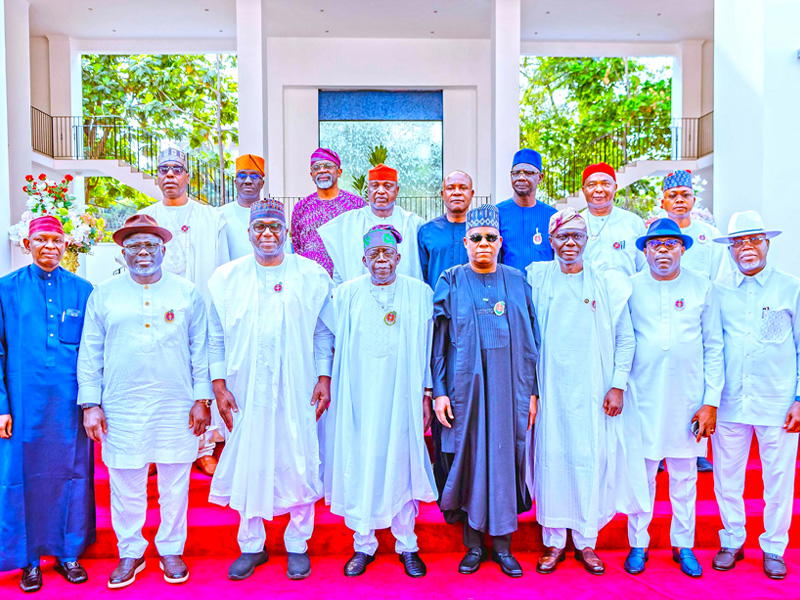
While governors of Ogun State, Dapo Abiodun, Caleb Mutfwang of Plateau State, Abba Yusuf of Kano State and those of Zamfara, Taraba, Kebbi, Adamawa, Nasarawa and Kwara states argued that state police was the way to go and had started putting measures in place to actualise community policing, Borno State governor, Babagana Zulum and his Sokoto State counterpart, among others, said Nigeria was not matured enough for state police.
The development comes amid worsening insurgency, banditry, kidnapping and communal clashes that have stretched the centrally controlled Nigeria Police Force to its limits.
President Bola Tinubu has repeatedly stated his desire for state police to combat insecurity.
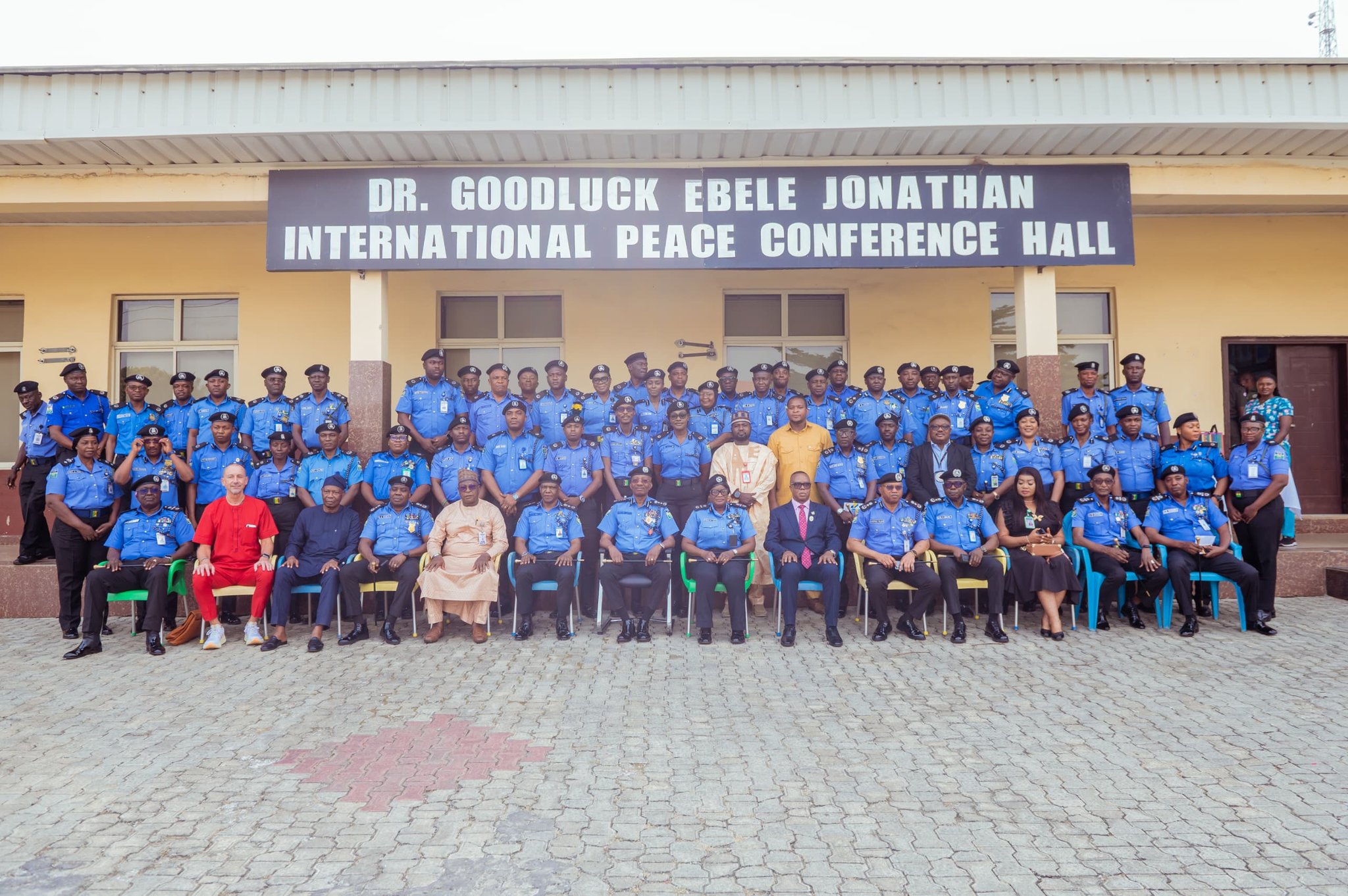
Recently, the new Inspector General Police, Olatunji Disu, set up a committee to lay out measures to actualise state police.
To be actualised, the National Assembly must amend the Constitution to accommodate state police with the backing of at least 24 or two-thirds of the 36 states of the federation.
North divided, but momentum builds
Across the North, the region hardest hit by insecurity, support is growing but not without resistance.
Kaduna has taken the lead, training over 300 personnel under its vigilance service, while Plateau has recruited about 1,400 operatives and set up an advisory committee.
Governor Caleb Mutfwang declared that “the time for the creation of state police is now,” arguing it would ensure faster response to threats.
Kano has also deployed over 2,000 personnel under a neighbourhood watch scheme, with Governor Abba Yusuf saying “it makes us safer… we are professionalising our community security approach.”
Zamfara, Taraba, Kebbi, Adamawa, Nasarawa and Kwara are aligning with the proposal, with some already funding or expanding local security outfits.
However, opposition remains strong.
Borno State governor, Prof. Babagana Zulum, warned: “Honestly speaking… I will not support it. Nigeria is not mature for state police.
“Some state governors can use it to wipe away other tribes… if half of the power is given… Nigeria will be in problem.”
In Sokoto and other states, stakeholders echoed fears of political intimidation.
“We must be careful not to create a structure that could be used against opponents,” a political leader warned.
South backs move, rolls out structures
In the South-West and South-South, support is stronger, with several states already building frameworks seen as precursors to state policing.
Ogun State Governor, Dapo Abiodun, described state police as “non-negotiable,” while Oyo, Ondo and Ekiti said outfits like Amotekun have laid the foundation.
In the South-South, Bayelsa, Delta and Akwa Ibom are pushing ahead with community-based security systems.
Bayelsa’s Community Safety Corps, drawn from all wards, is already operational, while Akwa Ibom’s 5,000-strong Ibom Community Watch complements federal agencies.
Delta said it has invested in police infrastructure across its 25 councils.
However, Edo State said it would await clear federal government guidelines.
Despite the momentum, concerns persist.
Environmentalist, Alagoa Morris, warned: “This clime is not yet matured… there is apprehension of misuse by state authorities.”
While consensus builds in the South-South for state police, the debate underscores a delicate balance between efficiency and accountability, with many insisting that without strong safeguards, the initiative could either strengthen security — or deepen political control.
Abia, otherssignal readiness
In the South-East, a retired Deputy Inspector General of Police, Azubuko Uda, said Abia State was ready to lead in implementing state police, noting that decentralisation would improve funding, welfare and operational efficiency.
N’Assembly, states must act— Afenifere
National Organising Secretary of Afenifere, Mr. Kole Omololu, said President Tinubu’s advocacy for state police, though necessary, cannot materialise without constitutional amendment.
According to him, “the burden of expedition lies more with the legislature than with the Executive,” noting that policing remains on the Exclusive Legislative List.
He stressed that the President “cannot, by executive fiat, create state police,” explaining that Section 9 of the Constitution requires approval by two-thirds of the National Assembly and at least 24 states Assembly.
Omololu, however, urged the Executive to transmit a “clearly drafted constitutional amendment bill,” while calling on lawmakers to prioritise the reform and governors to mobilise their Assemblies for ratification.
Senate moves to address concerns
However, the Senate has assured that concerns of Nigerians in this regard would be addressed.
Speaking in Abuja when he received, on a courtesy call, members of the steering committee of the Nigeria Police Force, established to develop a framework for the establishment of State Police, the Deputy President of the Senate, Senator Barau Jibrin, APC, Kano North, commended the Inspector General of Police, Olatunji Disu, for working in tandem with President m Tinubu’s Renewed Hope Agenda to ensure the country is fully secured.
He had on March 4, 2026, inaugurated an eight-member committee to develop a framework for state police.
Senator Barau, who chairs the Senate Committee on the review of the 1999 Constitution, received the Committee led by its Chairman, Professor Olu Ogunsakin.
In a statement by his Special Adviser, Media and Publicity, Ismail Mudashir, the Deputy Senate President tasked the committee to work on measures to promote accountability, safeguard against abuse, and embark on an enlightenment drive.
He said: “ You must, most importantly, work on a structure to create a robust public safety mechanism and engender a secure nation.
“ During public hearings of the Senate on the amendments of the 1999 Constitution, Nigerians raised their concerns and fears about the establishment of state police. We should create a system that allays their fears.”
One of the bills before the Committee on the Review of the 1999 Constitution is the one seeking to amend the Constitution to allow for the establishment of State and Community Police to enhance local law enforcement capabilities and community engagement through a structured legal framework.
To promote broad participation and inclusivity, the committee on the review of the Constitution under the chairmanship of Senator Barau conducted zonal public hearings in six locations across the country’s six geopolitical zones, giving all stakeholders the opportunity to contribute their quota to the amendment process.
Earlier, Professor Ogunsakin, briefed Senator Barau on the mandate of the committee and sought the Senate’s advice and contributions to enrich its report.
Why state police is inevitable
Backing the proposal, public analyst, Ayo Fadaka, described the absence of state police as “an aberration,” arguing that security is inherently local and communal.
Similarly, stakeholders across the South-West, including former SDP chairman in Ondo State, Stephen Adewale, and Oyo State Advisory Council Chairman, Chief Bolaji Ayorinde, SAN, said decentralised policing would improve intelligence gathering and response time. They, however, cautioned that funding, training, discipline and accountability must be addressed to prevent misuse.
Reform long overdue -Experts
Security experts insisted that decentralised policing was inevitable, given Nigeria’s size and diversity
they also backed the move, citing improved intelligence, faster response and job creation, but warned against political interference. A former NDLEA director, Braimah Nasiru, said: “The only fear… is abuse by political office holders.”
The road ahead
While momentum builds nationwide, stakeholders agree that success will depend on constitutional amendments, political will, funding, training and strong oversight.
For now, Nigeria stands at a crossroads. As one stakeholder put it: “State police is achievable. The question is whether the political will matches the urgency.”
The post STATE POLICE: Governors split as insecurity worsens nationwide appeared first on Vanguard News.