Slavery: Humanity found its voice, but US-Europe want it silenced, by Owei Lakemfa
 SKAiF NewsNG SNN
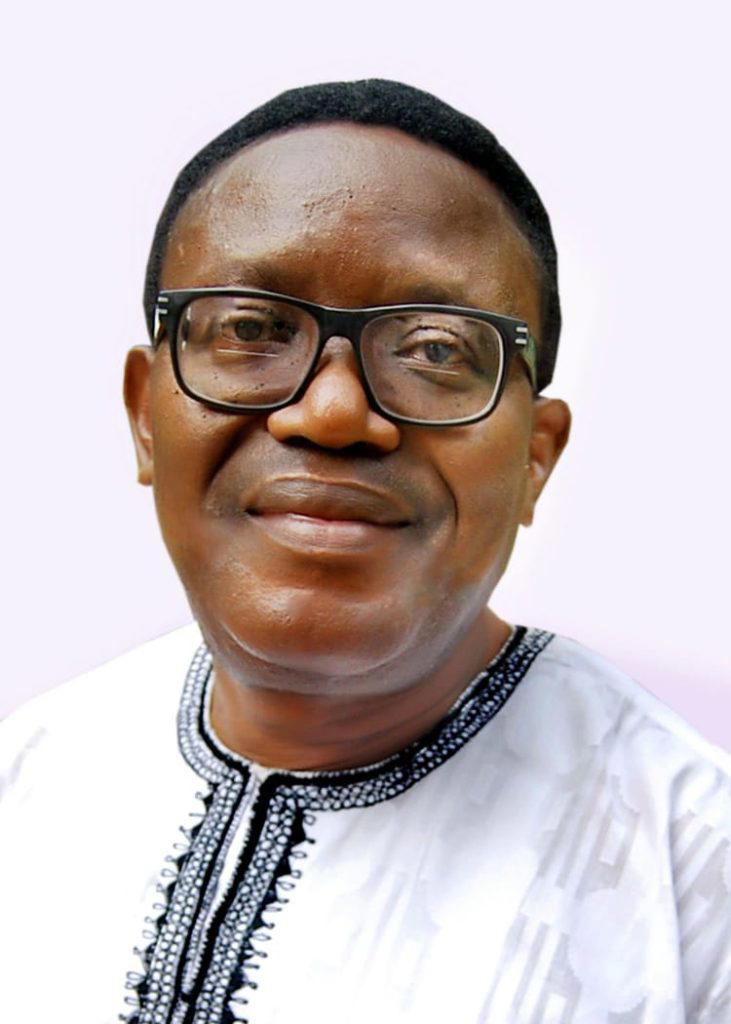
Humanity found its collective voice on March 25, 2026 by situating the 400 years of the Trans-Atlantic Slave Trade and categorising it. Also, it sought ways of honouring the millions who lost their lives in the evil trade, and how justice can be ensured. This United Nations, UN, Resolution was passed under the theme: “Commemoration of the abolition of slavery and the transatlantic slave trade.”
It was not surprising that there was a powerful group angered by this historic resolution. The entire Member countries of the European Union, EU, who are heirs and beneficiaries of the evil ‘free trade’ were opposed to it. The United Kingdom, whose kingdom came through territorial looting and appropriating the gold and wealth created by the enslaved, was also unhappy. But while these two groups showed their unhappiness in measured tones and by abstaining during the vote, the United States, US, the enfant terrible Britain gave birth to, was angry and condemned the rest of humanity for even raising the matter.
On the eve of the vote, the spokesperson of the 54 African countries who had formed a bloc with the Caribbean, Latin America and Asia-Pacific, gave an historic perspective of the resolution. President John Dramani Mahama of Ghana, told the world: “This resolution is a pathway to healing and reparative justice. This resolution is a safeguard against forgetting.” In those 17 words, he told humanity, first, not to forget its past, no matter how ugly. Secondly, to adopt a healing process which includes remembering the millions who needlessly lost their lives; and thirdly, the issue of reparation which he beautifully presented as “reparative justice”.
The struggle for justice in the context of the evil called slave trade has been on for centuries. Marcus Garvey was framed up in the US, imprisoned and deported over the matter. Individuals like Moshood Kashimawo Abiola of Nigeria had pursued those same goals. Also, the 15 countries of the Caribbean Community, CARICOM, had in March 2014 adopted their “Ten- Point Plan For Reparatory Justice”. In it, they campaigned along the lines of social justice. The Caribbean governments had a dozen years ago, directly accused European governments of being the owners and traders of enslaved Africans. Europe, they said, instructed genocidal actions upon indigenous communities and created “the legal, financial and fiscal policies necessary for the enslavement of Africans.”
They had demanded full apology, reparation, debt cancellation and the establishment of good public health, and wiping out illiteracy in the region. The CARICOM which strongly voted for the UN Resolution, called on the international community to move “from remembrance to action”.
The Group of Latin America and Caribbean States, GRULAC, also adopted the CARICOM position.
The Asia-Pacific States Group, said the resolution “reminds us of our shared responsibility” to preserve historical truth. It added: “Only through remembrance, reflection and action can we ensure that such atrocities are never repeated.”
In the UN Resolution, slavery was characterised as the gravest crime against humanity. A total 123 countries voted for the resolution, 52 abstained, while three voted against. Needless to say, the US was the leader of the pack that rejected the resolution. Its stated reasons reveal the mindset of an adult trapped in a child’s brain.
Despite the cries of the US, UK, Israel, Argentina and the European Union, the rest of humanity passed the resolution which emphasized the trafficking of enslaved Africans and racialised chattel enslavement of Africans as the gravest crime against humanity by reason of the definitive break in world history, scale, duration, systemic nature, brutality and enduring consequences that continue to structure the lives of all people through racialised regimes of labour, property and capital.”
The US was in the forefront of the failed attempts to shoot down the resolution. Its Representative to the United Nations Economic and Social Council, Ambassador Dan Negrea, said: “We regret that the United States must once again remind this body that the United Nations exists to maintain international peace and security. It was not founded to advance narrow, specific interests and agendas, to establish niche international days, or to create new costly meeting and reporting mandates. This resolution does all three.” Contrary to the US arguments, recognising historical injustice and taking steps to correct them actually advance the international peace and security goals of the UN. How can the US be weeping that the UN has established international days for worthy causes like those for International Day of Peace, World Health Day, International Women’s Day and Human Rights Day?
Negrea scandalously added: “The United States also does not recognize a legal right to reparations for historical wrongs that were not illegal under international law at the time they occurred.” In this, the US is claiming that slave trade was legal until its abolition; so it was not a crime!
The US also claimed the resolution is a criminal contraption as it is “the cynical usage of historical wrongs as a leverage point in an attempt to reallocate modern resources to people and nations who are distantly related to the historical victims.”
It also argued that the resolution declaring slave trade as ‘the gravest crime against humanity’ amounted to an attempt to rank crimes against humanity in an hierarchical order: “The assertion that some crimes against humanity are less severe than others objectively diminishes the suffering of countless victims and survivors of other atrocities throughout history. This is not a competition. This attempted ranking is also simply incorrect as a matter of law.” This specious argument, gives the impression that the US establishment cares about the victims.
The EU and UK are one with the US in trying to divert issues by claiming the rest of humanity is building an hierarchy of crimes.
Ghana Foreign Minister Samuel Okudzeto Ablakwa on behalf of the African Group reacted to these Americo-European claims. He emphasized that the declaration in the resolution is not about legal hierarchies but attempts to “complete history by establishing a principled framework for reconciliation grounded in truth and rooted “not in retribution, but in moral recognition”.
The people we have to be very careful about are not the Americans who are plain talking, but the Europeans who pretend to be partners with Africa. One of our ancestors, Franz Fanon, whose forebears were trafficked through the Atlantic Ocean, in 1961,warned Africans: “Let us waste no time in sterile litanies and nauseating mimicry. Leave this Europe where they are never done talking of Man, yet murder men everywhere they find them, at the corner of every one of their own streets, in all the corners of the globe…When I search for Man in the technique and the style of Europe, I see only a succession of negations of man, and an avalanche of murders.
The post Slavery: Humanity found its voice, but US-Europe want it silenced, by Owei Lakemfa appeared first on Vanguard News.