Reps amend Electoral Act to allow electronic service of court processes
 SKAiF NewsNG SNN
By Gift ChapiOdekina
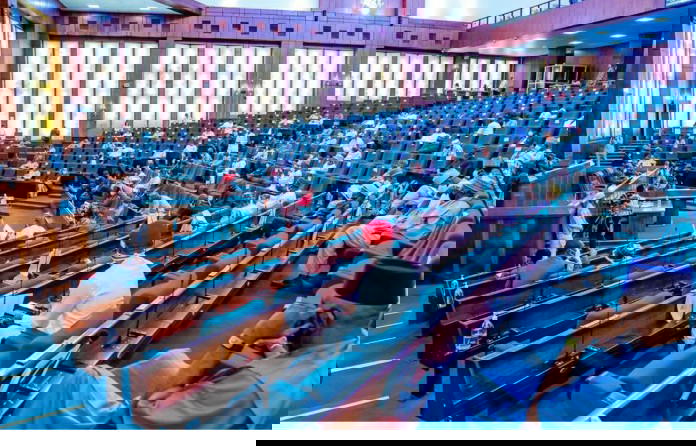
The House of Representatives on Wednesday amended the Electoral Act 2026, introducing a more flexible and technology-driven framework for the service of election petition processes as part of preparations for the 2027 general elections.
The amendment followed the adoption of a report by the House Committee on Electoral Matters at the Committee of the Whole, presided over by Deputy Speaker Benjamin Kalu.
The House had earlier passed two related bills for second reading before subjecting them to clause-by-clause consideration.
Presenting the report, Chairman of the Committee on Electoral Matters, Adebayo Balogun, said the proposed changes were designed to eliminate ambiguities in pre-election litigation, improve efficiency, and reduce delays caused by technical bottlenecks.
He explained that the amendments aim to “provide clarity and certainty on the jurisdiction of courts in pre-election matters, enhance timely adjudication, introduce flexible and technology-driven modes of service, and curb delays associated with the service of court processes.”
One of the key amendments to Section 29(8) now mandates political candidates to provide both physical and electronic contact details, including email addresses and phone numbers. It also recognises multiple modes of service such as personal delivery, registered post, and electronic channels like email and SMS.
Under the new provision, service is deemed valid once there is proof of transmission, including electronic delivery confirmations or system-generated records. It further states that a respondent’s failure to acknowledge receipt will not invalidate the service.
The House also introduced a new Section 29A to clearly define jurisdiction in pre-election matters. The amendment vests original jurisdiction in the Federal High Court for disputes involving National Assembly, State Assembly, and governorship elections, with appeals terminating at the Court of Appeal.
For presidential pre-election disputes, the Court of Appeal is granted original jurisdiction, with final appeals lying at the Supreme Court.
“No court shall entertain any pre-election matter except in accordance with the provisions of this section,” the amendment stipulates.
Balogun noted that reliance on physical service alone had become “outdated and susceptible to manipulation, evasion, and logistical challenges,” adding that technological alternatives offer more credible and verifiable solutions.
He further observed that inconsistencies in the current legal framework had led to conflicting judicial decisions, while delays in serving court processes had hindered the timely resolution of electoral disputes.
According to him, the amendments align with Section 285 of the 1999 Constitution (as amended) and reflect international best practices in electoral dispute resolution.
“The delineation of jurisdiction will significantly reduce preliminary objections and expedite hearings, while granting original jurisdiction to the Court of Appeal in presidential matters reflects the urgency and importance of such cases,” he said.
Balogun expressed confidence that the reforms would “improve the administration of electoral justice, reduce frivolous objections, and strengthen the credibility of the electoral system.”
Meanwhile, an attempt by a lawmaker from Sokoto State, Abdussamad Dasuki, to raise concerns over the possibility of electronic messages being diverted to spam folders was dismissed during deliberations.
Responding, both Kalu and Balogun clarified that the amendment does not replace physical service but rather expands available channels to ensure efficiency and reliability.
The post Reps amend Electoral Act to allow electronic service of court processes appeared first on Vanguard News.