Re-election bid: Why is Tinubu scared of winning fair and square? By Olu Fasan
 SKAiF NewsNG SNN
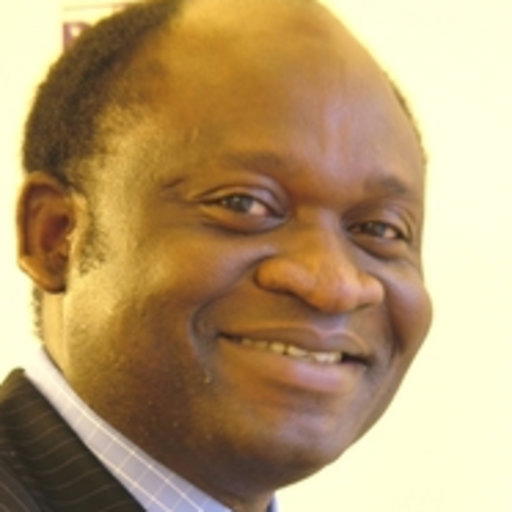
By now, everyone knows President Bola Tinubu’s approach to capturing power. In his own words, it is: “At all costs, fight for it, grab it, snatch it and run with it”. That was how he put it at a pre-election event in London in December 2022. Many would swear that he deployed this buccaneering strategy to secure the presidency in 2023, arguably helped by INEC’s mysterious “technical glitch”. But right from when he became president in May 2023, Tinubu has set his gaze on his re-election bid in 2027, seemingly determined to employ the same power-grabbing strategy.
One element of the strategy is to disable the main opposition parties. Thus, Tinubu used Nyesom Wike to cripple the PDP and “hold it down” for his re-election bid and used other willing tools to sabotage the ADC. Recently, Tinubu half-jokingly said he would send the Senate President Godswill Akpabio “to scatter the other side”. Well, “scattering” opposition parties is a core element of Tinubu’s election strategy. Another is to corral Nigeria’s 36 state governors to endorse his re-election; indeed, through some extraordinary horse-trading, he co-opted all the opposition governors, bar two or three, into his party. It’s a classic Tinubu-esque act of one-upmanship and political control.
Yet, in a credible election, none of these can guarantee President Tinubu’s re-election next year, as we saw recently in Hungary, where Viktor Orbán, the seemingly invincible autocratic prime minister, lost his re-election bid in a massive assertion of people power. But how far is Tinubu prepared to go to retain power? Would he allow a free and fair poll? Or would he abuse his incumbency and misuse state resources, particularly INEC, the judiciary and the security agencies, to distort the level-playing field and secure an unfair electoral advantage?
Last week, Tinubu told his opponents: “You can’t scare me off!” Fair enough! But is he scared of the electorate? And is he scared of winning a second term fair and square? Tinubu said: “I’ve been through this path before. And if I have to come back over and over again, I’ll do the same thing.” Do exactly what again? Grab, snatch and run with power at all costs? President Tinubu may not be scared of his opponents, he should, in a true democracy, be scared of the voters. Call me cynical, if you like. But given his by-hook-or-by-crook approach to gaining power, it is not cynical to ask if President Tinubu is prepared to win fair and square, an indisputable victory achieved cleanly.
Let me say unequivocally with utmost sincerity. I am utterly agnostic about next year’s presidential election. I have absolutely no sympathy with any political party or presidential candidate. Thus, it doesn’t bother me a jot if President Tinubu is returned to power. Indeed, I would congratulate him in this column, but provided he wins in a free, fair, transparent and genuinely competitive election, not one in which all the cards are stacked against the opposition, not one in which INEC and the judiciary are biased and complicit in denying Nigerians a truly credible election, and not one in which the security agencies do the bidding of the president in a partisan election setting. The judiciary, the electoral body(INEC) and the security agencies have rightly been described as “the triangle of compromise” in Nigerian presidential elections because, under the steering influence of the incumbent, the trio are complicit in foisting badly flawed elections on Nigeria. So, the question bears repeating: Is President Tinubu willing to win re-election fair and square?
Sadly, the omens are bad. As things are, Nigeria is heading to next year’s presidential election as an electoral autocracy, not a genuine democracy. An electoral autocracy is a system under which multiparty elections take place in theory, but, in practice, the incumbent uses its power to constrain active opposition participation and deploys supposedly independent state agencies to its advantage. Electoral autocracy is antithetical to liberal democracy, characterised by, among others, competitive, free, and fair elections. Unfortunately, Nigeria’s presidential election next year will almost certainly not be competitive, free and fair. And, in those circumstances, won’t be credible and legitimate!
As I wrote last week, the PDP, under Wike’s iron grip, will not present a presidential candidate for next year’s poll, thanks to the decisions of the judiciary and INEC, which both appear to be acting out a script written by Wike, who wants to “hold PDP down” for Tinubu. The ADC also looks very unlikely to field a credible presidential candidate, again thanks to the decisions of the judiciary and INEC. Last week, President Tinubu welcomed the decisions of the courts and told the opposition to obey them.
“We cannot submit to disobedience of a lawful order of the court,” he said, adding: “We must embrace the judiciary, whether it favours us or not.” Of course, that was self-serving. What if the courts are doing the bidding of the incumbent or the ruling party? What if the courts are being used, as the Nigerian Bar Association put it in a recent statement, to “secure undemocratic political advantage”? Elections should be a verdict on the performance of the incumbent and, thus, should reflect the popular will of the people. But that won’t happen if the people’s will is thwarted by the judiciary, the electoral body and others acting at the behest of, or in sympathy with, the incumbent.
Last week, President Tinubu said that in taking over from President Muhammadu Buhari, he actually took over from himself. Hear him: “The late Buhari was me. He was my partner. And if I took over from him, is that not from me?” In other words, Tinubu admitted that his government is a continuation of the Buhari administration. Indeed, he was right, both administrations being APC-led, and both having emerged through a grubby “you-scratch-my-back-and-I’ll-scratch-yours” Faustian bargain. But while Buhari led a calamitous eight-year presidency, Tinubu has made things – poverty, inequality, insecurity, misery, etc – far worse since 2023. In a genuine democracy, the question Tinubu will face in next year’s presidential election is: are Nigerians better off under APC’s administrations than they were before APC came to power in 2015? There’s no civilised country where a party will go to the electorate after 12 years of catastrophic governance record and be confident of winning.
However, the assumption is that Nigerians don’t vote based on the performance of the incumbent, however appalling; rather, they vote based on ethnicity, religion and, thanks to poverty, how they are told to vote by those from whose tables they eat crumbs. Yet, while the assumption generally holds, it is not always true. For instance, the 2023 presidential election, which Tinubu won narrowly with just 36.6 per cent of the popular vote, showed that Nigerians were willing to vote out a ruling party. Indeed, they did in 2015 when they actually voted out an incumbent president. The outcomes of the 2023 and 2015 presidential elections are evidence that if elections were genuinely competitive, free and fair, incumbency would lose its outsized role in Nigeria’s presidential elections.
So, back to the recurring question: is President Tinubu willing to secure re-election fair and square? Well, truth be told, he can’t win re-election on the record of his party since 2015 or his own since 2023, hence he’s outsourcing his re-election bid to state governors. Yet, although 35 state governors, except Governor Seyi Makinde of Oyo state, have endorsed Tinubu’s re-election bid, power belongs to the people, not state governors. Provided the presidential election is free, fair, transparent and competitive, provided INEC, the judiciary and the security apparatus are not compromised, the popular will of the people will prevail. If that means President Tinubu is re-elected, so be it, but he must win fair and square. Would he? Well, I’m not holding my breath!
*Dr Fasan is the author of ‘In The National Interest: The Road to Nigeria’s Political, Economic and Social Transformation’, available at RovingHeights bookstores.
The post Re-election bid: Why is Tinubu scared of winning fair and square? By Olu Fasan appeared first on Vanguard News.