Politicians jostle for power while 141 million Nigerians sink into poverty — Obi
 SKAiF NewsNG SNN
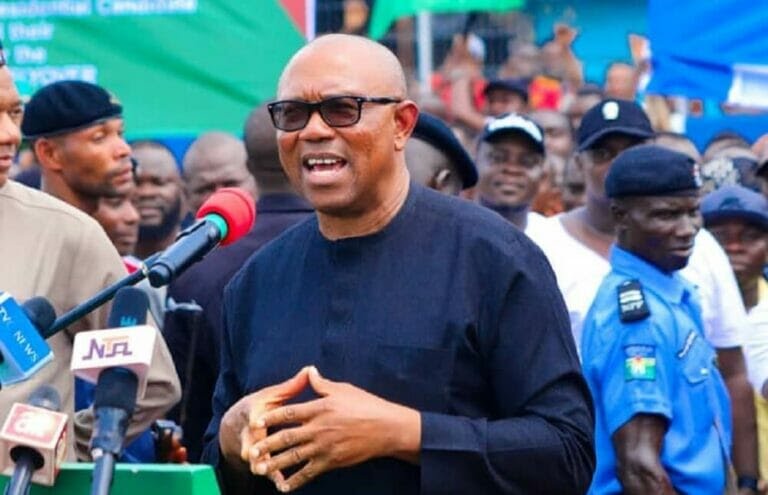
Former Anambra State governor and 2023 Labour Party presidential candidate, Peter Obi, has criticised Nigerian politicians for prioritising internal power struggles and political positions while poverty continues to deepen across the country.
In a statement posted on his verified X account on Friday, titled “While Politicians Jostle, Poverty Deepens,” Obi said political actors scramble for positions and vie for control of party structures, even as millions of Nigerians slide further into poverty.
“As we politicians scramble for positions and vie for control of party structures — often sharing posts even before elections are concluded — a harsh truth confronts our nation: a staggering 62% of Nigerians — roughly 141 million people — are ensnared in poverty,” he said.
Citing data from the World Bank, Obi noted that the number of Nigerians living in poverty rose from 81 million in 2019 to about 139 million in 2025, with projections indicating the figure could reach 141 million by 2026.
“In just one year, from 2023 to 2024, the number of impoverished Nigerians jumped from 115 million to 129 million — an increase of 14 million individuals,” he said, adding that “an additional 26 million Nigerians will be thrust into poverty between 2023 and 2026.”
Obi referenced the Nigeria Economic Outlook 2026 report, titled “Turning Macroeconomic Stability into Sustainable Growth,” which he said reinforces projections that 62 per cent of Nigerians will be living in poverty by 2026.
“Despite recent attempts at stabilization, the report underscores that weak real income growth and persistently high living costs will continue to exacerbate poverty,” he said, adding that “Most Nigerians will not experience income growth sufficient to counter escalating costs.”
He warned that although headline inflation may moderate, high prices driven by energy, logistics and exchange-rate pressures would continue to hurt households, particularly the poor.
“Low-income households are especially at risk, as food constitutes up to 70% of their total spending, leaving them acutely vulnerable to food inflation and price shocks,” Obi said.
According to him, rising poverty is weakening purchasing power, reducing demand and putting pressure on micro, small and medium-sized enterprises that depend on local consumers.
“A sustained increase in poverty could unravel public finances, erode human capital, and impede economic recovery unless we see robust job creation, productivity growth, and effective social protection programs,” he added.
Obi contrasted Nigeria’s situation with countries such as India and Indonesia, which he said had significantly reduced poverty through investments in education, health and social protection.
“India successfully reduced extreme poverty from 35–40% in 2000 to an astonishing 5.3% today,” he said, adding that Indonesia cut poverty from about 30 per cent to roughly eight per cent over the same period.
He lamented that Nigeria, by contrast, saw poverty rise from about 40 per cent in 2000 to 62 per cent today, noting that the country has remained in the low human development category for 25 years.
“The fact that 141 million Nigerians are living in poverty is not merely a national failure; it is a blatant threat to our future,” Obi said.
He called for urgent structural reforms, stressing that “macroeconomic stability, investment in agriculture, food supply, logistics, education, health, productivity, and large-scale job creation are no longer optional; they are imperative.”
The post Politicians jostle for power while 141 million Nigerians sink into poverty — Obi appeared first on Vanguard News.