Petrol price hike deepens hardship for FCT motorists
 SKAiF NewsNG SNN
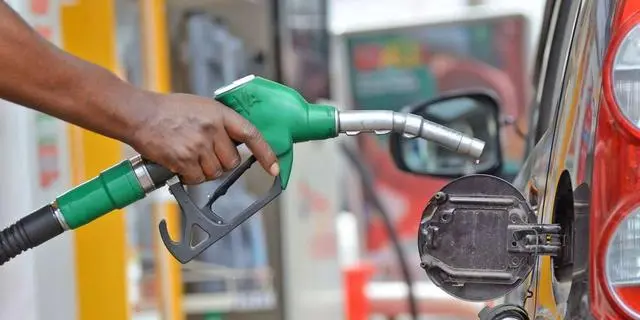
Motorists and residents in the Federal Capital Territory (FCT) have expressed frustration over the recent increase in petrol pump prices, warning that the development has worsened transport costs and living conditions across Abuja.
The News Agency of Nigeria (NAN) reports that fuel prices were adjusted upward on Wednesday, with stations across the city reflecting new rates that have further strained commuters and businesses.
Checks by NAN showed that filling stations which previously sold petrol between N1,261 and N1,295 per litre have now adjusted prices significantly. The Nigerian National Petroleum Company Limited is currently selling at about N1,364 per litre, while major marketers such as MRS, BOVAS, AP (Ardova), and Mobil now sell between N1,364 and N1,370 per litre. Other outlets including AA Rano, Emedab, Empire Energy, and Ranoil are reportedly selling at higher rates ranging from N1,370 to N1,444 per litre.
The continuous upward adjustments have pushed many commercial drivers off the roads, with fewer vehicles available for commuters and transport fares rising sharply. Some residents were seen stranded at bus stops during the week.
A civil servant, Mrs Zainab Idris, said the situation had become unbearable, noting that transport costs were affecting her ability to go to work regularly.
“At times, I do not go to work because there is no money for transportation, and feeding is even a bigger problem,” she said.
She added that many civil servants were now converting their private vehicles into commercial transport to survive rising fuel costs.
Another civil servant, Mr Abdullahi Baba, said he often resorts to commercial transport despite owning a car because fueling it has become unaffordable.
He noted that rising fares were not reducing even when fuel prices were adjusted slightly, calling for government intervention to stabilise the situation.
Business owners have also reported losses. A trader at Garki Market, Aliyu Hassan, said transport costs were increasing the prices of goods, making basic commodities less affordable for low-income households.
Logistics operator, Mr Emeka Obi, called for investment in alternative energy sources and mass transit systems, including compressed natural gas (CNG) and electric vehicles, to reduce dependence on petrol.
Chief Emeka Uzo, a businessman, blamed the removal of fuel subsidy without adequate planning for worsening economic hardship, urging the government to reconsider policy measures to ease pressure on citizens.
A taxi driver, Gbenga Emmanuel, said rising fuel and food costs had made daily survival difficult, noting that many drivers were operating at a loss.
Similarly, ride-hailing driver Bisi Ajayi said high fuel costs had significantly reduced demand for transport services, forcing many drivers out of business.
Some residents also raised concerns about alleged unfair pricing practices among CNG vehicle operators, calling for better regulation.
Hajiya Hafsat Umar, a retired civil servant, urged government to expand CNG infrastructure nationwide, describing it as a more affordable alternative that could help reduce transport costs.
She also appealed for stronger social support systems for retirees and vulnerable citizens facing worsening economic conditions.
Meanwhile, a vegetable seller in Wuse Market, Ibrahim Usman, said rising supply costs had forced him to increase prices, leading to poor sales and potential losses.
An official of the Independent Petroleum Marketers Association of Nigeria (IPMAN) attributed the frequent price changes to market deregulation, explaining that fuel prices are influenced by global crude oil prices and exchange rate fluctuations.
The post Petrol price hike deepens hardship for FCT motorists appeared first on Vanguard News.