One month later: Oriire school children, teachers still missing
 SKAiF NewsNG SNN
Timelines OF The Oriire school abduction crisis
•May 15, 2026: Terrorists abduct pupils and teachers in Oriire
•May 17, 2026: IGP visits affected communities.
•May 18, 2026: Abducted teacher beheaded by kidnappers.
•May 18, 2026: Tinubu condemns killing, orders intensified rescue efforts.
•May 30, 2026: Makinde visits Oriire community.
May 31, 2026: FG delegation visits Oriire.
•June 1, 2026: Teachers embark on strike as protests erupt.
•June 16, 2026: VeryDarkMan leads protest in Ibadan.
By Adeola Badru
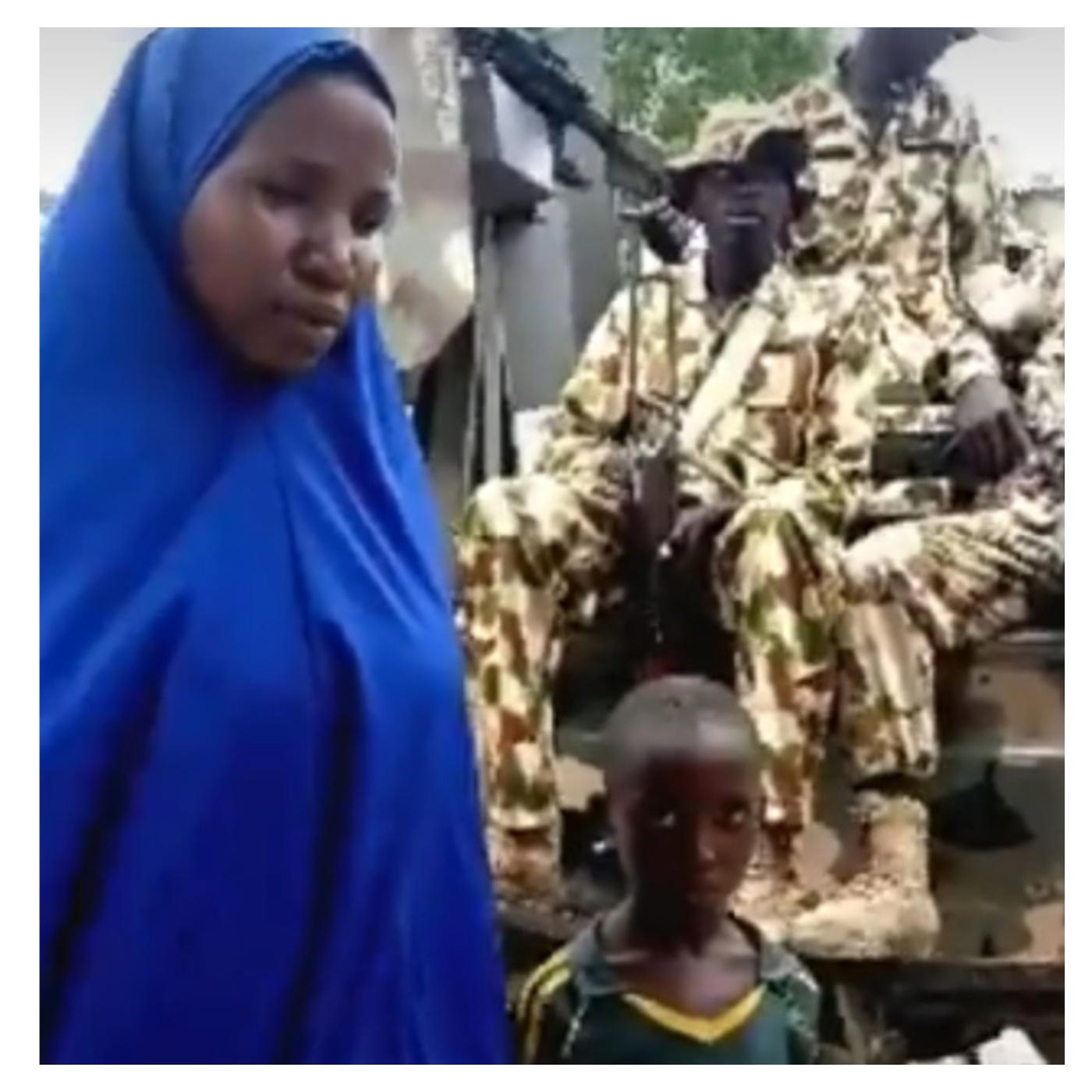
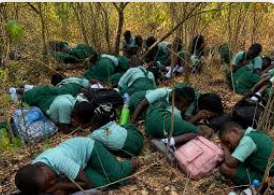
IBADAN— IN the rural expanse of Oriire Local Government Area of Oyo State, one month has passed since pupils and teachers were taken from Ahoro-Esinle and Yawota by terrorists, yet the passage of time has done little to soften the impact.
Instead, it has given the incident a more settled place in the daily consciousness of the affected communities, where uncertainty has gradually replaced shock, and waiting has become a form of routine
That shift from immediate alarm to prolonged anxiety is most visible in households directly affected, where the absence of the abducted has become the agonising reality of family life.
What began as a sudden disruption has evolved into a drawn-out emotional burden, shaped less by what is known than by what remained unanswered, particularly about the condition and whereabouts of the victims.
The uncertainty is compounded by the geography of the crisis, with the abductees believed to be held within forest corridors associated with Oyo National Park.
That terrain, dense and difficult to access, has become a physical and symbolic barrier, one that limited immediate rescue visibility while deepening the psychological distance between families and those they are searching for.
Within that distance, daily life in Oriire has adjusted in uneven ways.
Farming activities, though ongoing, are now marked by caution, while movement between settlements has reduced in frequency and confidence.
Schools in neighbouring areas are also feeling indirect effects, as parents increasingly weighed safety considerations alongside educational needs, revealing how quickly insecurity localised, can influence broader social behaviour.
The emotional strain is not uniform, but it is widely shared. Parents speak less in declarations and more in questions, about survival, health, and possibility.
The situation has been further complicated by the reported death of teacher, Michael Oyedokun while in captivity.
The incident has altered perceptions of risk and introduced a more sobering dimension to what was initially hoped to be a recoverable situation.
As anxiety deepened locally, the conversation has also expanded regionally.
It’s a worrying indicator —Gani Adams
The Aare Ona Kakanfo of Yorubaland, Gani Adams, described the development as a worrying indicator of shifting insecurity patterns in the South-West, arguing that communities once considered relatively stable are now facing renewed exposure.
His concerns have centred on both the vulnerability of rural settlements and the need for stronger coordination among security stakeholders.
He said: “What is happening in these rural communities is no longer isolated. It shows that areas once considered safe are now exposed, and we must urgently strengthen coordination among all security stakeholders to prevent further deterioration.”
Afenifere faults slow institutional response
In a similar vein, the National Publicity Secretary of Afenifere, Mr Jare Ajayi, criticised what he viewed as a slow and inadequate institutional response, warning that armed groups may be expanding into less-protected border communities.
His position reflected a broader civic concern that delayed action could allow the situation to spread beyond its current location.
Ajayi said: “It is painful that after more than a month, these children and their teachers are still in captivity. The response has not matched the urgency of the situation, and we cannot afford to allow armed groups to expand into more communities.”
Balancing these perspectives, the Director-General of the DAWN Commission, Seye Oyeleye, has emphasised that any intervention must prioritise the safety of the captives, cautioning against approaches that could endanger lives in the process of rescue.
His position underscored an ongoing tension between urgency and caution in the management of the crisis.
Oyeleye said: “Every effort must prioritise the safety of the captives. In a situation like this, the method of intervention is as important as the outcome, and we must avoid any action that could endanger innocent lives.”
On the operational front, the Nigeria Police Force continued to coordinate search-and-rescue efforts alongside other security agencies, while maintaining that efforts remain active and intelligence-driven.
It’s been traumatic, depressing —Makinde
The Oyo State government, led by Seyi Makinde, has consistently reaffirmed its collaboration with federal authorities, framing the situation as both a humanitarian concern and a test of intergovernmental security response capacity.
Makinde said: “Today marks exactly one month since the children and their teachers were abducted. It has been a traumatic and depressing situation for us as a government and for the people of Oyo. We are here to continue to cooperate with the federal authorities, especially the Nigeria Police Force, to solve this problem.”
We’re committed to rescue effort —DIG
On his part, the Deputy Inspector-General of Police for the South-West, Olagoke Fayoade, reaffirmed operational commitment.
Fayoade said: “The Nigeria Police Force remains fully committed to this rescue effort. No officer engaged in this operation will relent until the abducted pupils and teachers are safely reunited with their families.”
Meanwhile, a presidency source familiar with ongoing efforts, speaking on condition of anonymity, suggested that developments may be progressing behind the scenes.
The source said: “Security forces have tightened their presence around the area, and negotiations are ongoing to ensure a safe resolution.
Supplies are being provided to sustain the victims, but the position remains firm that no exchange involving released high-profile suspects will be entertained.”
The crisis now sits at the intersection of urgency and endurance.
For policymakers, it is a test of coordination; for security agencies, a test of operational precision; and for families, a test of emotional survival.
Ultimately, the crisis in Oriire Local Government Area has moved beyond the immediate question of rescue alone and now speaks to a wider need for sustained security coordination, stronger rural protection systems, and faster response frameworks that can reduce the vulnerability of remote communities.
The convergence of local anxiety, civic concern, and official assurances reflected not only the urgency of the present moment but also the structural gaps that continued to shape insecurity in parts of the South-West.
As efforts continued through the Nigeria Police Force and other security formations, alongside engagements by the Oyo State Government, the emphasis from multiple stakeholders has remained consistent: that the safety of the abducted pupils and teachers must remain central, and that every operational decision must be guided by that priority.
At community level, however, the most immediate demand remained simpler and more human, the return of those taken.
For families, institutional briefings and security updates carried meaning only in as much as they translate into visible progress.
Each day of waiting continued to test the limits of endurance, even as it strengthened the resolve not to accept permanence in absence.
And so, in Oriire, hope now exists in a restrained form, less as certainty and more as quiet insistence.
It is present in the early morning gatherings of parents along familiar paths, in the hesitant conversations held outside homes at dusk, and in the unspoken belief that somewhere beyond the forests, the story has not ended but is still unfolding.
The post One month later: Oriire school children, teachers still missing appeared first on Vanguard News.