Olukoyede: EFCC recovered N566bn, anchored Tinubu’s economic reforms in two years
 SKAiF NewsNG SNN
— Says recoveries funded students loan, consumer credit schemes
By Luminous Jannamike
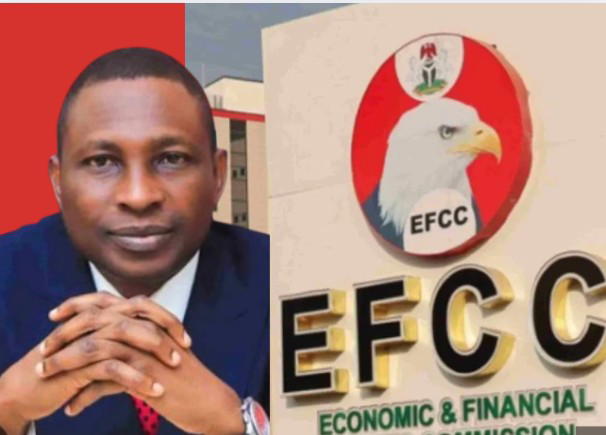
ABUJA — The Executive Chairman of the Economic and Financial Crimes Commission (EFCC), Mr. Ola Olukoyede, has disclosed that the Commission recovered over ₦566 billion and played a key role in supporting President Bola Tinubu’s economic reforms through enforcement, asset recovery, and institutional renewal over the past two years.
According to the EFCC’s mid-term report released in Abuja on Thursday, the agency’s recoveries and reforms have strengthened Nigeria’s anti-corruption framework and contributed to economic stability by reinvesting recovered funds into national development programmes.
“Part of the funds recovered by the Commission in the last two years was invested in critical social investment programmes such as the Students Loan Scheme and the Consumer Credit Scheme. A total of ₦100 billion was invested in these two schemes,” Olukoyede stated.
Appointed on October 18, 2023, and confirmed by the Senate the following day, Olukoyede has overseen major convictions, recoveries, and reforms within the EFCC.
Between October 2023 and September 2025, the Commission received 19,318 petitions, investigated 29,240 cases, filed 10,525 cases in court, and secured 7,503 convictions. It also recovered ₦566.3 billion, $411.5 million, £71,306, €182,877, and other foreign currencies, in addition to 1,502 forfeited real estate assets.
“On these two critical scores—convictions and recovery of proceeds of crime—the performance of the Olukoyede-led EFCC in the last two years is most inspiring. The numbers speak for themselves,” the report noted.
The report also highlighted several high-profile prosecutions involving former governors, ministers, and public officials, while noting that the EFCC had revived long-standing corruption cases previously stalled in court.
Olukoyede said the Commission had contributed to stabilising the economy through its clampdown on currency racketeering, naira abuse, and cryptocurrency fraud.
“The campaign against currency racketeering and criminal speculation, including the clampdown on rogue cryptocurrency exchanges, helped to reduce pressure on the naira and supported the CBN’s efforts to stabilise the economy,” he explained.
He revealed that 792 suspects linked to investment and cryptocurrency fraud—including 192 foreigners—were arrested in a major Lagos sting operation in December 2024, prosecuted, and deported.
Olukoyede also underscored his commitment to institutional reforms, integrity, and prevention-driven anti-corruption measures. He said the EFCC had created new directorates such as Fraud Risk Assessment and Control (FRAC), Digital Transformation and Innovation, and International Asset Tracing and Recovery, while 55 staff members were dismissed for misconduct.
“You cannot use corruption to fight corruption. From day one, I have continued to emphasise integrity and zero tolerance for unethical behaviour,” he said.
On international cooperation, the EFCC report detailed strengthened ties with the FBI, UK National Crime Agency, Royal Canadian Mounted Police, Spanish and German police, INTERPOL, and JICA, leading to the recovery and repatriation of stolen assets to victims abroad.
Olukoyede, who currently serves as President of the Network of National Anti-Corruption Institutions in West Africa (NACIWA), was recently re-elected for a second term after establishing the body’s permanent secretariat in Abuja — a move described as a major diplomatic milestone for Nigeria’s anti-corruption efforts.
He further announced the launch of EFCC Radio 97.3 FM, Nigeria’s first anti-corruption radio station, to promote civic awareness and integrity-driven citizenship.
“Under my watch, the EFCC has prioritised prevention as a cheaper and more effective alternative to enforcement. We are deploying risk-based approaches to monitor budget performance in MDAs and prevent fund diversion,” he said.
Olukoyede added that the EFCC is undergoing a major rebranding to strengthen professionalism, transparency, and public trust, noting that a new logo and slogan will be unveiled soon.
He reaffirmed the Commission’s commitment to aligning its anti-graft efforts with the Tinubu administration’s Renewed Hope Agenda, aimed at fostering transparency, accountability, and sustainable economic growth.
The post Olukoyede: EFCC recovered N566bn, anchored Tinubu’s economic reforms in two years appeared first on Vanguard News.