NYSC reform? Beautiful idea, by Suleiman A. Suleiman
 SKAiF NewsNG SNN
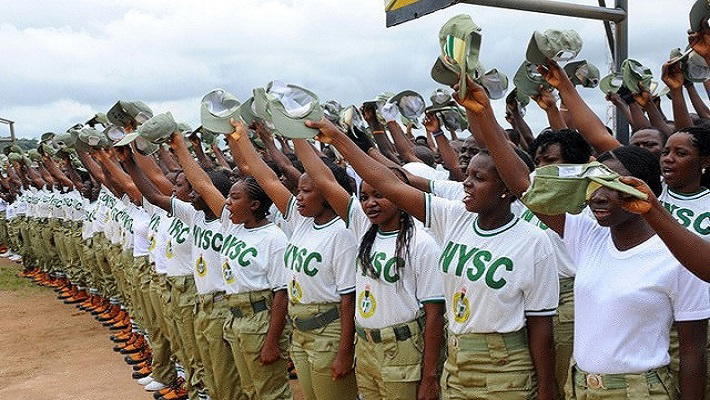
Let’s begin with a few questions that I think we should all be asking about the federal government’s decision to comprehensively reform the National Youth Service Corps (NYSC). Should the existing NYSC scheme be fundamentally overhauled? How should we understand the government’s proposed reform? And what is the proper purpose of a national service scheme in today’s Nigeria? My answer to the first question is a direct “yes.”
The NYSC is a child of conflict created by the military in its own image. And after 53 years, there can be no argument that it is no longer fit for purpose in its current form. Military leadership and personnel, command structures, and a military culture of drills, parades and martial discipline are not the stuff of 26 years of uninterrupted democracy. Nor are these necessarily the best mechanisms for advancing national service or unity. So, yes, the NYSC should be run as a civil institution, rather than a quasi-military outfit that it has never truly been but only mimicked. And no, it should not be led by people whose primary job is to fight wars.
Moreover, the sort of root-and-branch approach to institutional reform being considered for NYSC is precisely the kind that Nigeria needs across all our public institutions. As I have written several times in these pages, all too often our reform policies tend to be either tokenistic or cosmetic, even where a complete overhaul is required. Poverty reduction? Give wheelbarrows to a handful of people here, or set up barbershops for others there. Is it policing or prison services reform? Change the name or the uniforms, and you are done. But this approach has only left us where we are now as a country. Therefore, if we get a root-and-branch reform of the NYSC right, we will have a successful model of public-sector reform to transfer elsewhere, and the government itself would have achieved an enduring legacy.
That said, however, I find specific details of the proposed reform troubling. As the Punch newspaper reported last Monday, the idea is to reposition “the NYSC into a skills-focused, productivity-driven institution aligned with the Federal Government’s economic agenda.” And at the core of this idea is a “a redesigned six-week orientation programme with stronger focus on leadership, entrepreneurship, digital skills and specialised career streams, skills-based primary assignments aligned with academic background and career pathways….”
I welcome any skills acquisition and economic productivity schemes for Nigeria, but the proposed policy is still under a severe intellectual and moral strain. First of all, it assumes that because our graduates struggle to find jobs or often lack even basic skills, the NYSC should take on a labour-market orientation. But if the NYSC does that, it will displace its original missions of national integration and civic service, which are still fundamental for a national youth service scheme. Moreover, is this six-week training intended to supplant the four to five years of training graduates receive at universities and polytechnics? Leadership, entrepreneurship, digital skills, etc., are already included in the general studies courses at universities and polytechnics. Is the reform proposing a finishing school in the name of national service? And if so, where then is the national service in it?
Just as important, it is not clear how any six-week training can fix Nigeria’s problems of unemployment and employability, which are deeply rooted in the failures or absence of other institutions elsewhere. If there are no big companies to employ people by the thousands; if there is no credit for small and medium enterprises; if there is no venture capital to provide seed funding to start-ups; and if there are no strong laws, infrastructure or serious industrial policy to drive all of these, then there is not much a six-week training in employability can do, however effective it may be. Entrepreneurship, in particular, is a function of institutional arrangements rather than a skill to be learned by the individual. It depends considerably on the society’s institutional structures, from industrial policy, credit markets and infrastructure to social trust, social networks and legal protections. No youth scheme can bring it about.
Third, the reform proposes to “align” post-camp primary assignment postings with “academic background and career pathways” across 11 broad career streams that cover most courses of study. However, it is quite impractical. First, are there enough placements in the agricultural sector in the country for all new graduates of agriculture-related courses every year? Are there enough placements for all other specializations? Moreover, the current scheme is also supposedly based on academic backgrounds, but the practice is driven more by the who-you-know Nigerian factor. Many NYSC members are either rejected from places of primary assignment aligned with their academic backgrounds or simply end up teaching in primary and secondary schools, which isn’t bad at all. But I doubt if this who-you-know factor will go away.
More importantly, what is wrong with cross-specialization postings? It is certainly in keeping with the whole idea of university education, the idea that the graduate has sufficient grounding in learning, skills and values to face the world, regardless of what hand fate deals them. I might have a degree in journalism but find myself at a bank or a bakery during my NYSC, and still make the most of that opportunity. What is wrong if during NYSC a botany graduate finds a job, and does well, at an asset management firm or in production management at a manufacturing company? What is wrong if those jobs turn out to be their long-term career paths? Isn’t this already good practice for many former NYSC members? Both university education and employability are about certain values and competencies, not academic pigeonholes.
Finally, there is an inherent elitism in the proposed reforms that raises serious moral questions. The reforms appear to assume that graduates deserve a special package of employability interventions because they possess university degrees. Since government has equal responsibility to all citizens, the first question about policy is value-based: what moral issues underpin this policy? If employability and entrepreneurship are national priorities, why should they be reserved only for graduates? What corresponding investments are we making for millions of other young Nigerians who never had the opportunity to attend university?
This brings us to the issue of what kind of national service is fit and proper for Nigeria today. I would say it should be one that is squarely focused on a serious idea of national service and public works. Instead of the NYSC being effectively what is a graduate employability scheme, which a single unit at every university and polytechnic can do even better, we should think of it very differently, more ambitiously, and, in my view, more strategically.
If we are willing, we can transform the NYSC into Nigeria’s largest public works and national development programme, ever. Nigeria currently faces two persistent problems. On the one hand, we face the mounting problem of youth unemployment, both graduate and non-graduate. On the other hand, we face the acute problem of unmet needs in every sector: in literacy, basic education, and school renovation; in flood mitigation, afforestation, urban regeneration, and environmental restoration; and in agricultural extension, data collection, healthcare support, and in housing, roads, bridges, and the restoration or building of new public spaces like libraries, archives, museums, cinemas, town halls, and so on.
These two problems are solutions looking for each other. Why not use the NYSC to help these problems find each other in a solution, so that as a national youth service scheme it is open to all youths, from the age of 18 to 30, graduates and non-graduates alike? You can find appropriate functions among these unmet needs for graduates, but also for non-graduates. In short, why can’t we be ambitious for once and turn the NYSC into Nigeria’s New Deal? You can even call it Renewed Hope, and it will be fit and proper so.
Suleiman, a public affairs analyst, writes from Abuja
The post NYSC reform? Beautiful idea, by Suleiman A. Suleiman appeared first on Vanguard News.