Nwodo urges academics to develop blueprint for S’E economic revival
 SKAiF NewsNG SNN
By Alumona Ukwueze
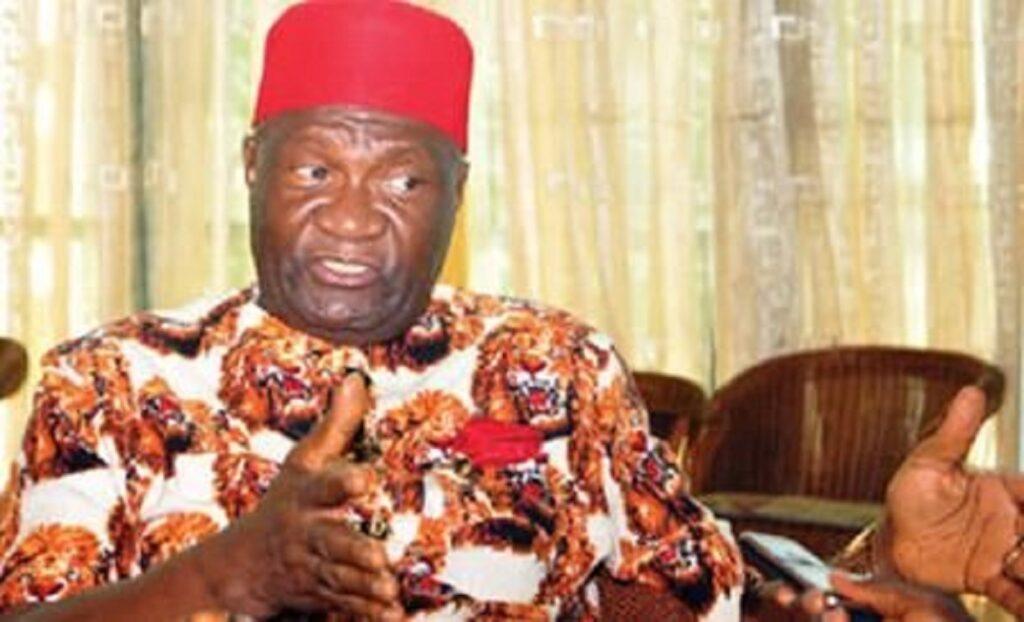
NSUKKA —A former President General of Ohanaeze Ndigbo Worldwide,
Nnia Nwodo, has challenged academics in the Southeast to develop a workable blueprint capable of reviving the region’s economy.
Nwodo, who is also a former Minister for Information gave the charge in Nsukka yesterday during the 2026 Southeast Nigeria Regional Development Summit.
The summit, themed “South East Nigeria Regional Development Strategy,” was organised by the Africa Centre of Excellence for Sustainable Power and Energy Development, ACE-SPED, in collaboration with the Association for Tourism Development in Nigeria.
Speaking at the event, Nwodo recalled that the Southeast was among the fastest-growing economies in the world during Nigeria’s First Republic and questioned the factors responsible for the decline of the region’s once-thriving economy.
“We all know that the Southeast was one of the fastest-growing economies in the world during the country’s First Republic. What happened to the region’s once-thriving economy?” he asked.
He urged professors and academics in the region to unite and deploy their intellectual capacity towards finding lasting solutions to the economic challenges facing the Southeast.
“This is the perfect time for professors and academics in the region to unite and demonstrate their academic prowess. They should examine where the people of the Southeast missed their path for so long,” he said.
Nwodo, who chaired the occasion, also encouraged universities and researchers to commercialise their research findings by turning them into viable businesses.
According to him, such initiatives would support partnerships with the South East Development Commission in implementing regional development blueprints and reintegrating products and businesses from the region into global supply chains.
The former minister noted that the Southeast was once renowned for rapid socio-economic transformation driven by agricultural commercialisation, industrialisation, and revenue diversification, rather than dependence on basic social services.
“It is undeniable that the Southeast region currently faces severe socio-economic constraints that have affected its former status as an industrial and commercial powerhouse,” he stated.
He also commended the organisers of the summit and urged them to design marketable programmes for universities and governments in the region, focusing on the development and commercialisation of the area’s abundant natural resources.
In his remarks, the Vice-Chancellor of the University of Nigeria, Nsukka, Simon Ortuanya, described the summit as timely and significant in promoting regional integration and development in the Southeast.
“There is a need for the people of the Southeast to work together in addressing issues such as development, insecurity, youth empowerment, energy, and infrastructure,” he said.
Ortuanya expressed optimism that the summit would produce practical solutions to the region’s numerous developmental challenges.
Also speaking, Professor Emenike Ejiogu, Director of ACE-SPED, said the summit aimed to provide a platform for stakeholders to assess regional challenges and formulate a unified strategy for transforming the Southeast into a competitive economy attractive to tourism, education, and investment.
According to him, the initiative aligns with the United Nations Sustainable Development Goals on poverty reduction, quality education, decent work, health and well-being, and peace and security.
Professor Ejiogu noted that the Southeast possesses enormous natural and material resources, a strong entrepreneurial culture, and a vibrant informal sector.
He added that the establishment of the South East Development Commission last year had created a policy framework for coordinated regional development, unlike the fragmented efforts of the past.
“However, this will only become effective if the people of the region agree to work together to protect their land, invest at home, rebuild their cities, and industrialise the region,” he said.
He appreciated participants who attended the summit physically and virtually.
Delivering the keynote address, Ifedi Okwenna, Executive Secretary of the South East Business and Investment Summit, said the Southeast was not lacking in ideas, enterprise, or talent, but rather in coordination, organisation, and partnership.
Okwenna identified six pillars necessary for the revival of the Southeast economy as regional economic cooperation, investment architecture, industrial cluster development, infrastructure development, execution framework, and human capital development.
He also criticised the culture of individualism in business within the region, describing it as “one-man power” or “Ikeotuonye.”
He commended the organisers and urged them to remain committed to the vision of reviving the Southeast economy.
Earlier, Pat Okpoko, President of the Association for Tourism Development in Nigeria, said the summit brought together academics and stakeholders from different disciplines to brainstorm and develop practical solutions to the challenges confronting the Southeast.
He expressed hope that the region would regain the economic strength it enjoyed during the First Republic under Michael Okpara, former Premier of Eastern Nigeria.
The post Nwodo urges academics to develop blueprint for S’E economic revival appeared first on Vanguard News.