Nigeria’s Security Meltdown: African Labour leaders reveal forces behind bloodshed, terror
 SKAiF NewsNG SNN
*Lament 2,200 killed , millions displaced in 6 months
*5,000 kidnapped, billions demanded as ransom in 12 months
*Urge Tinubu to save nation from descent into chaos
By Victor Ahiuma-Young
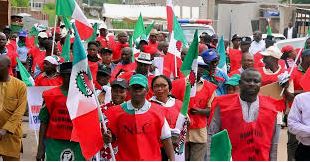
Nigeria’s spiraling insecurity has triggered an unprecedented alarm from African labour leaders, who warn that the country is standing at the edge of a national catastrophe. Amid an explosion of kidnappings, mass killings, and the growing paralysis of rural and urban communities, the African Regional Organisation of the International Trade Union Confederation (ITUC-Africa) has issued one of its strongest statements in years — a blistering indictment of the structural failures driving Africa’s most populous nation into turmoil.
ITUC-Africa in the statement by its General Secretary, Akhator Odigie, painted a grim picture of a country where violence has become a full-fledged economy, where rural communities are abandoned to bandits, and where millions are caught in the crossfire of insurgency, terrorism, and state fragility.
The statement frames Nigeria’s crisis not merely as a security breakdown but as the product of years of neglect, corruption, poor governance, and unchecked criminal expansion.
The statement reads among others: “We commend President Bola Tinubu and his government for declaring a nationwide state of emergency on insecurity and for deploying additional security personnel and resources to protect schools, communities, and workplaces. This is an important signal that the Nigerian state recognises the scale of the crisis and is prepared to act.
“However, Nigeria’s security breakdown is not sudden. It stems from long-standing structural challenges that must be addressed honestly for any emergency measures to yield sustainable peace.
“Violence in the North East, North West, and North Central regions continues to intensify, driven by extremist insurgency, terrorism, organised banditry, and increasingly deadly farmer–herder clashes. In the first half of 2025 alone, over 2,200 people were killed, with millions displaced.
“Kidnap-for-ransom has evolved into a thriving criminal economy. Nearly 5,000 abductions were recorded within 12 months, with billions demanded in ransom. This predatory economy destabilises households, destroys livelihoods, and fuels a continuous cycle of criminality.
“The current crisis is rooted in deep socio-economic and governance failures especially marginalisation, exclusion, unemployment, weak public services, and corruption have eroded trust in state institutions. Armed groups dominate neglected areas through violent taxation and coercion.
“Scarcity of water and shrinking farmland have intensified farmer–herder clashes. Many young people are drawn into violence due to limited livelihood opportunities. External religious framing has heightened divisions, despite shared suffering across communities. Without addressing these structural drivers, insecurity will persist, even where military gains are made.
“Nigeria’s 2022 law prohibiting ransom payments is a decisive step toward denying criminal groups the financial incentives they seek. Yet ransom payments continue, often out of desperation.
“Operationalising a credible no-ransom strategy requires: Financial-crime intelligence targeting ransom networks, asset seizures and sanctions against perpetrators and sponsors, strong victim protection and robust state-led rescue operations, and clear, responsible public communication that rebuilds public confidence. These measures are essential to breaking the economic backbone of kidnapping and related violence.
Security with Justice
“Security forces must prioritise public protection — especially in rural communities, workplaces, and schools — rather than focusing on elite convoys. We applaud the government’s recent directive recalling police officers assigned to elite individuals and redeploying them to communities that urgently need policing. This directive must be implemented fully and without ambiguity.
“All real and perceived injustices must be properly understood and addressed. The government must also make genuine efforts to provide adequate compensation to victims of violence while pursuing programmes for rehabilitating perpetrators. Justice thrives when grievances are recognised and addressed.
“Violence by non-state actors or individuals within state institutions must be investigated, prosecuted, and sanctioned in accordance with existing laws — with no sacred cows. These actions are critical to rebuilding legitimacy, sustaining the rule of law, and strengthening national stability.
“The Nigerian government must also demonstrate courage in identifying and prosecuting the sponsors of violence and insecurity in all their forms.
“To reduce vulnerability and disrupt recruitment pipelines into violent networks, Nigeria must accelerate youth skills development and job creation, rural economic transformation and support for smallholder farmers, climate-adaptive livelihoods and infrastructure renewal, expanded social protection for conflict-affected communities.
“Communities must not remain trapped in fear and poverty. Inclusive and collaborative solutions are critical. We are confident that the ILO and other UN agencies stand ready to support Nigeria’s efforts to restore security and hope to affected communities.
Healing divides, restoring social cohesion
“Insecurity has deeply fractured social bonds across Nigeria. Peace becomes durable only when dignity is restored and divisions are healed. Effective peacebuilding must include genuine, facilitated dialogue and reconciliation between rival groups, trauma support for children, workers, internally displaced persons, and survivors as well as reintegration programmes with strong community oversight
“Nigeria must lead decisively — but collaboration is essential. Seeking external support to protect citizens is not a sign of weakness; it reflects responsible governance.
“ITUC-Africa urges regional, continental, and international partners to intensify cooperation to ensure disruption of illegal arms supply, enhanced intelligence sharing and military training support, humanitarian assistance, inclusive development financing that avoids debt burdens and dependency-creating conditions and diplomacy guided by respect for sovereignty and national dignity
“The Nigerian labour movement remains a pillar of national unity, cohesion, and democracy. We salute its steadfast commitment to human dignity, peace, and social justice.
“Workers — including teachers, health professionals, transport operators, farmers, and public administrators — remain among the most targeted and affected by insecurity.
“ITUC-Africa stands firmly with Nigerian trade unions and will continue working with them by defending rights and safety at work and in communities through organising, mobilisation, negotiation, capacity building, and collective action, documenting and reporting abuses while pressing for accountability at national, continental, and international levels, designing workplace-based programmes to support victims and survivors, mobilising continental and global solidarity for trade union initiatives and dvocating consistently to ensure that security spending does not displace essential social investment
“We reiterate our call for the Nigerian government to act with urgency, transparency, and inclusiveness — as reflected in the declared state of emergency on national security. ITUC-Africa stands ready to support all people-centred initiatives aimed at restoring peace, justice, and decent work.”
The post Nigeria’s Security Meltdown: African Labour leaders reveal forces behind bloodshed, terror appeared first on Vanguard News.