Nigeria’s Economic Reawakening: How reforms, discipline, quiet leadership restored global confidence
 SKAiF NewsNG SNN
By Edirin Etaghene
When the Financial Action Task Force (FATF) placed Nigeria on its “grey list” in early 2023, it sent shockwaves through global financial circles. It wasn’t just a technical downgrade—it was a signal that Africa’s largest economy was struggling to meet the world’s expectations for transparency and integrity in its financial system.
Less than two years later, that narrative has dramatically changed. At its October 2025 plenary in Paris, the FATF announced that Nigeria—alongside South Africa, Mozambique, and Burkina Faso—had been removed from the list of countries under increased monitoring for money laundering and terrorist financing.
The delisting marked not just a compliance victory, but a symbolic restoration of global confidence in Nigeria’s economic management. It reflects the fruits of deliberate reforms, institutional synergy, and a renewed commitment to fiscal discipline under the administration of President Bola Tinubu.
Nigeria’s inclusion on the grey list in February 2023 was a reputations blow that stemmed from longstanding weaknesses in financial oversight: insufficient intelligence sharing, fragmented institutional coordination, and a lack of stringent enforcement mechanisms. The country’s heavy reliance on cash transactions and informal financial systems compounded the challenge, making it difficult to track illicit flows.
For investors, the grey listing was an unmistakable red flag. The International Monetary Fund (IMF) estimates that countries under FATF monitoring experience a 7.6% drop in foreign capital inflows. For Nigeria—then battling foreign exchange scarcity, rising inflation, and fiscal strain—the consequences were severe.
Getting off the FATF list demanded more than rhetoric—it required deep structural change. Over two years, Nigeria implemented sweeping reforms that strengthened inter-agency collaboration, modernized financial intelligence systems, and tightened compliance frameworks.
The Nigerian Financial Intelligence Unit (NFIU) led this transformation, supported by the Ministries of Justice, Finance, and Interior. Attorney-General Lateef Fagbemi spearheaded legal realignment, Interior Minister Olubunmi Tunji-Ojo strengthened border and data systems, and NFIU Chief Executive Hafsat Bakari advanced intelligence-sharing mechanisms that met international standards.
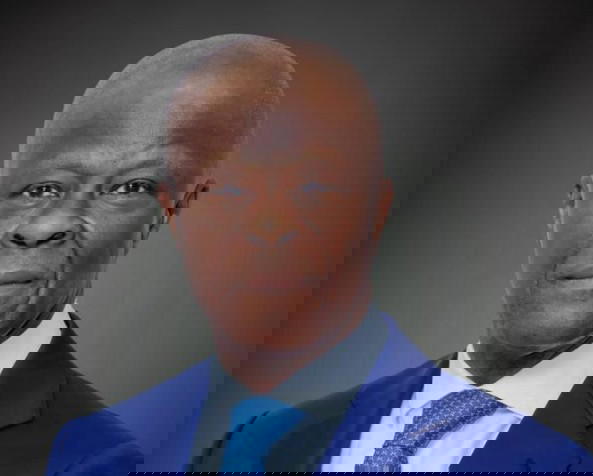
At the policy helm, the Minister of Finance and Coordinating Minister of the Economy, Wale Edun, worked quietly to align financial reforms with broader economic restructuring. His emphasis on fiscal transparency, prudence, and stronger reporting standards ensured that Nigeria’s compliance efforts were not cosmetic, but deeply institutionalized.
The FATF itself acknowledged Nigeria’s “stronger inter-agency coordination” and “improved implementation of AML/CFT measures” as decisive factors in the delisting—a testament to the coherence and commitment driving the country’s reform agenda.
The FATF delisting coincides with other encouraging economic indicators—a sustained moderation of inflation and a steady rise in foreign reserves. Together, they paint a picture of recovery built on discipline and reform- the footprints of Edun, who emphasized that the retina as a national Imperative would rebuilding confidence through economic stability.
Since mid-2024, Nigeria’s inflation rate has begun a consistent downward trend, easing pressures on households and businesses. The rise in foreign reserves, supported by increased oil revenues, diaspora remittances, and renewed investor interest, reflects growing confidence in Nigeria’s fiscal and monetary stability, and a new chapter for financial governance.
These improvements are not accidental. They stem from policy coherence anchored on the fiscal side by Edun’s ministry and mirrored on the monetary side by a recalibrated Central Bank. The unification of exchange rates, rationalization of subsidies, and prioritization of transparency in debt management have all contributed to rebuilding credibility in Nigeria’s economy.
For Nigeria, exiting the FATF grey list is more than a bureaucratic milestone—it’s a signal to global markets that the country is open for business under renewed terms of integrity and predictability.
“Corporates and individuals will face less friction in cross-border payments once key jurisdictions mirror the FATF decision,” noted Vincent Gaudel, a compliance expert with LexisNexis Risk Solutions. “Banks will expand correspondent services, and trade-finance operations will run more smoothly.”
The delisting means lower transaction costs, fewer compliance bottlenecks, and improved investor perception—key elements for boosting foreign direct investment and facilitating trade.
The greater challenge now lies in consolidation. FATF’s warning is clear: delisting is not the end of scrutiny. Nigeria must continue to maintain and strengthen its systems to avoid backsliding.
That sustainability drive is already taking shape. The Finance Ministry and NFIU are institutionalizing compliance frameworks, embedding audit mechanisms, and ensuring ongoing alignment with evolving global standards.
President Tinubu underscored this long-term vision in his statement:“The exit from the FATF grey list marks the beginning of a new chapter in the nation’s financial reform agenda. Nigeria will sustain the already institutionalised reforms, deepen institutional collaboration, and continue to build a financial system that Nigerians and the world can trust.”
While the delisting was a collective achievement, the coordinating discipline that underpinned it reflects the imprint of Wale Edun’s economic philosophy—measured, data-driven, and reform-oriented.
His stewardship of Nigeria’s fiscal policy has emphasized transparency, market confidence, and stability over populist spending. By aligning budget priorities with real sector productivity, tightening financial leakages, and fostering credible engagement with investors and development partners, Edun has helped shape the environment in which confidence could return.
He has often avoided the spotlight, but his role in steering Nigeria’s economic turnaround—from restoring fiscal order to rebuilding international credibility—cannot be overlooked.
Nigeria’s removal from the FATF grey list symbolizes more than compliance—it signifies a turning point in national credibility. It tells the world that Africa’s largest economy is serious about reforms, disciplined about implementation, and intentional about earning back trust.
Combined with a gradual decline in inflation and a strengthening reserve base, it marks the reawakening of a nation charting a path toward sustainable growth.
The journey is far from over—but the message is unmistakable: Nigeria is back on the path of financial integrity, economic reform, and global confidence—one deliberate policy at a time.
— Edirin Etaghene, a journalist, writes from Lagos, Nigeria.
The post Nigeria’s Economic Reawakening: How reforms, discipline, quiet leadership restored global confidence appeared first on Vanguard News.