Nigeria’s challenges are political, not religious — Oyewole, YCE scribe
 SKAiF NewsNG SNN
*Says: Our problems shouldn’t be viewed as Christian-Muslim conflict * Establishment of state police ‘ll curb insecurity *Explains why he supports traditional methods of securing our communities *Tasks S-West govs to provide sufficient resources for Amotekun
By Dapo Akinrefon
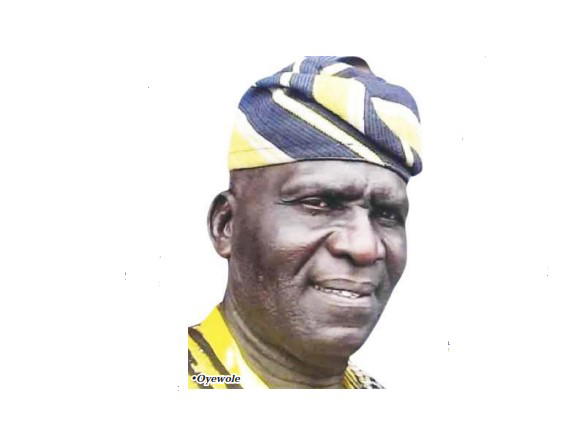
Chief Dipo Oyewole is the Secretary-General of the Yoruba Council of Elders, YCE. In this interview, he speaks, on State Police, how the selection process, operational guidelines, and administration of state police can be carefully regulated. He also speaks on alleged persecution of Christians in Nigeria, unity in Yoruba land, among other issues. Excerpts:
The recent rescue of school children and teachers of Orire local government area of Oyo State has renewed the debate over state policing. What is your position on state police?
To the glory of God, when Mr. President first introduced the idea of establishing state police, the Yoruba Council of Elders supported it. We drew from our understanding of how security was managed in the past and believed the idea was necessary. We looked beyond the political arguments surrounding it and focused on its long-term benefits.
Today, we are pleased that the proposal has received the support of the President and the National Assembly. We fully support the establishment of state police.
Some people fear that state police could be abused by state governors. Do you agree?
Yes, and we addressed that concern in one of our early publications. We stated clearly that there must be strict conditions and legal safeguards to prevent abuse of power by state governors.
We also believe that whoever heads a state police command must be a person of integrity who cannot easily be influenced or manipulated. The selection process, operational guidelines, and administration of state police must be carefully regulated. Otherwise, the system could be abused.
Recently, Senator Adams Oshiomhole mentioned that, as governor, he once gave an instruction to the conventional police that was not carried out. We considered that encouraging because it demonstrated that professional officers can exercise independent judgment when necessary.
Ultimately, state police must operate under clear rules and regulations to ensure professionalism and accountability.
The Ooni of Ife recently called on traditional rulers to revive traditional methods of securing their communities. Do you support that position?
Absolutely. I recently visited the Ooni’s Palace and observed local security personnel working there. In such communities, strangers are quickly identified because security is rooted in the grassroots. Community-based policing has always been effective, and we support that approach.
Some have argued that Amotekun has not achieved its objectives because it is not adequately funded. What is your view?
Security requires proper funding.
I must commend the late Governor, Rotimi Akeredolu, for his leadership in establishing Amotekun. He did an excellent job.
Any security outfit must be adequately equipped and funded to perform effectively. Lagos, for example, has the Lagos State Neighbourhood Safety Corps rather than Amotekun. Although the names differ, the principle is the same.
Governors across the Southwest must provide sufficient resources for local security agencies. If Amotekun or any grassroots security outfit is underfunded, insecurity will persist.
Do you believe the original vision behind Amotekun is still achievable?
Yes, it is.
Governor Akeredolu carried the people along when the initiative was introduced. Today, the challenge is sustaining that vision through adequate funding and continued commitment from state governments.
The opposition posits President Tinubu’s policies have worsened economic hardship. What is your assessment of his performance?
The Yoruba Council of Elders is completely non-partisan. We do not support any political party, so we evaluate issues objectively.
I believe the President has made significant decisions. When you plant a crop, you give it time to grow. Likewise, reforms require time before their benefits become evident.
One of his most significant decisions was removing the fuel subsidy, which had benefited only a small group of people for many years. The savings have been distributed to state governments.
The responsibility now lies with governors to use those funds wisely.
Take Abia State as an example. Governor Alex Otti has invested in electricity infrastructure, enabling artisans, hairdressers, welders, and businesses to operate more effectively. Other governors should adopt similar development initiatives.
The Southwest was once regarded as Nigeria’s most developed region. Today, many believe it has lost that position. What should governors do?
Accountability is essential.
Governors are entrusted with protecting the welfare of the people. They must ensure that public resources are used transparently and effectively.
The President has created opportunities through his reforms. Governors and local government chairmen must now deliver development at their respective levels.
Electricity is particularly important. Every state has the potential to generate power through different sources, including solar, hydro, and other renewable energy. Stable electricity will stimulate agriculture, small businesses, and industrial growth. The governors must work harder.
There are worries that the Southwest Development Commission has not lived up to expectations. What are your expectations from the Commission?
Dr. Charles Akinola has been appointed as the Director-General of the Southwest Development Commission.
At this stage, it is still too early to assess the Commission’s performance. However, the President has created the necessary institutional framework.
The Commission cannot succeed without the cooperation of the Southwest governors. What we need now is a clear development blueprint and coordinated implementation.
That is an area where we intend to continue engaging the relevant authorities.
The division within the ranks of the South West leaders no longer makes the zone appear to speak with one voice. What can be done?
Unity is very important. There are now many self-determination groups across the region. Having many groups is not necessarily a problem, but they should work together toward common goals.
The Yoruba Council of Elders seeks to complement, not compete with these organizations. Progress becomes difficult when everyone views others with suspicion.
If we can reason together and pursue shared objectives, the region will move forward.
Is the Yoruba Council of Elders engaging these various groups you talked about?
Yes. We believe our responsibility is to provide guidance based on experience. We engage organizations such as OPC, Yoruba self-determination groups, and others to encourage dialogue and responsible leadership.
Our focus is on education, unity, and preserving the interests of future generations.
The United States recently reduced some forms of engagement with Nigeria over concerns about religious freedom. Do you think those concerns are justified?
Nigeria’s challenges are fundamentally political rather than religious.
Throughout our political history, different groups have pursued power through various means. However, I do not believe Nigeria’s problems should be viewed simply as a Christian-Muslim conflict.
Our priority should be national development rather than division along religious or ethnic lines.
Various political parties and stakeholders have accused the President of trying to create a one-party state. Do you agree?
No. If governors from different political parties choose to support the President because they believe his policies are beneficial, that should not automatically be interpreted as an attempt to create a one-party state.
Politics should be driven by development rather than suspicion. Strong institutions are more important than political labels.
What is your dream for Nigeria?
My greatest hope is that future generations will inherit a better country than we did.
That means investing in education, moral values, and responsible leadership.
When I was growing up, honesty and discipline were highly valued. Today, many people believe success comes through manipulation rather than integrity. We need to restore our moral foundations through education. Nigeria is richly blessed.
We have abundant human and natural resources across every part of the country. What we need is good leadership, responsible governance, and citizens who think beyond personal interests.
If we return to sound values and work together for the common good, Nigeria can become one of the world’s great nations.
The post Nigeria’s challenges are political, not religious — Oyewole, YCE scribe appeared first on Vanguard News.