Nigerians to FG: Terrorists can’t truly repent
 SKAiF NewsNG SNN
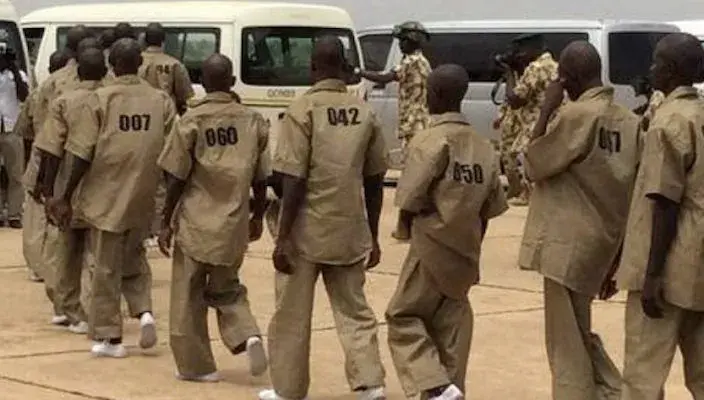
•Stop wasting money rehabilitating them
•Help victims who suffered
By Dayo Johnson, Regional Editor, South West; Olasunkanmi Akoni; Samuel Oyadongha; Rotimi Ojomoyela; Egufe Yafugborhi, Ozioruva Aliu; James Ogunnnaike; Adeola Badru; Steve Oko; Ndahi Marama; Ochuko Akuopha; Emem Idio & Uko Etim
The late President Muhammadu Buhari in 2016 launched the controversial Operation Safe Corridor to facilitate the rehabilitation of ex-insurgents saying that the reintegration of deradicalised combatants would ensure sustainable peace and security in the country and help bring the decade-long insurgency to an end.
On March 23, 2018, while receiving 105 schoolgirls who were abducted from the Government Girls Science and Technical College (GGSTC) in Dapchi, Yobe State, in February that year, Buhari announced that his administration was prepared to offer amnesty to repentant Boko Haram members who were willing to surrender and embrace peace.
According to him, the amnesty was extended to those who would surrender “unconditionally”, stating his willingness to rehabilitate and reintegrate these “repentant” individuals into the society. The aim, he said, was to reduce insecurity, save lives lost during the conflict, and re-channel funds used for weapons toward infrastructure development.
Despite public outcry, Borno State Government on Democracy Day, June 13, 2026 reintegrated another batch of 720 men, 992 spouses, and 2,050 children who had repented and surrendered to the troops, after many of them were deradicalized, disarmed, rehabilitated at the Hajj Camp in Maiduguri and participated in various skills acquisition programmes. These latest categories of repentant insurgents were all made to swear on oath with the Holy Quran and would be reunited into their various communities across Borno State. The state government has so far reintegrated 9,680 repented terrorists.
Many Nigerians have however expressed outrage at the policy, insisting that it is a dangerous trend. They argued that terrorists can not truly repent. They accused the government of caring more about rewarding criminals than helping victims who suffered in their hands. Some also argued that rehabilitating terrorists would hurt the morale of the soldiers on the battlefield.
Execution of reintegration policy dangerously flawed—Prof Okaba
Speaking on the development, the immediate past President of the Ijaw National Congress (INC), Prof. Benjamin Okaba, said: “These are not just policy questions; they touch on the very soul of our national life, justice, and security. The idea of a terrorist genuinely repenting is the most difficult hurdle for any Nigerian to accept. The pain is still too fresh; victims and communities are understandably traumatised and view this as prioritizing perpetrators over those who have suffered.
However, as a scholar, I must look beyond emotion. Operation Safe Corridor is not an amnesty. It is a strategic non-kinetic counter-terrorism tool. Launched in 2016, it targets ‘low-risk’ individuals, those coerced, abducted, or who surrendered voluntarily. They undergo a rigorous 6- to 12-month programme of psychological counselling, vocational training, and religious reorientation, with authorities claiming a recidivism rate of less than 2%. Is the policy working? The jury is still out. While authorities cite over 124,000 surrenders since 2023 and a low recidivism rate, independent data on long-term outcomes is scarce. Reintegration, the community acceptance phase, remains critically underfunded and poorly executed. To soldiers sacrificing their lives and victims grieving their losses, it feels like a reward for violence. This perception is a failure of communication and transparency. We cannot afford blind trust, but we also cannot afford to close the door on every single person who has been radicalized. The policy is strategically necessary, but its current execution is dangerously flawed. We must judge it not by the ceremonies in Gombe, but by the safety of our communities five years from now.”
Any identified terrorist should be neutralized—Ambakederimo
For the Convener of the South South Reawakening Group, Elder Joseph Ambakederimo, he said: “My concern is that we have a former Chief of Defence Staff who is the current Minister of Defense, General Christopher Musa, who does not believe we should give terrorists a second chance and thinks all terrorists, should be neutralized, while the present Chief of Defence Staff, General Olufemi Oluyede, equates terrorists to prodigal sons who must be reintegrated into the society. So we can see the divergent thought processes within the government. The fight against terrorism should not be fought with a divided mindset; this is one of the drawbacks we have suffered. My position is that any identified terrorist should be neutralized. We must take the fight to the enclaves of the terrorists and not wait until an attack occurs before reacting. The government should not rest on its oars; it must provide the necessary hardware and give proper welfare to the troops.”
It’s an evil FG must abort Forthwith —Odugala
For Dcn. Okezi Odugala, Coordinator of the Forum of Delta State NGOs, “These bandits are on a tribal, religious and economic expansionist mission; therefore, any form of amnesty or reintegration is another crime on the part of the government. We cannot compare these bandits with the Niger Delta militants’ agitation for equitable crude oil proceeds dispensation. These are bandits who killed and forcefully took people’s land and their natural endowment, even declaring their own fiefdoms inside the Nigerian nation, which is treason. It is evil to reintegrate the terrorists into society. They should, in fact, face capital punishment, as they do not believe in interfaith relationships, and violence is their DNA.
“Why are these reintegrated bandits not fighting to end banditry in the nation, whereas it is escalating?
The programme is in fact provocative to any sane-minded society, and it must be discarded as it is motivating heinous crimes against humanity. I see an expansionist agenda known to them that we must do everything to stop, or we will go into extinction. The government should deal with them and their sponsors frontally, without mercy, to curb this menace, which is a time bomb that will disintegrate our country.”
No sense spending billions on fighting terrorism and pampering them— Gbemre
On his part, Zik Gbemre, Coordinator of the Niger Delta Peace Coalition, said Gbemre questions their sincerity: “Saying you are sorry at a graduation ceremony or swearing on a holy book does not mean someone has truly changed inside. A reformed terrorist can not be trusted. Bad guys often pretend to surrender just to spy on the government and plan new attacks. The bigger problem is tracking. Unlike advanced countries that track former criminals forever, Nigeria does not have the effective capacity to track people. Once these men leave the camp, they disappear into regular neighborhoods. Asking victims to just ‘trust’ them without any tracking is highly dangerous.
“Reintegration happens in real villages, not inside a guarded government camp. Because local leaders and victims were left out of the planning, people are terrified and angry. When communities refuse to accept these former bandits, these men become outcasts, making it very easy for them to go back to terrorism. Our soldiers risk their lives and watch colleagues die fighting terrorists. It therefore hurts their morale to see those same terrorists captured, fed well, given free job training, and treated gently by the government. For victims, it’s worse. Millions of innocent people are starving in crowded refugee camps, yet the government is giving former terrorists cash, food, and free business starter kits. It looks like the government cares more about rewarding criminals than helping victims who suffered. Every single bandit should have to stand before a judge, answer for their crimes, and serve prison terms. Job training and reform should happen inside a prison, not outside of it.”
The program hurts soldiers and victims most— Oluyori
Also speaking, Mr. Elkanah Oluyori, a member of a Civil Society Organisation, faulted the process, arguing that the programme lacks the institutions needed to make it work. He said, “Operation Safe Corridor is not just a bad idea poorly executed; it is a serious idea being executed by an institution that has not earned the trust required to pull it off. The program hurts soldiers and victims most: The government is telling them, in effect, that the people they fought can graduate from a camp and re-enter society, and that this is progress. No one has sat with those men and explained why that is strategically necessary rather than politically convenient. For victims, there is no equivalent programme for them.”
Perpetrators are rewarded, victims remain neglected—David
For Dr. Victor David, Executive Director of Vital Partners for Development, repentance cannot be declared by oath alone and must be proven over time. “Swearing on the Qur’an or any holy book alone cannot be the sole test of transformation. Trust should never be automatic. While deradicalization has worked in Saudi Arabia, Colombia, and Indonesia, Nigeria’s version is mixed. There is insufficient transparency about outcomes. Communities and victims are often not consulted. Some returnees may relapse into violence. The programme appears to reward perpetrators while victims remain neglected.
“The real question is not whether a terrorist can repent. The real question is whether the government has built a system capable of distinguishing genuine repentance from strategic deception while ensuring that justice for victims is not sacrificed in the pursuit of peace.”
Terrorists will never truly repent —Bassey
Itoro Bassey, a journalist in Uyo, dismissed the programme outright, saying: “There’s no sense in spending billions of naira and dollars rehabilitating and reintegrating so-called repented terrorists into society; they will never truly repent. It would be more effective to eliminate them all as a deterrent to aspiring jihadists. Those who were made to swear that useless oath with the Quran in Borno State were merely acting out scripts given to them.”
A terrorist can not repent —Jonathan
Mr. Utibe Jonathan, a businessman, linked the skepticism to Boko Haram’s ideology: “It’s difficult to accept that a terrorist can repent. I am saying so because the nature of terrorism we are experiencing in Nigeria is tied to religion. Recall the mantra of Boko Haram: western education is offensive.”
No victim of terrorist attack will be comfortable it—Etim
David Etim, an entrepreneur, offered a cautious view but stressed monitoring: “Repentance can only be judged from the person’s conscience and is only known by God. After going through the rehabilitation corridor, they could show remorse but I suggest that critical monitoring be deployed. I feel it’s risky, but as repented terrorists, I would suggest that they be distanced from any sensitive program that contains security information while they are still being monitored. Also, it will weaken the morale and motivation of soldiers to combat terrorism. No victim of a terrorist attack would easily accept the reintegration policy and move on with ease.”
Terrorists will fake repentance to infiltrate the system —Ekpe
An activist, Mr. Ubong Ekpe, said, “A terrorist cannot truly repent. An idea was sold to them which they ran with for several years; a few months in rehabilitation centres cannot make them repent. Rather, they will fake repentance to infiltrate the system, leak vital information to their colleagues, and ultimately deal the nation a deathblow. There’s no evaluation mechanism in place to ascertain the workability of the policy. Rather, the optics shows it’s not working, as the number of recruited insurgents continues to swell, their attack rates soar, and the number of victims and casualties among military personnel surge. Reintegrating terrorists undermines justice for the victims and their family members. Over N11 billion has been spent on Operation Safe Corridor, while no tangible support or rehabilitation effort has been made for the families of the victims and fallen military personnel. The funds should have been deployed to upgrade the dilapidated IDP camps, provide schools, healthcare facilities and skill development rather than on terrorists. Operation Safe Corridor should be scrapped, it is gradually killing the morale of officers and insurgents should be made to face the law when caught”.
It’s a dangerous gamble with Nigeria’s Security—Princewill
Amb. Binebai Princewill, Spokesman, Ijaw Youth Council (IYC) worldwide said: “Reintegrating former terrorists into the society is a dangerous gamble with Nigeria’s security. While genuine repentance is possible in principle, national security cannot be built merely on declarations of repentance or symbolic oaths. Terrorist organisations are trained in deception, infiltration, and ideological manipulation. Before such individuals are reintegrated into society, Nigerians deserve credible evidence that rigorous security assessments, psychological evaluations, and continuous monitoring mechanisms are in place. This remains one of the greatest fears of ordinary Nigerians. It is legitimate to ask whether some individuals may exploit the programme to infiltrate communities, security institutions, or strategic national assets while maintaining ties with extremist networks. In a country already battling intelligence leaks and persistent attacks, these concerns cannot simply be dismissed. If the programme has significantly weakened terrorism, Nigerians should expect measurable improvements in security. Unfortunately, kidnappings, attacks on military formations, killings of innocent citizens, and mass abductions continue in several parts of the country. The persistence of insecurity naturally raises questions about the overall effectiveness of the reintegration policy”.
It’s difficult to truly reintegrate Ex terrorists—Dr. Edegbuo
Prince Edegbuo, Head of Resource Justice/Programmes Manager (Social Action) asserted “It is difficult to truly reintegrate former terrorists into society, no matter how repentant they may be especially for those who went into terrorism for no reason other than religious beliefs or the lie that they are God’s own when they kill and cause pain to others. If the programme is to be applauded, then the repented terrorists are supposed to provide intelligence that would help in demonizing their former colleagues or partners. Anything short of this is counterproductive and exposes our men and women in the military, who fight bandits daily. There have been reports of former terrorists who fled after being trained by the Nigerian military, and reports of former terrorists attacking and killing their employers. At this point in our growth, anyone who has knowingly killed any person should be killed.”
How does government verify such repentance?—Amananaghan
Tare Maureen Amananaghan, Executive Director, Fringe Voices Development Foundation (Fringe Voices) noted: “The real issue is how the government verifies such repentance and ensures that those reintegrated do not return to terrorism or become channels for intelligence leaks to active terrorist groups. Many Nigerians are understandably worried because victims of terrorism, displaced persons, widows, orphans, and security personnel who have sacrificed their lives often feel that justice has not been adequately served.
For them, seeing former insurgents receive rehabilitation and reintegration support can appear unfair, especially when many victims still struggle to rebuild their lives. I seriously wonder how the children in captivity will feel. Given Nigeria’s current security situation, the success of any reintegration programme should be measured by transparency, strict monitoring, community acceptance, accountability, and measurable reductions in violence. The government must also ensure that victims receive equal or greater attention through compensation, rehabilitation, and support programmes.
Operation Safe Corridor is a strategic miscalculation with grave consequences—Afenifere
The National Organising Secretary of the Pan Yoruba Socio- political group, Afenifere, Apagun Kole Omololu, said “For many Nigerians, the fundamental question remains unresolved: can individuals who once took up arms against their own country, killed civilians and destabilised entire communities truly be trusted again? The policy assumes that repentance is not only possible but verifiable.
Yet this assumption is deeply flawed. There is no reliable method to confirm genuine ideological transformation, nor to guarantee that reintegrated individuals will not relapse or act as informants for their former networks. At best, it is an experiment in risk management; at worst, it is a gamble with national security. Even more troubling is the message this policy sends to the wider society. To soldiers on the front lines who risk their lives daily, it can appear as though sacrifice is being undermined.
To victims of terrorism and displaced communities, it often feels like justice has been replaced with administrative forgiveness and to the terrorists themselves, it risks projecting weakness rather than deterrence. It is difficult for citizens to reconcile the billions spent on counter-terrorism operations with the simultaneous reintegration of those who once embodied the very threat being fought. While de-radicalisation may have theoretical merit in conflict resolution models across the world, its implementation in Nigeria raises serious concerns about transparency, accountability and long-term security outcomes.
Ultimately, Operation Safe Corridor reflects a deeper policy confusion, an uneasy attempt to balance justice with expediency. But peace built on unresolved wounds, unverified repentance and public distrust is not sustainable peace. It is, at best, a temporary pause in conflict, at worst, a strategic miscalculation with grave consequences.
The policy has failed, should be discarded forthwith —Fadaka
A Public Analyst Hon Ayo Fadaka said that, “terrorism and banditry are very serious crimes against the State, in fact anyone that bears arms against the nation has committed high treason, and the penalty for that is death. This policy of deradicalization of terrorists begs the issue, it is even a criminal variation in the application and implementation of the law. It is tantamount to merely slapping the wrists of these criminals, thereby tacitly endorsing their enterprise. It is a policy that underscores the emotional approach of our leaders to issues that concern their faith and region, therefore I steadfastly believe that President Buhari failed the nation on that score.
It is my opinion that the policy be discarded forthwith as it has failed and cannot be justified by any reason. Let the laws be applied dispassionately, let the terrorists get due penalty for their crimes, perhaps the level of their criminality would have been seriously scaled down without this policy. That policy does no justice to Nigeria as a nation that is spending huge resources, both human and capital to combat terrorism, it also assaults the sacrifices of the security agencies fighting terror and disparages the psyche of their victims. Those who died from the actions of these criminals will not forgive a nation that could not protect them while alive and thereafter failed to decisively punish their killers.
It gives attention to former terrorists than their victims —Adewale
Another Public Analyst Hon Stephen Adewale said, “Nigerians’ concern is that the process appears to give more attention to former terrorists than to their victims, the affected communities and the soldiers who have paid the highest price in the battlefield. The question is not simply whether a terrorist can repent. People can change, but national security cannot be built on public confession or oath-taking alone. Who exactly is being reintegrated? Were they forced recruits, low-level collaborators, or commanders involved in killings? What happens to those who committed grave crimes? How are victims compensated? How are communities protected from possible infiltration? A reintegration policy that ignores justice will look like a reward for violence. It sends a painful message to victims and soldiers if former terrorists are rehabilitated while displaced families, widows, orphans and destroyed communities remain abandoned. Operation Safe Corridor can only earn public trust if it is transparent, victim-centred and security-conscious.
Repentance is possible, but trust must be earned — Moruff Balogun
Former Vice Chairman of the Nigerian Bar Association (NBA), Ijebu Ode Branch, Moruff Balogun, said, “terrorists can repent. However, repentance is not the same as trust. True repentance cannot be conclusively proven because it is what goes on in a person’s heart. Swearing an oath on the Qur’an, the Bible or any other holy book does not guarantee a change. What is important is to see evidence through actions. The question is not only whether terrorists can repent, but whether repentance can be proven. The answer lies in their conduct over time.
They must demonstrate respect for the law and maintain a non-violent lifestyle for a prolonged period. Even then, society still has a responsibility to protect itself. No one can guarantee the redemption of all former terrorists with one hundred per cent certainty. Intelligence agencies worldwide operate on risk management, not certainty. Terrorist organisations have historically relied on infiltration. Some of those who graduated from Operation Safe Corridor may genuinely have renounced violence, while others may be pretending in order to gain freedom, access or resources. An oath on the Qur’an is meaningless to anyone who still secretly holds extremist beliefs”.
Kidnappers, terrorists, bandits should face the consequences of their actions——Akinyemi
Alhaji AbdulWasiu Akinyemi, President, Progressive Muslim Cleric, Ogun State, said, “not every member of Boko Haram joined the group voluntarily, some were forced into it by circumstances beyond their control. Many of them claim they were forced into the fold. We know such things happen. Many people who find themselves in those environments do not get there voluntarily. If investigations reveal that certain individuals were coerced into joining the group and did not willingly embrace its ideology, then such people can be rehabilitated. However, I am very sure that notorious commanders and those known to have masterminded atrocities would not fall into the category of people eligible for rehabilitation and reintegration. My position remains that kidnappers, terrorists and bandits should face the consequences of their actions. Depending on the circumstances, they should either be prosecuted and punished according to the law or sentenced to life imprisonment. Supporting rehabilitation for some individuals does not change that position.”
Reintegrating them will depopulate terrorist camp——Ekujumi
The General Secretary, Coalition of Democratic Formations, Nelson Ekujumi, said, “Everything about the war is not based on arms and ammunition, the rehabilitation is a big part of it to depopulate the terrorist camp. A terrorist can truly repent, because not all who joined the terrorist group did it voluntarily, some were forced, threatened and induced against their will. Reintegrating them is just like reintegrating convicted criminals who have served their terms, that’s the essence of the non kinetic approach. Nobody can be trusted, but people can be given the benefits of doubt and whoever abuses that opportunity to violate the law, will pay dearly for it when caught.”
Rehabilitation should not become a substitute for justice——Aborisade
A human rights activist, Barr. Femi Aborisade said, “As a human rights activist, I believe every human being is capable of change. The principle of rehabilitation is recognised under both domestic and international law. However, repentance cannot merely be declared; it must be demonstrated through verifiable conduct over time. Society cannot be expected to accept at face value that individuals who once participated in mass killings, abductions, destruction of communities and other atrocities have suddenly become harmless simply because they have taken an oath. The fundamental concern is justice. What message does this programme send to thousands of victims who lost family members, livelihoods and communities to terrorism? Many victims remain displaced, traumatised and impoverished. Yet the state appears willing to devote enormous resources to the rehabilitation of those accused of inflicting these sufferings. This creates a perception of injustice and may deepen public resentment.
There is also the question of accountability. Have those involved in serious crimes been properly investigated and prosecuted? Rehabilitation should not become a substitute for justice. The rule of law demands that criminal responsibility be established where evidence exists. Otherwise, society risks creating the impression that violence attracts rewards while law-abiding citizens are neglected. The critical issue is whether Operation Safe Corridor is genuinely reducing terrorism and enhancing national security. Public confidence cannot be built on official assurances alone. Government should publish comprehensive data showing the programme’s effectiveness, recidivism rates, costs and long-term outcomes. Ultimately, sustainable peace requires a balance between justice, accountability, rehabilitation and the rights of victims”.
Oath-taking ceremony alone cannot guarantee genuine reform——Ogunsuyi
A Public Analyst and Media Strategist in Ekiti, Lanre Ogunsuyi said, “The key issue is not whether terrorists can repent, but how such repentance is verified. An oath-taking ceremony alone cannot guarantee genuine reform. Effective reintegration requires thorough screening, continuous monitoring, and strong community safeguards to ensure that former combatants do not return to violence or exploit the process for ulterior and pecuniary motives. There is also the question of justice and perception of fairness because many victims are still displaced, communities are still grieving and soldiers on the Front line may view the programme as rewarding traducers and perpetrators of heinous crimes while those who suffered most are yet to receive inadequate government support. Reintegration policy must therefore be balanced with meaningful assistance and restitution for victims and recognition and reward of the daily sacrifices of security personnel. Ultimately, the programme’s success will be measured by results, not numbers and fanfare; unless it reduces recidivism and strengthens security, it may not be worthwhile.
Those involved in acts of terror should face justice——Chimezie
National President of the Igbo Women Assembly, Lolo Nneka Chimezie, described the policy as a major error in Nigeria’s fight against terrorism, arguing that those involved in acts of terror should face justice rather than rehabilitation. According to Chimezie, “It was a colossal mistake for the Federal Government to adopt the repentant terrorists policy. Many Nigerians remain uncomfortable with a situation where former insurgents are rehabilitated while victims of terrorism continue to grapple with the consequences of violence. The victims are still suffering, yet attention appears focused on rehabilitating those accused of perpetrating the violence. That naturally raises questions in the minds of citizens”. Chimezie also called for stronger scrutiny of security institutions, citing longstanding public concerns about possible infiltration by criminal elements and the need for robust internal accountability mechanisms.
Sacrifices of fallen soldiers, affected communities must not be overlooked——Ibem
Similarly, the Coalition of Nigerian Youth Leaders (CONYL) questioned the rationale behind reintegrating hundreds of former terrorists into society without sufficient public transparency regarding the programme’s long-term effectiveness. President-General of the youth coalition, Comrade Goodluck Ibem, said “Nigerians deserve clear answers on the criteria used to determine whether former insurgents had genuinely abandoned violent ideologies. National security cannot be built on assumptions. It must be built on certainty, rigorous monitoring and verifiable accountability. We demand a comprehensive public audit of Operation Safe Corridor, including details of the programme’s successes, challenges, monitoring mechanisms and independent assessments. A nation that appears more invested in the rehabilitation of perpetrators than in the healing of victims risks creating dangerous perceptions of injustice”. The youth body further expressed concern about the impact of the policy on the morale of military personnel fighting insurgency across the country, arguing that the sacrifices of fallen soldiers and affected communities must not be overlooked”.
The post Nigerians to FG: Terrorists can’t truly repent appeared first on Vanguard News.