Nigerians eating themselves to death – Experts warn
 SKAiF NewsNG SNN
By Chioma Obinna
Decades ago, food in Nigeria was as natural as the soil it came from. Plantains and bananas ripened on trees. Palm fruits were processed without chemicals. Groundnuts were roasted in clean sand, and cassava for fufu fermented naturally, free from additives. Food was slow, seasonal, and trusted.
Today, that food culture is fast disappearing. What Nigerians now eat and how it is processed, has quietly become a major public health concern, with experts warning that millions are unknowingly consuming foods that may be harming them over time.
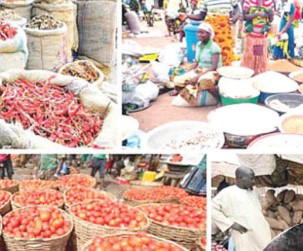
Across markets, supply chains, and street food systems, traditional processing methods have been replaced by practices driven by speed, profit, and rising demand. Investigations across Lagos reveal a growing pattern where appearance now matters more than safety and shelf life more than nutrition.
Fruits are force-ripened with chemicals such as calcium carbide, a chemical linked to headaches, dizziness, and potential long-term toxicity. Cassava fermentation, once a careful natural process, is accelerated with detergents and other unsafe substances, raising concerns about chemical contamination.
Oils are sometimes adulterated with dyes to enhance colour. Grains are preserved with pesticides not intended for human consumption. Even staple foods are increasingly altered in ways consumers cannot easily detect.
Street foods are also affected. Reused cooking oil is commonly reheated multiple times, producing toxic compounds linked to cancer, liver damage, and cardiovascular disease. Even street foods and snacks are not spared. Reused cooking oil heated repeatedly is now common, producing harmful compounds associated with cancer and heart disease.
“Getting naturally processed food today is like passing a thread through the eye of a needle,” a Lagos-based food vendor lamented. Another foodstuff seller at Cele market, Abimbola Adebayo said, “When people come to my shop and I encourage them to buy, most people see me as being expensive. But they have not asked themselves questions about buying natural and unadulterated food products”.
According to Abimbola, the bright yellow sheen of plantain bunches and the uniform softness of ripe mangoes no doubt draw customers without suspicion. But behind the display tables, she said there was a need to answer some certain questions about how some of these fruits reach that stage of readiness so quickly.
While she claimed she does not use such to ripen hers, she acknowledged there are several activities behind closed doors that unsuspecting Nigerians do not know. “I have a permanent supplier who is not also into that harmful practice. I have been in this business but I have never used carbide or anything to quicken the ripening of my plantains and bananas or any fruit. At least I have been in this business for over 15 years. I cannot also tell you that people are not using calcium carbide. We do not use carbide to ripen our fruits but we cover them for some days for it to ripe”, she said.
She explained that many things are happening today in the market, adding that the scarcity of foods and the economic situations have forced traders to apply all manner of sharp practices to make more profit.
“You should also know that these products come from outside Lagos. Some even get spoiled on the way. We use nylons, clothes and plastics to cover them for some days in order to hasten the ripening process but we do not use calcium carbide”, she said.
Also a groundnut seller, who identified herself as Mama Ekaette hinted Saturday Vanguard that no one uses sand to fry groundnuts anymore. According to her, to avoid sand getting into the groundnut, people now use either garri or salt but the dangerous one is acid which she claims she has heard about but has not used it.
Another long-time fruit seller, known in the market as Aunty Bisi, acknowledged the growing public concern over artificial ripening of fruits but insisted that traders at the retail end are not responsible for the practice.
According to her, “People are always talking about chemicals, but those things are not done here in the market. We receive our goods from suppliers. Whatever they do before bringing them is not in our hands. Most fruits arrive from rural supply routes already showing signs of ripeness. Sometimes mangoes are harvested and kept for a few days before they are brought down. So when they arrive, they already look ripe. We don’t know what happens before they reach us.”
According to her, concerns raised in other cities about rejected consignments of fruits being returned due to suspected chemical ripening have not been experienced in her market. “We hear those stories, but here, we have not had such issues. Our association even warns us regularly to avoid anything that can bring trouble. This is because NAFDAC has also sensitised them. The market leaders told us clearly that anyone caught using harmful methods will face sanctions. Nobody wants that kind of problem.”
But another trader in the same market, who simply identified herself as Titi, took a different view, admitting that the pressure of customer demand sometimes influences practices in the fruit trade.
She said plantains, in particular, are often treated to speed up ripening because buyers rarely wait.
“Customers don’t have patience. If you bring unripe plantain today, they will not buy. But if it is ripe, they will finish it immediately. So people try to manage time. But some people just cover plantains with sacks, clothes, or keep them in dark rooms. In a day or two, they soften naturally.”
A trader in Oyingbo market, Mrs Chinenye Ozoh also confirmed adulteration of red oil. “I have stopped buying oil from Lagos. I make sure I order my oil from the East. My customers know me for that. It may be N200 higher than the market price but what I am selling is not mixed with any other thing,” she boasted.
Yet behind these assurances lies a broader concern repeatedly raised by food safety experts, that the speed of modern food distribution, coupled with profit pressure, is quietly reshaping how fruits reach consumers. Further findings show that from wholesale depots to retail stalls, the line between natural ripening and artificial enhancement continues to blur, leaving consumers to rely largely on trust in a system they rarely see beyond the surface.
Voices from the streets
Sadly, in the middle of it all sits the everyday buyer, drawn by colour, guided by appearance, and often unaware of the unseen processes that determine what ends up on the plate.
For many Nigerians, survival often outweighs safety. Agnes, a fruit buyer in Lagos said, “I know the fruits are ripened with chemicals, but they are cheaper and look fresh. What choice do we have?”
A food vendor, Bisi, admitted that economic pressure drives some of the practices. She said, “We want things to sell fast. If you wait for natural ripening, you may lose money. But we don’t always know the health effects.”
Another resident, Chinedu, blamed ignorance saying, “Most people don’t even know these things are harmful. We just eat what is available.”
The fast-food explosion
Worst still, urbanisation has also fueled a boom in fast food consumption. Meals high in sugar, salt, and unhealthy fats are now a daily staple for many Nigerians. Combined with sedentary lifestyles, this has led to rising obesity rates, even among young people.
The era of fast food, not only drove away home cooked foods in most homes but have promoted high consumption of salt due to sodium in pre-packaged foods. Sadly, diet-related non-communicable diseases such as hypertension, cardiovascular diseases, and stroke are on the rise globally and within Nigeria. Studies have shown that excessive sodium is one of the leading dietary risk factors contributing to these conditions.
According to public health advocates, for almost two decades, the country’s food landscape has been transformed by an aggressive expansion of ultra processed products high in sugar, salt and chemical additives. These products are strategically placed in spaces where daily life unfolds.
For instance, most Lagosians can easily drop at a bus stop and access these dangerous cold sugary drinks without stress. School children can easily access a Mallam’s kiosk and buys packaged snacks.
Even mothers shopping for provisions walks through aisles filled with brightly packaged instant foods. Sadly, experts warn that overtime the effect adds up. According to them, what was once seen as an occasional treat slowly becomes routine that tends to create a ticking time bomb.
A nation eating at risk
However, unlike in the past, when infectious diseases dominated, Nigeria is now battling a surge in non-communicable diseases such as hypertension, diabetes, cancer, and chronic kidney diseases.
Public health experts say poor diet is a major driver. In the views of the Director-General of the National Agency for Food and Drug Administration and Control, NAFDAC, Prof. Christianah Adeyeye, Nigeria is facing a growing public health emergency driven by the use of calcium carbide in fruit ripening, warning that the practice exposes consumers to cancer, organ failure and neurological damage.
Adeyeye noted that the use of calcium carbide for artificial ripening of fruits and other unsafe food practices have become a serious public health threat requiring urgent national attention. She said there have been repeated calls from well-meaning Nigerians, alongside concerns raised by national newspapers and civil society organisations, urging stricter regulatory actions to address the menace.
According to her, since 2019, NAFDAC has taken decisive steps including sustained public sensitisation campaigns across media platforms and enforcement operations involving intelligence-led raids in fruit markets, which have led to the seizure and destruction of unsafe products.
Adeyeye explained that while fruits are vital sources of nutrients, artificial ripening with carbide undermines their safety, often leaving fruits deceptively ripe on the outside while remaining unripe internally.
She noted that such fruits could be identified by abnormal colouring patterns, powdery residues and unusual texture changes. Adeyeye said: “Fruits provide the body with micronutrients that improve immunity and prevent diseases among other benefits. Fruit ripening is a unique aspect of plant development, which makes the fruit edible, softer, sweeter, more palatable, nutritious, and attractive.
“However, the consumption of fruits such as mango, banana, plantain, guava, orange, grape, etc or any other fruits ripened with calcium carbide is dangerous to health. Fruits artificially ripened with calcium carbide may be ripe on the skin while the inside remains unripe.
“You can identify such artificially ripened fruits if you notice that the fruits are all yellow whereas the stem is dark, this is true especially with banana and plantain. In addition, naturally ripened fruits usually have brown or black spots, while those artificially ripened have traces of powdery substances and peel off quickly.”
She explained that fruit ripening is a natural biological process that enhances taste, texture and nutritional value, but warned that fruits such as mangoes, bananas, plantains, oranges, grapes and guavas become dangerous when ripened with calcium carbide.
She further warned that calcium carbide reacts with water to produce acetylene gas, which mimics ethylene but contains toxic impurities such as arsenic, lead and phosphorus.
According to her, exposure to such substances can result in serious health complications including cancer, kidney, liver and heart failure, as well as neurological disorders, respiratory distress, skin damage and gastrointestinal problems.
She added that pregnant women and children are particularly vulnerable, with risks including memory loss, seizures, developmental disorders and brain swelling.
Adeyeye said NAFDAC has also commissioned scientific studies to deepen understanding of the health risks and strengthen mitigation strategies, while intensifying nationwide enforcement and grassroots sensitisation.
According to her, calcium carbide contains dangerous impurities such as arsenic and lead, which when consumed can trigger kidney and liver failure, skin damage, neurological disorders and, in severe cases, cancer. She added that acetylene released during the process can also disrupt oxygen flow to the brain, causing long-term neurological effects.
Also speaking to Saturday Vanguard, a consultant endocrinologist and Professor of Medicine at the Lagos University Teaching Hospital, LUTH, Prof. Olufemi Fasamade, warned that Nigeria’s changing lifestyle and diet patterns are fuelling a silent epidemic of metabolic and hormonal disorders.
He said increasing dependence on fast foods, sedentary habits and chemically processed meals is contributing to rising cases of obesity, infertility and other endocrine complications.
Fasamade dismissed common misconceptions around diet, noting that starchy foods are not the enemy and that skipping meals does not prevent diabetes. Instead, he said, such practices often worsen metabolic imbalance. He stressed the importance of early screening, advising that individuals from age 30 and above should begin regular checks for prediabetes and diabetes, as early detection remains key to prevention and management.
Food adulteration undermining nutrition, child development
The Head of Nutrition and Dietetics Department at Obafemi Awolowo University Teaching Hospital, Ile-Ife, Dr. Obinna Ogbonna, told Saturday Vanguard that widespread food adulteration is quietly eroding the nutritional value of what Nigerians consume daily. He defined adulteration as the deliberate addition of harmful or inferior substances to food to increase profit or reduce production cost, warning that such practices weaken nutrient density and compromise human health.
According to him, when foods are diluted or contaminated, essential macronutrients such as proteins, carbohydrates and fats are reduced, leading to poor growth in children, weakened immunity and reduced energy levels in adults.
Ogbonna warned that prolonged consumption of adulterated foods could result in stunted growth, frequent illness and impaired brain development in children, particularly where infants are fed low-quality or diluted milk substitutes.
He added that poor-quality diets also weaken immunity, making individuals more susceptible to infections, fatigue and cognitive decline. The nutrition expert urged families to prioritise quality over quantity in food choices, encouraging the consumption of affordable local foods, vegetables and alternative protein sources to maintain balanced nutrition within limited budgets.
However, beyond the warnings and market realities, the burden ultimately falls on the consumer who must navigate an increasingly uncertain food system. In homes, markets and street corners, choices are often dictated not by safety but by affordability, availability and appearance. As economic pressures deepen, many Nigerians continue to prioritise survival over long-term health, even when aware of the risks.
But experts insisted that awareness, however gradual, remains the first line of defence, knowing what to look out for, asking questions about food sources, and making safer choices where possible.
According to findings, for regulators, health professionals and consumers alike, the challenge is no longer distant; it is immediate and deeply personal. What was once trusted as nourishment is now, in some cases, a hidden threat. As Nigeria confronts a growing wave of diet-related diseases, the need for stricter enforcement, sustained public education and a return to safer food practices has never been more urgent. Until then, the nation’s silent food war will continue to play out daily on plates, in markets, and in the bodies of millions who may not realise the danger until it is too late.
The post Nigerians eating themselves to death – Experts warn appeared first on Vanguard News.