Nigeria revives digital TV transition, adopts hybrid broadcasting model
 SKAiF NewsNG SNN
By Joseph Erunke, Abuja
After years of delays and uncertainty, Nigeria’s long-awaited transition from analogue to digital broadcasting received a major boost on Tuesday as key stakeholders unanimously reaffirmed their commitment to completing the country’s Digital Switch Over (DSO) programme and agreed on a new hybrid model designed to accelerate implementation.
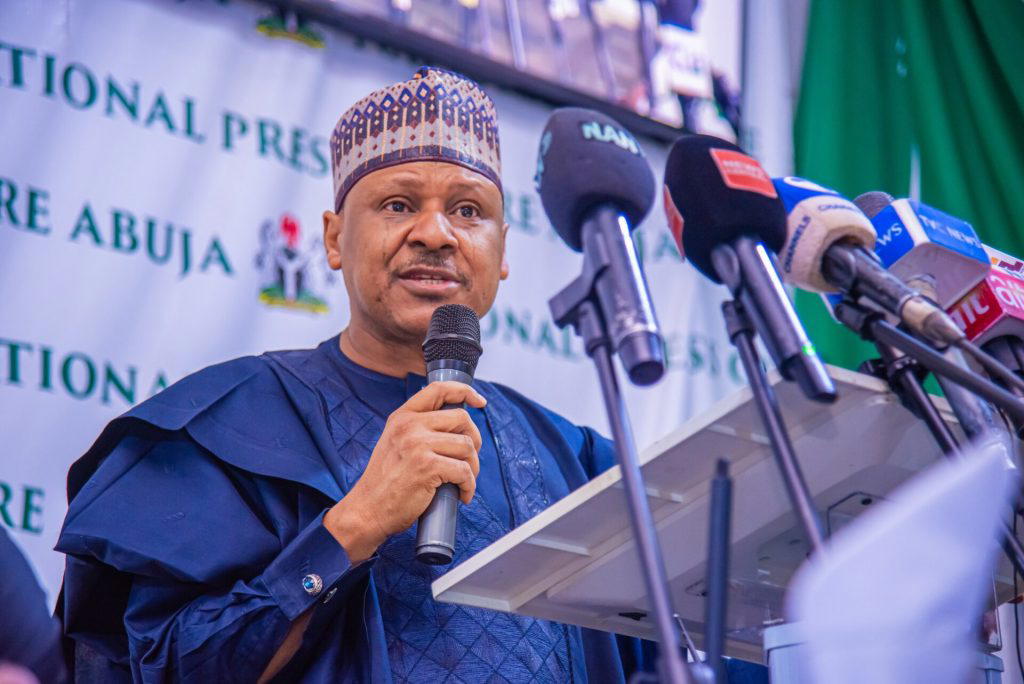
The landmark resolution emerged from a high-level stakeholders’ meeting convened by the National Broadcasting Commission, NBC, under the supervision of the Federal Ministry of Information and National Orientation in Abuja.
The meeting, chaired by the Minister of Information and National Orientation, Alhaji Mohammed Idris, brought together 128 participants, including regulators, broadcasters, signal distributors, satellite operators, set-top box manufacturers, content producers and industry associations.
Among those in attendance were the Director-General of NBC, Mr Charles Ebuebu; Permanent Secretary of the Ministry, Dr B.R.M. Ukire; Director-General of the Nigerian Television Authority (NTA), Abdulhamid Dambos; Director-General of the Advertising Regulatory Council of Nigeria (ARCON), Dr Olalekan Fadolapo; Chairman of the Broadcasting Organisations of Nigeria (BON), Chief Tony Akiotu; and Managing Director of NIGCOMSAT Ltd, Mrs Jane Nkechi Egerton-Idehen, respectively.
At the end of extensive deliberations, stakeholders endorsed a hybrid digital broadcasting framework that combines Digital Terrestrial Television, DTT, Direct-to-Home, DTH satellite services and digital application-based delivery platforms, marking what industry observers described as a significant shift in Nigeria’s digital migration strategy.
The meeting also firmly rejected any suggestion that digital terrestrial television should be abandoned, insisting that DTT remains a critical pillar of the nation’s digital broadcasting architecture.
The stakeholders further agreed that the Digital Implementation Team (DigiTeam), which previously played a central role in driving the DSO project, should be reconstituted to provide strategic direction and coordinate implementation efforts.
In remarks that set the tone for the closed-door engagement, Minister Idris described the session as a “family discussion” aimed at resolving lingering issues and ensuring the successful completion of the DSO project.
The minister assured participants that the federal government had no hidden agenda regarding the digital migration process and pledged that decisions would be guided by national interest, inclusiveness and the long-term sustainability of Nigeria’s broadcasting industry.
He acknowledged concerns raised by stakeholders over consultation and participation, admitting that broader engagement should ideally have started earlier but stressing that it was still possible to build consensus and move forward together.
According to him, while stakeholders may differ on implementation strategies, there is overwhelming agreement that Nigeria must complete its migration to digital broadcasting.
The meeting produced a rare consensus across the broadcasting ecosystem, with participants agreeing that the DSO project remains both necessary and beneficial to Nigeria’s economic and technological development.
Stakeholders identified job creation, investment attraction, local content development and support for indigenous manufacturing as critical objectives that must remain at the heart of the programme.
They also emphasised the need for regulatory certainty, investor confidence and stronger collaboration among industry players to guarantee the sustainability of the broadcasting value chain.
A major concern raised during discussions was the protection of investments already made by licensed set-top box manufacturers and other operators within the DSO ecosystem.
In response, the NBC pledged to safeguard existing investments and deepen consultations with stakeholders to ensure transparency and inclusiveness throughout the implementation process.
Another key outcome of the meeting was support for ongoing efforts by NBC and ARCON to develop a sustainable business model that would strengthen audience measurement systems, improve advertising revenue generation and enhance the financial viability of broadcasters.
Industry leaders argued that an effective audience measurement framework would help media organisations attract more advertising investments and improve competitiveness in the rapidly evolving digital media landscape.
Addressing concerns over satellite reliability, NIGCOMSAT assured stakeholders that robust measures had been put in place to guarantee uninterrupted service on the DSO platform.
The satellite operator disclosed that backup arrangements with alternative satellite providers were already operational, ensuring continuity of service and eliminating the need for subscribers to realign their dishes in the event of disruptions.
In a move aimed at preventing future disagreements and maintaining momentum, participants agreed that stakeholders’ meetings would now be held at least once every quarter.
The federal government, through the Ministry of Information and National Orientation, is expected to reconstitute the DigiTeam platform, while NBC will continue consultations with set-top box manufacturers and other industry players to address investment-related concerns.
The reconstituted DigiTeam and NBC are also expected to develop a revised implementation framework that clearly defines the roles of national, regional, state and community broadcasters within the new hybrid broadcasting model.
Additional public awareness campaigns and stakeholder sensitisation programmes are planned as part of efforts to improve understanding of the DSO strategy and its benefits.
Tuesday’s resolutions are widely seen as a significant breakthrough for Nigeria’s digital migration project, which has faced repeated delays despite the country’s commitment to global broadcasting digitisation standards.
With government, regulators and industry players now appearing united behind a common roadmap, stakeholders expressed optimism that the renewed collaboration could finally pave the way for the successful completion of one of the most ambitious reforms in Nigeria’s broadcasting history.
The post Nigeria revives digital TV transition, adopts hybrid broadcasting model appeared first on Vanguard News.