Nigeria loses N455bn to poor sanitation – Shettima
 SKAiF NewsNG SNN
…as open defecation threatens public health
By Gabriel Ewepu, Abuja
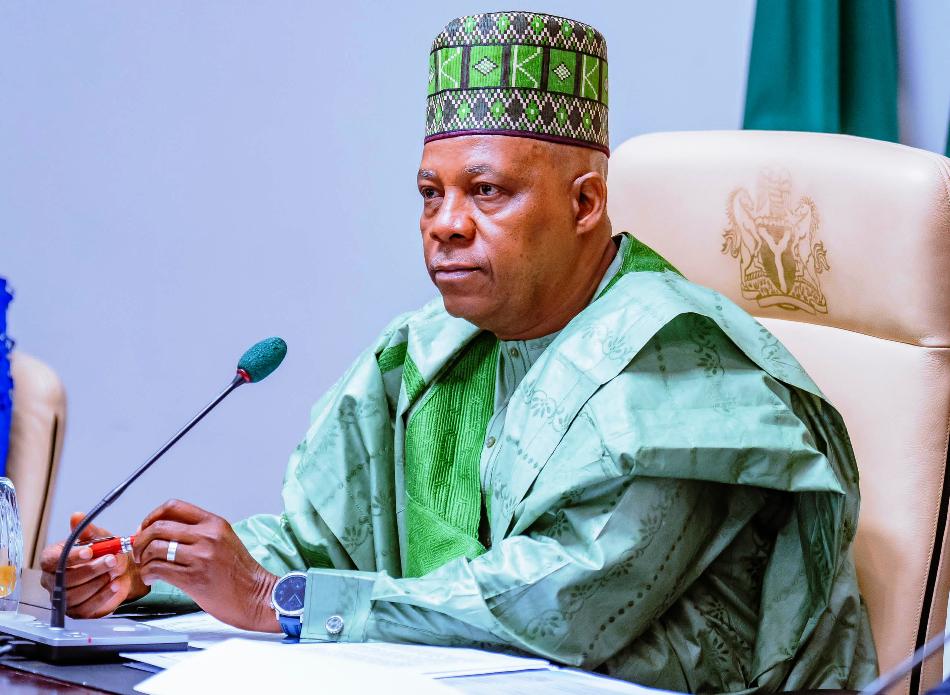
Ahead of the 2030 deadline to end open defecation nationwide, Vice President Kashim Shettima on Monday disclosed that Nigeria loses N455 billion annually due to poor sanitation, warning that open defecation continues to pose serious public health risks.
Shettima spoke at the opening ceremony of the maiden National Sanitation Conference in Abuja, organized by the Federal Ministry of Water Resources and Sanitation under the theme, “Accelerating Sanitation for All.” The Vice President was represented by the Special Adviser to the President on Humanitarian Affairs and Development Partners, Inna Binta Audu.
“Access to safe sanitation remains one of the most pressing public health and development challenges of our time,” Shettima said. “Sanitation is not merely about toilets or infrastructure; it is about human dignity, health, productivity, and the future of our nation’s children. A clean Nigeria is a healthy, prosperous, and equitable Nigeria.”
He noted that open defecation continues to contaminate water sources, increase preventable diseases such as cholera and diarrhea, and undermine national productivity and image. According to a World Bank report, poor sanitation costs Nigeria an estimated N455 billion ($3 billion) annually.
Despite progress in recent years, Shettima said, more coordinated action is needed at federal, state, and local levels. He highlighted government initiatives such as:
State of Emergency and the National Action Plan for the Revitalization of the Sector
Partnership for Expanded Water, Sanitation and Hygiene (PEWASH)
SchoolWASH and HealthWASH programmes
Sustainable Urban and Rural Water Sanitation and Hygiene (SURWASH)
Clean Nigeria: Use the Toilet Campaign, backed by a Presidential Executive Order
The Vice President revealed that 158 Local Government Areas (LGAs) have attained Open Defecation Free (ODF) status, including state-wide achievements in Katsina and Jigawa. He urged scaling up innovative financing, expanding the sanitation value chain, encouraging private sector participation, and fostering behavior change in communities.
Shettima also emphasized the economic potential of the sanitation sector and menstrual hygiene marketplace, projected to reach $14.23 billion by 2030, broken down as:
Toilet economy: $9.9 billion
Circular sanitation economy: $2.5 billion
Smart sanitation economy: $25 million
Menstrual hygiene marketplace: $1.8 billion
“This sector offers opportunities for innovation, private sector investment, and waste-to-wealth initiatives,” he added.
The Minister of Water Resources and Sanitation, Engr. Joseph Utsev, described sanitation as the cornerstone of human development, noting that the two-day conference provides a platform for dialogue, innovation, and partnership to accelerate national progress.
Officials from various agencies, including FCT Minister Nyesom Wike, the Head of Civil Service, Didi Walson-Jack, and WASH Ambassador Engr. Ebele Okeke, pledged continued support for sanitation initiatives and emphasized prioritizing vulnerable groups, including women and children.
“The goal is ambitious but achievable: a Nigeria where every citizen can access safe, dignified, and sustainable sanitation and hygiene services. When we achieve this, we reduce disease, unlock economic opportunities, protect our environment, and ensure that no one is left behind,” Shettima concluded.
The post Nigeria loses N455bn to poor sanitation – Shettima appeared first on Vanguard News.