Nigeria @66:Why the Judiciary is being crucified — PROF Yadudu
 SKAiF NewsNG SNN
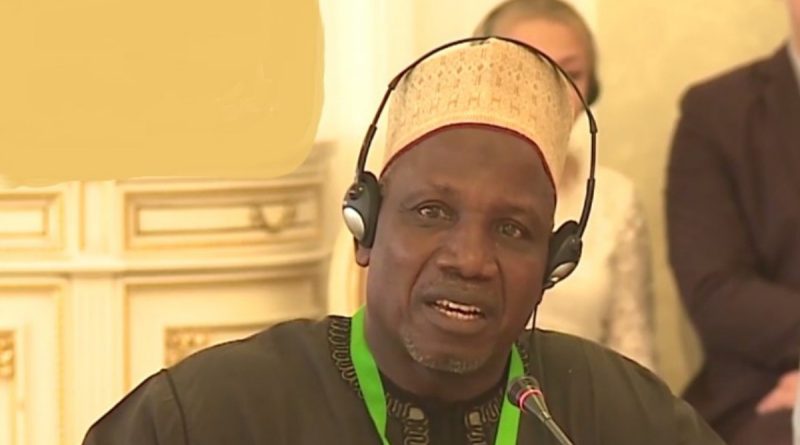
IN this chance interview with Professor Auwalu Yadudu of Bayero University, Kano, he makes it clear that whereas there are erring judicial officers in the country, Nigeria’s judiciary has not done as badly as is being perceived. Unfortunately for the justices, they cannot come out openly to forcefully defend their actions. No matter! The challenge, in his view, is that the National Judicial Council, NJC, a supposed Ombudsman, would enjoy more public acceptance if it is reconstituted to reflect the presence of more persons outside the judiciary. Excerpts
By Jide Ajani
Sixty years after independence, if you were to score Nigeria’s judiciary, how would you grade that arm of government?
Out of 10, I’ll give them seven. They have not done terribly. You see, what really happens is that the judiciary does not exist in a vacuum. They only adjudicate disputes brought before them. And some disputes may not have been resolved to the satisfaction of many. But I think, in their defence, in my view, they apply and interpret the law according to the evidence before them. And generally I wouldn’t think they have done terribly badly. There are very many areas of improvement. Yes, we need to call out the bad eggs and also deal with recalcitrant judicial officers because that is why the judiciary is being crucified. But generally, it is not as bad as some perceive it to be.
How would you describe the level of independence in that space?
I think they have so much independence, but the public perception is that their independence is curtailed and detracted from. I think they need to be more forceful in their own defence – you know, they can’t speak, they can’t defend themselves in public. But, in my view, in cases that are so egregious that they have handled, they need to come out as forcefully as possible in defending their rights. But the confidence in the National Judicial Council, NJC, keeps waning?
There are cases where sometimes the outcome of a petition before the NJC leaves much to be desired, I agree. But they need to be more proactive and also forthright in dealing with their own recalcitrant judicial officers.
You talked about Lord Denning in your lecture, saying he also applied uncommon reasoning. In Nigeria’s case, apart from coming out to deal with recalcitrant judicial officers, what more do you think NJC and the justice system can deliver to assure Nigerians that hope is not lost?
Quite frankly, I think the composition of the NJC is such that there are more judicial officers than can be excused. In my view, it gives a pretext for ordinary observers to say that they do not come hard on their likes because the membership is so skewed in their favour. I would want to see an NJC that is reconstituted, with great input from non-judicial officers. And therefore that will have the benefit of the feeling that the public has. It can also lift some of the burden from them because the perception is that somebody is accused. He comes before his colleagues and they take his issues lightly.
Now, you served during the military as advisor to the president. There is this perception that rightly or wrongly, that during the military, you had justices who stood firm despite everything to deliver judgments that were very, very sound. But since 1999, we have not really seen that type of robust delivery of judgments with the politicians in charge. What could have accounted for that?
It’s difficult to assess or to judge why. But do you agree with that perception? I think there is that perception. Of course, there were decisions that the courts took right in the face of the military and they were applauded for that. Unfortunately, the judiciary does not seem to have either the opportunity or to be minded to be as firm on the side of rule of law and in checking abuse of the law in a manner that the public will sit up and also those in office will sit up to say that these people mean business. My view is that, yes, it’s just true, but I don’t know. They have all the latitude, they have all the independence and they should allow their conscience to be the judge of the outcome of cases before them.
On the side of the judiciary – so that we don’t crucify them needlessly – you have a Nigerian constitution, 1999. Then you have the Electoral Acts. Some provisions in the electoral acts run contrary to some of the things the constitution has put in place. Now, unfortunately for some judicial officers, there have been judgments where they seem to lean more on the electoral acts than even the constitution…?
No, I would disagree. I don’t think there are provisions in the Electoral Act that fly in the face of the Constitution. I don’t know whether you have an example.
For instance, forgery. People have talked about it so much that it should be treated as a pre- and post-election matter or else that’s the end of it?
To the best of my knowledge, the judiciary cannot claim to have their hands tied by certain statutory requirements which fly in the face of constitutional provision. I doubt if there are such scenarios. It will be unbecoming.
On the issue of the executive being seen in quotes to be over pampering judicial officers with houses, choice cars. There’s this contention out there that all these things would seem to give the impression that the judges are being bought. And from the delivery of judgments too, it is beginning to gain ground that maybe they are paying back to the executive?
No, no. I have to be fair to them in this case: the cars and the houses are not given to them personally. They’re entitled to live comfortably and also drive comfortable cars. I would not go to the extent of saying that any decision or outcome is more a payback based on favours that government has done to them. Now, of course, as one would insist, it’s difficult for them because they can’t speak. They cannot join issues. Unfortunately, some of these allegations are baseless, but they can’t say anything about it
The post Nigeria @66:Why the Judiciary is being crucified — PROF Yadudu appeared first on Vanguard News.