Need to implement value-addition export policy
 SKAiF NewsNG SNN
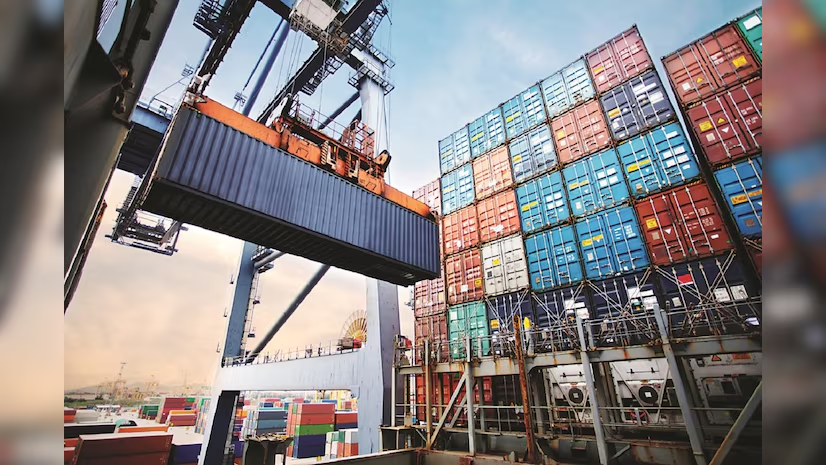
Latest figures from the Nigerian Bureau of Statistics, NBS, indicate that Nigeria’s non-oil export sector recorded a healthy rise despite the severe security challenges occasioned by occupation of our forests and farmlands by armed criminals.
Export of unprocessed raw materials fetched the nation N2.9trn by September 2025 compared to N1.174trn by September of 2024. This represents about 147.4 per cent rise. It is also more than five times compared to N564.73m recorded in September 2023.
However, while these figures represent steady growth in our non-oil exports, it also signals abject failure in President Bola Tinubu’s determination to ensure value-addition to our exports, a major peg towards raising the economy’s Gross Domestic Products, GDP, to $1trn within the regime’s tenure.
It also means that sector operators are defying key administration policies aimed at imposing value-addition before export. These include: Raw Materials Protection/Ban, where some products such as raw Shea nuts must be semi-processed before export; the Central Bank’s Incentive-Alignment, where unprocessed exports are denied financial incentives and Local Content Promotion with emphasis on local content sourcing by manufacturers.
This policy failure is attributable to lack of a central vehicle with a universal enabling law to drive the value-addition of our exports. It is unfortunate that the legislation that would have provided this vehicle is still languishing in the National Assembly.
This legislation, sponsored by the Raw Materials Research and Development Council, RMRDC, proposes a compulsory 30 per cent value addition to all our exports. The RMRDC is to drive the policy and prevent the continuation of raw exports which tell negatively on our economy and our national prestige as the biggest economy on the continent.
The call to upgrade our raw materials before export has been on the table since Nigeria’s independence. In 2009, the Economic Community of West African States, ECOWAS, adopted the policy of value-addition as precondition for duty-free exports.
Last year, former Minister of Science and Technology, Uche Nnaji, unfolded a 10-year transformation plan aimed at achieving 60 per cent value-addition to our raw materials before export. This plan was developed alongside the African Development Bank, AfDB.
It is obvious that, typical of Nigerian governance affairs, generation of policy is not lacking. We have more than enough. But the usual elephant in the room – implementation – is the issue. Even when the National Assembly completes enactment of the Act, the policy will still go nowhere unless a no-nonsense presidential action plan for implementation is put in place.
Value-addition will promote rapid Micro, Small and Medium Enterprises, MSMEs, at the grass roots, create wealth and jobs, reduce urban migration and ultimately help in combating terrorism through the recovery of ungoverned spaces. It will reduce economic drain and unlock prosperity.
If the Tinubu regime is serious about achieving the $1trn economy, it must drive this policy to success.
The post Need to implement value-addition export policy appeared first on Vanguard News.