My AFCON 2025 Observatory: Training grounds, where tournaments are quietly won
 SKAiF NewsNG SNN
By Sola Fanawopo
My good friend Callistus Ebare, a prominent sports journalist and Editor at AIT Sports, described the Super Eagles’ training base in Fès as world class. “A wonderful centre to cook a winning team,” he enthused. He was right.
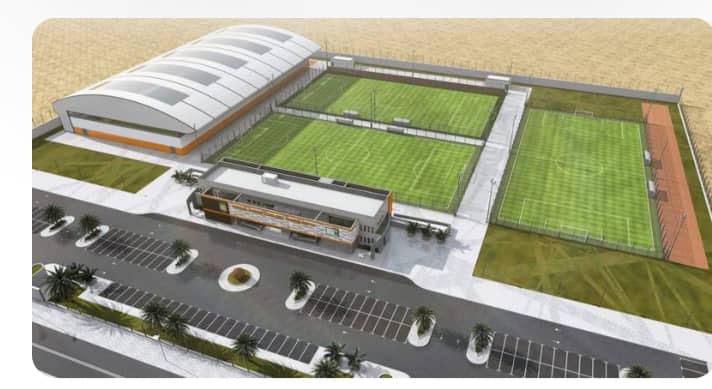
The Super Eagles are not training in a stadium. They are training at the Centre de Formation of Maghreb Association Sportive de Fès — and that single decision tells you almost everything you need to know about how modern football tournaments are truly won.
This facility is not glamorous.
It is efficient. Purpose-built. Calm.
And that is precisely the point.
The MAS Fès training centre represents one of Morocco’s deepest advantages at the Africa Cup of Nations: permanent football infrastructure designed for daily excellence, not occasional spectacle. The pitches are firm, well-drained, and consistently match-ready. Rain does not disrupt sessions. Players train at full intensity without fear of injury. Recovery spaces are close, functional, and professionally managed. Tactical rooms sit just a few steps from the pitch. Nothing here is accidental.
More importantly, the environment is controlled.
No crowds. No noise. No chaos.
National teams prepare here the way elite clubs prepare for Champions League nights—privately, methodically, and without distraction. This is where AFCON narratives are quietly shaped: before kickoff, before line-ups, before punditry.
While many countries still treat tournaments as temporary events—borrowing facilities, improvising logistics, and overusing match stadiums—Morocco treats tournaments as extensions of an already-functioning football ecosystem. Club academies double effortlessly as national-team base camps because standards are already high.
That ecosystem is anchored by the world-class Mohammed VI Football Academy near Rabat. Spanning more than 30 hectares, the academy integrates elite pitches, education, accommodation, and advanced medical and recovery units within a sustainably powered complex. Recognised globally by FIFA, it serves as the primary hub for Morocco’s national teams, hosts international youth tournaments, and continues to produce players who define Morocco’s modern football identity.
Both Morocco and Algeria have held training sessions at the Mohammed VI Academy and its adjoining complex—an endorsement of its continental benchmark status.
In total, the Confederation of African Football designated 24 base camps across Moroccan cities, assigning every participating nation a dedicated training ground:
Rabat axis: Tunisia, Algeria, DR Congo, Uganda, Tanzania, Benin, Botswana
Casablanca: Mali, Zambia, Comoros, Burkina Faso, Equatorial Guinea, Sudan
Fès: Nigeria national football team
Agadir: Egypt, Cameroon, Gabon, Mozambique
Marrakech: South Africa, Angola, Zimbabwe, Ivory Coast
Tangier: Senegal
This is institutional thinking at scale. Preparation is not improvised; it is engineered.
The lesson is uncomfortable but clear:
AFCON is no longer won by passion alone.
It is won by planning, infrastructure, and institutional seriousness.
At MAS Fès, the Super Eagles are not just training muscles. They are benefiting from a system that understands a simple truth: football tournaments are decided long before the first whistle.
Within Nigeria’s football ecosystem, only Beyond Limit Football Academy and Ebiede Football Club currently approach this level of consistency and intent. In addition, the now-defunct Kwara State Football Academy once possessed several quality pitches capable of competing respectably with international standards, as does Lanreleke Sports Academy.
These examples prove the point.
The capacity exists.
What remains is the will to make excellence permanent, not occasional.
One hopes, too, that Kwara State government officials who visited the training centre in Fès took careful note of how not to mismanage academy infrastructure.
Sola Fanawopo, Chairman, Osun Football Association, writes from Morocco
The post My AFCON 2025 Observatory: Training grounds, where tournaments are quietly won appeared first on Vanguard News.