Mile 2-Apapa highway gridlock: Police, LASTMA, FRSC, others helpless
 SKAiF NewsNG SNN
***Residents, motorists blame container terminals for worsening traffic jam
***Terminal operator cites limited space, port restrictions
***We’re working with stakeholders to curb Mile 2 traffic— NPA lNSC absolves self from gridlock
By Efe Onodjae, Precious Enaike & Florencemary Nwabueze
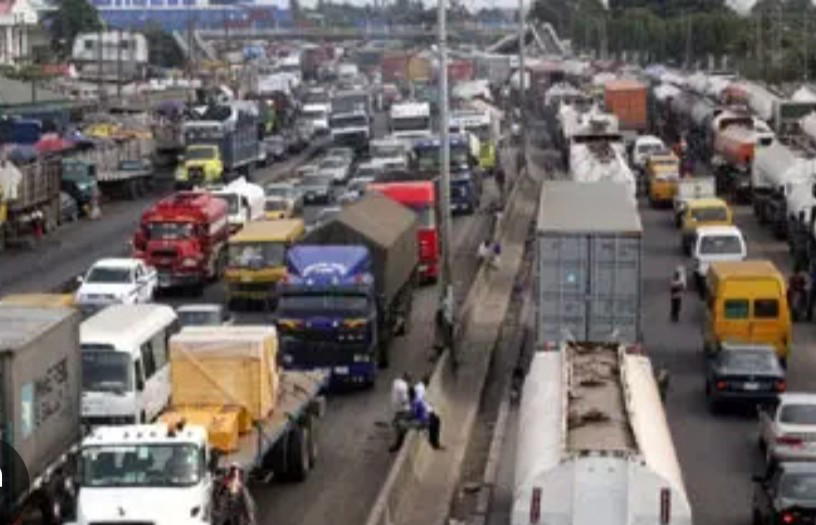
LAGOS — RESIDENTS, motorists and business owners along the Berger/Kirikiri corridor, yesterday, blamed the worsening traffic congestion on the Mile 2-Apapa expressway on the proliferation of container terminals in the area, saying the facilities have become the major source of the persistent gridlock.
The gridlock, yesterday, left thousands of commuters stranded for hours, with many abandoning their journeys and returning home.
An auto dealer, Ekene Iruanya, described the container terminals as the primary cause of the perennial congestion, saying the traffic situation deteriorated after the facilities commenced operations.
According to him, trucks transporting empty containers to the terminals frequently occupy the road, creating bottlenecks despite the presence of traffic management officials.
Iruanya said: “There is nothing else causing this traffic other than the terminals opposite the Catholic Church. Before they came here, this road was free. Today, you have three different terminals receiving containers and all the trucks are heading there.”
Police, LASTMA, FRSC, others helpless
He added that personnel of the Nigerian Navy; Lagos State Traffic Management Authority, LASTMA; Federal Road Safety Corps, FRSC and other security agencies are regularly deployed to control traffic in the area, but their efforts have yielded little improvement because of the volume of trucks.
He called on the government to reconsider the location of the terminals, arguing that relocating or shutting them down would significantly ease congestion along the road leading to Kirikiri, the Nigerian Correctional Service facilities and the Naval Barracks.
Responding to the allegations, a representative of one of the container terminal operators denied that the facility alone was responsible for the traffic, noting that several terminals within the corridor receive containers.
The official explained that the terminal currently receives only empty containers and has become busier because other facilities handling similar cargo are no longer operating at full capacity.
Why the terminal is congested
“For now, we are the only ones receiving these empty containers while other terminals are not functioning fully. That is why the place is congested. We don’t even have enough space inside the terminal because everywhere is filled with empty containers,” the official, who spoke in confidence, said.
He explained that the containers cannot be returned directly to the ports because port authorities only accept specified volumes at a time, making bonded terminals necessary holding areas.
According to him, the terminal receives between 150 and 200 empty containers daily but only accepts new deliveries after previously stored containers have been evacuated to the ports.
He also maintained that many of the trucks contributing to the traffic are not owned by the terminal, explaining that they belong to independent transport operators bringing containers from different locations.
The official suggested that stricter traffic management could help improve the situation.
“If the trucks are properly lined up on one lane by the security agencies, there will be free movement. The problem is when they are parked indiscriminately on different parts of the road,” he said.
He added that the evacuation of containers from the terminal is largely determined by port allocations, which specify the number of containers to be returned daily.
We’re working with stakeholders to curb Mile 2 traffic —NPA
Meanwhile, the Nigerian Ports Authority, NPA, said it was collaborating with relevant stakeholders and law enforcement agencies to address the recurring traffic congestion along the Mile 2-Apapa port corridor.
The assurance came amid massive gridlock caused by tanker trucks and container-laden vehicles lining the Mile 2 axis and stretching towards Apapa, leaving commuters stranded for hours.
Speaking on the development, NPA spokesman, Ikechukwu Onyemechara, said government agencies have put measures in place to ensure swift intervention whenever traffic challenges arise on port access roads.
According to him, one of the key resolutions reached at a recent stakeholders’ meeting was the establishment of a WhatsApp platform through which agencies can promptly report and respond to traffic incidents.
He explained that once a traffic situation is reported, agencies such as LASTMA, are immediately alerted to deploy personnel to the affected location and ensure that parts of the road remain open for other motorists.
“Every effort the government is making is a collaborative operation. Everybody has to work together to ensure success,” he said.
He urged tanker operators to be orderly and avoid blocking major roads, stressing that cooperation from all stakeholders is essential to achieving lasting solutions.
The NPA spokesman, however, admitted that enforcing sanctions against erring tanker operators remains difficult, alleging that attempts to discipline them are often met with threats of industrial action.
“Anytime the government wants to take action, they threaten to stop lifting fuel, and the government does not want a fuel crisis. They are taking advantage of that position,” he said.
Onyemechara also disclosed that some tank farm operators are yet to fully key into the electronic call-up system introduced to regulate truck movements into the ports.
He attributed the persistent congestion around Mile 2 to the fact that the corridor serves both tank farm-bound tankers and container trucks heading to the ports, unlike the Apapa port access road, which is less affected by tanker traffic.
According to him, the Managing Director of the NPA has assured stakeholders that the government remains committed to finding a permanent solution to the challenge.
NSC absolves self from gridlock
When contacted, the Nigerian Shippers’ Council, NSC, said it was not aware of the traffic situation at the Mile 2 corridor.
Responding to enquiries, the Council’s Deputy Director of Regulatory Services, Ms Adaora Nwonu, said she had passed through the area earlier without experiencing any unusual congestion and promised to verify the reports.
“I passed there about an hour or two ago and it wasn’t bad, so there must be a reason,” Nwonu said.
She said preliminary information suggested the queue comprised tanker trucks heading to tank farms rather than port-bound cargo trucks.
“If they are tankers, then they are most likely trying to access the tank farms. There must be a reason for the gridlock because normally it shouldn’t be like that.
“I’ll ask my people to check. They are already out on monitoring today, so I’ll find out whether they have covered the Tincan and Apapa axis and what they observed,” she said.
The post Mile 2-Apapa highway gridlock: Police, LASTMA, FRSC, others helpless appeared first on Vanguard News.