Middle East War: No petrol, no food for Nigerians
 SKAiF NewsNG SNN
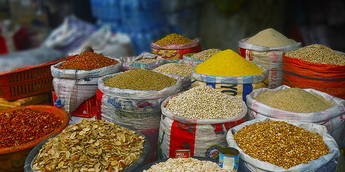
—farmers worry over rising costs of fuel
By Gabriel Ewepu
AS pump price of petrol continues to rise following the war in the Middle East which hiked the price of crude, Civil Society Organizations, CSOs, and farmers have warned about the grave implications and dangers the situation poses to the economy and Nigerians.
We ask FG to make fuel available, affordable —AFAN
The National President, All Farmers Association of Nigeria, AFAN, Mohammed Magaji, demanded that the Federal Government make fuel available and affordable to farmers and other Nigerians at reasonable price, saying food production depends on fuel availability.
Magaji added that if things continue the way they are without any intervention, farmers will be affected and also food prices will go up beyond the reach of Nigerians.
He said: “The ongoing energy crisis in Nigeria will affect the cost of food production because of the fact that farmers are using petrol to power water pumping engines.
“So, it’s just very unfortunate, everything will increase and the food prices too will definitely increase because of the cost of transportation, and this particularly will increase the cost of production of any commodity.
“If it continues like this, it is going to affect farming activities in terms of the cost of transportation but we hope and pray that the issue of energy crisis will end in the next few days or so.
“What government should do to my understanding is this: Number one, government should make sure that there is sufficient petroleum in the whole country, and at the same time, government should intervene in a number of ways so that at least the price should not go beyond the common man, beyond something that farmers can afford.”
Hike in petrol price inimical to food production – AFAN, FCT Chapter
In an emotion laden voice, the Chairman, AFAN, FCT Chapter, Dr Nkechi Okafor, said the hike in petrol price is inimical to food production.
Okafor said: “The number one implication is that food prices will be equally hiked because of transportation fare, but you should know that Nigeria system is not considerate on farmers at all.
“Consider the high prices of agricultural inputs and low prices of agricultural produce which is unfair to farmers’ investment”.
Hike will lead to higher food prices in coming weeks —DeBranch Farmers
In her reaction, the Chief Executive Officer, CEO, DeBranch Farmers Limited, Sandra Victor-Gwafan, warned that the hike in pump price of PMS will reflect on high food prices in coming weeks.
“Since the increase in the pump price of petrol happened only a few days ago, the full impact may not yet be visible in food markets”, Victor-Gwafan said.
“However, it is expected that the hike will lead to higher food prices in coming weeks.
“This is because transportation plays a major role in Nigeria’s food supply chain.
“Food items are mostly transported from rural farming communities to urban markets using petrol and diesel. When fuel prices increase, transporters are likely to increase their fares, and traders will pass those additional costs on to consumers.
“In addition, many farmers and food vendors depend on petrol to power generators for processing, storage, and market activities due to unreliable electricity.
“As fuel becomes more expensive, the cost of production and distribution will likely rise, which could push food prices upward.
“What the government should do to intervene before prices get out of hand, given that the fuel price hike is recent, this is the right time for government to act quickly to prevent excessive increases in food prices.
“First, government should support the transportation of food items by considering temporary measures that reduce the cost of moving agricultural produce from farms to markets.
“Second, there should be increased support for farmers through subsidized inputs, improved access to credit, and mechanization support to reduce production costs.
“Third, investing in alternative energy solutions such as solar-powered irrigation, cold storage, and processing facilities can help farmers and traders reduce dependence on petrol.
“Finally, government should strengthen social protection programs to support vulnerable households that are most affected by rising food and transportation costs.”
Farmers, processors deeply feeling impact – JetFarmsNG
Expressing farmers’ pain over the development, the Chief Farmer of Africa and Team Lead, JetFarmsNG, Jeremiah Olanrewaju, said, “The recent increase in the pump price of petrol is something that farmers and food processors across Nigeria are already feeling very deeply.
“From my engagement with rural farmers, aggregators, and small food processors, the reality is fuel sits at the heart of our food system, so when the price rises, the impact quickly spreads across the entire value chain.
“First, transportation becomes significantly more expensive. Most of the food consumed in major cities like Abuja, Lagos, and Port Harcourt comes from rural farming communities in northern and middle-belt regions.
“These crops whether grains, vegetables, or roots and tubers are transported by road. When petrol prices increase, transporters immediately adjust their rates.
“That extra cost does not disappear; it is transferred along the chain from the transporter to the trader, to the processor, and eventually to the consumer.
“For rural farmers, this creates a difficult situation. Farmers already operate with very small margins. When transport costs rise, buyers often offer lower farm-gate prices because they also need to cover higher logistics costs. This means farmers sometimes earn less for their produce while consumers pay more in the market.
“Secondly, production costs increase. Many farmers depend on petrol-powered machines for land preparation, irrigation pumping, threshing, and small-scale mechanization.
“In communities where electricity is unreliable, petrol generators are often the only source of power.
“As fuel becomes more expensive, farmers spend more just to keep their farms running. “For some smallholder farmers, this may even force them to reduce the size of their farms or delay planting.
“Thirdly, the impact on food processors is also very serious. Across rural Nigeria, thousands of small processors mill grains, dry spices, process cassava, and package food products using machines powered by generators.
“At JetFarmsNG, where we work closely with smallholder farmers and agro-processors, we see how energy costs directly affect production. “When fuel prices increase, processors pay more to run grinding machines, dryers, and packaging equipment. The cost of processed foods such as flour, spices, and packaged staples then increases.
“For rural communities, this situation can be especially painful.
“Higher fuel costs mean higher transport costs, higher production costs, and reduced income for farmers.
“At the same time, rural households also buy food and pay for transportation, so their purchasing power declines.
“Ultimately, the fuel price hike can lead to higher food prices, reduced food availability in markets, and increased pressure on already vulnerable households.
“If not managed carefully, this can deepen food insecurity, particularly for low-income families.”
Meanwhile, he counseled government to move fast salvage the situation.
His words: “This is a very important moment for government to act in a way that protects both producers and consumers.
“Any intervention should recognize that farmers and food processors are already under significant pressure.
“In the short term, government can ease the burden of transporting food from rural areas to urban markets.
“For example, targeted support for trucks transporting agricultural commodities could help stabilize logistics costs.
“If transportation becomes more affordable, the pressure on food prices can be reduced.
“Another important measure is the effective use of national food reserves.
“Strategic grain reserves should be properly managed so that staple foods like maize, sorghum, and rice can be released into the market during periods of extreme price increases.
“This helps stabilize supply and prevents panic buying.
“However, beyond short-term solutions, Nigeria must address the structural weaknesses in our food system.
“One major step is investing in rural infrastructure. Many farming communities struggle with poor roads, which already make transportation expensive even before fuel prices rise.
“Improving rural road networks will reduce the cost of moving food from farms to markets and improve farmer incomes.”
“Secondly, government should support local agro-processing in rural areas.
“When food is processed closer to where it is produced, the need to transport bulky raw produce over long distances is reduced.
“This creates jobs in rural communities while lowering logistics costs across the value chain.
“Energy is another critical area. The future of agriculture must include renewable energy solutions.
“Solar-powered irrigation systems, solar dryers, and solar cold storage can help farmers and processors reduce dependence on petrol.
“This will make the agricultural sector more resilient to fuel price fluctuations.
“Finally, we must strengthen agricultural productivity and farmer support systems. Farmers need access to improved seeds, fertilizers, mechanization services, and stronger extension support. When productivity improves, farmers can produce more efficiently and better absorb cost shocks”.
Double jeopardy for ordinary Nigerians —ActionAid
Speaking with Sunday Vanguard, the Country Director, AAN, Dr Andrew Mamedu, described the situation Nigerians face as “double jeopardy” while speaking on the implications of the hike in pump price of PMS.
Mamedu said: “The increase in the pump price of petrol has serious implications for poor Nigerians because fuel prices influence almost every aspect of daily life and economic activity in the country.
“What we are seeing now is a situation of double jeopardy for ordinary Nigerians.
“First, the removal of the fuel subsidy in 2023 pushed petrol prices sharply upward and triggered a wave of increases in transport fares and food prices across the country.
“Many households were already struggling to stabilise their finances.
“Now, rising global oil prices linked to geopolitical tensions in the Middle East are pushing fuel prices up again, with some areas seeing petrol sell as high as ¦ 1,200 per litre. “Families are therefore facing another round of sharp increases in transportation, food, and basic goods.
“Now, rising global oil prices linked to geopolitical tensions in the Middle East are pushing fuel prices up again.
“This means families who were already dealing with the economic consequences of subsidy removal are now facing another round of increases in the cost of transportation, food and basic goods.
“For poor households, the first and most immediate effect is usually on transportation costs.
“Public transport fares tend to increase almost immediately when fuel prices rise.
“For millions of Nigerians who rely on daily income from informal work, this means a larger portion of their earnings is suddenly spent simply getting to work or transporting goods to markets.
“The increase in transport fare will also force households to make difficult choices as was the norm in previous times.
“For example, some families may withdraw children from school, reduce attendance at school, or have them walk long distances because transport fares are no longer affordable.
“Similarly, rising costs can push people to seek cheaper health alternatives, including self-medication or traditional medicine, instead of professional care.
“The second major impact is food prices. Nigeria’s food supply chain depends heavily on transportation, with produce moving from rural farming communities to urban markets.
“When fuel prices increase, the cost of transporting these goods rises, and traders pass those additional costs on to consumers. The other major impact is on businesses and livelihoods. Many small businesses rely on generators or fuel-powered equipment, so higher fuel prices immediately increase operating costs and reduce income.
“For households that already spend a large share of their income on food, this can quickly reduce food consumption or force families to shift to less nutritious alternatives.
“In that sense, rising fuel prices are not just an energy issue — they directly affect food security, livelihoods and the ability of poor families to meet their basic needs”.
The AAN boss also warned that if pump price of PMS continues to increase by marketers, “most Nigerians, particularly those already living in poverty, the immediate economic impact is unlikely to be positive”.
He went on: “When fuel prices increase, the effect spreads rapidly across the economy. “Transport costs rise, businesses face higher operating expenses, and the cost of moving goods increases.
“These pressures typically translate into higher prices for food and other essential items, which further reduce the purchasing power of households.
“In an economy where millions of people depend on informal work and daily income, rising living costs can significantly weaken economic activity.
“When families are forced to spend more on transportation and food, they have less money available for other needs such as education, healthcare and small business investments.”
He raised “a broader concern about how Nigeria’s oil revenues are managed, saying, “During periods of global tension, oil prices often rise which can increase government revenues.
“However, many Nigerians feel that these resources do not translate into meaningful improvements in public services or economic opportunities.
“As a result, while the state may benefit from higher oil earnings, ordinary citizens often experience only the rising cost of living, reinforcing a sense that the burden of economic shocks falls disproportionately on the poor.”
He also said the current situation will definitely deepen poverty levels, describing it as “extremely difficult because many households were already facing severe economic pressure even before this latest fuel price increase”.
Mamedu stressed: “Over the past few years, families have had to cope with high inflation, rising food prices, currency instability and stagnant incomes.
“The removal of the fuel subsidy significantly increased the cost of transportation and basic goods, and many households have been struggling to adapt to those changes.
“The current increase in fuel prices linked to global tensions therefore creates a second economic shock for households that had not yet recovered from the first.
“For families living in poverty, budgets are often extremely tight.
“Even small increases in the cost of transportation or food can force difficult choices. “Some households reduce the quantity or quality of food they consume, delay medical care, withdraw children from certain school activities, or take on additional informal work to survive.
“Women are often particularly affected because they manage household food budgets and play a central role in informal economic activities such as petty trading and small-scale farming. “Rising costs therefore increase both the financial and social pressures placed on women within households and communities.
“The cumulative effect is that many vulnerable households are being pushed further into poverty and economic insecurity.”
The AAA leader called on government and players in the petroleum sector to “recognise that rising fuel prices have profound social consequences for millions of Nigerians”.
“First”, he said, “there must be greater transparency and accountability in how oil revenues are managed.
“Nigeria continues to earn significant income from oil, particularly when global prices rise during geopolitical tensions.
“Citizens need to see these resources translated into investments that improve their lives, rather than being lost to administrative excesses, leakages or waste.
“Second, government must prioritise stronger social protection systems to cushion the impact of rising living costs on vulnerable households. “Many Nigerians currently lack adequate safety nets, leaving them highly exposed to economic shocks such as sudden increases in fuel prices.
“Third, policymakers must focus on long-term solutions that reduce Nigeria’s vulnerability to fuel price shocks, including improving public transportation systems, strengthening domestic refining capacity and investing in agricultural infrastructure so that food can move more efficiently from farms to markets.
“Ultimately, Nigeria’s economic policies must ensure that the country’s natural resource wealth benefits its citizens.
“Without that balance, ordinary Nigerians will continue to bear the burden of rising costs while the benefits of oil wealth remain unevenly distributed.”
Petrol compounds precarious economic situation – IPC
In another reaction, the Executive Director International Press Centre IPC, Lanre Arogundade, said the hike in the price of petrol is simply compounding the already precarious economic situation.
“Although linked to the war situation in the Gulf, it has the imitation of compounding the already precarious economic situation Nigerians have since found themselves”, Arogundade said.
“If transporters increase fares as a result, the effect would be multi-layered. The question will also arise: What is happening to the refineries?”
He also argued that the international crude oil price would not impact positively on the Nigerian economy, saying, “I don’t see that happening, although it may bring in more petrol dollars.
“Life is getting tougher and tougher, especially with the electricity crisis.
“They should know that reliance on Dangote Refinery alone cannot help solve problems like this.”
Inflation will squeeze Nigerians – Centre
For her part, the Executive Director, Ene Obi Centre for Development, Comrade Ene Obi, said Nigerians will bear the brunt of inflation, and called on government to urgently intervene.
Obi said: “It causes inflation, every other person, even the minimum wage that they say they should pay for workers, some states have not even paid not to talk of another huge inflation that comes because how do you want even the boat drivers to charge when you have now sort of doubled, about doubled the price of fuel.
“Those who are the traders, they move their wares. Those who buy the fuel now triple their pump price and then the vulnerable Nigerians are the ones that are paying the price.
“What is the goodness of any government in a country? What’s the point of a democracy? What is the dividend of democracy when the dividend cannot defend the poor people of Nigeria?
“If you want to say how will it impact positively to the economy, how does it? People are at this point really stressed trying to feed their families and now you again go into the price because it shows that the administration is not ready.
“You’re ready to work for the poor, to bring some dividends to the generality of Nigerians. What are we talking about? You came on board and you say fuel subsidy is gone.
“Many countries that have oil in its quantum, what they use the oil is to bridge the gap for their citizens. So you cannot compare Nigerian price with international price.
“The fuel is in ground here, you are producing it here. You are refining.
“Some of it is being refined here because they have refused to repair the refineries, fund refineries because it suits them because if we are producing and we are refining.
“What we have today will not be what we’re having here because this is something that is from our land and should be able to work for us.
“When you say what do you think about the situation with the impoverished people, of course you have according to the statistics from the Nigerian Bureau of Statistics, about 139 million Nigerians are living below the poverty line, what do you think will happen to them?”
The post Middle East War: No petrol, no food for Nigerians appeared first on Vanguard News.