M-East war: Nigeria, 39 others meet on Hormuz Strait
 SKAiF NewsNG SNN
•As Gulf states seek UN mandate use of force to protect Hormuz
By Nkiruka Nnorom with agency reports
With pressure growing over the closure of the Strait of Hormuz by Iran, 40 countries, including Nigeria, yesterday held a virtual talk to explore ways to restore freedom of navigation through the vital shipping route.
The virtual meeting organised at the behest of the British Prime Minister, Keir Startmer, came after United States President, Donald Trump, said he was considering withdrawing his country from North Atlantic Treaty Organisation, NATO, over the refusal by the alliance to support the war and even vowed more aggressive strikes on Iran.
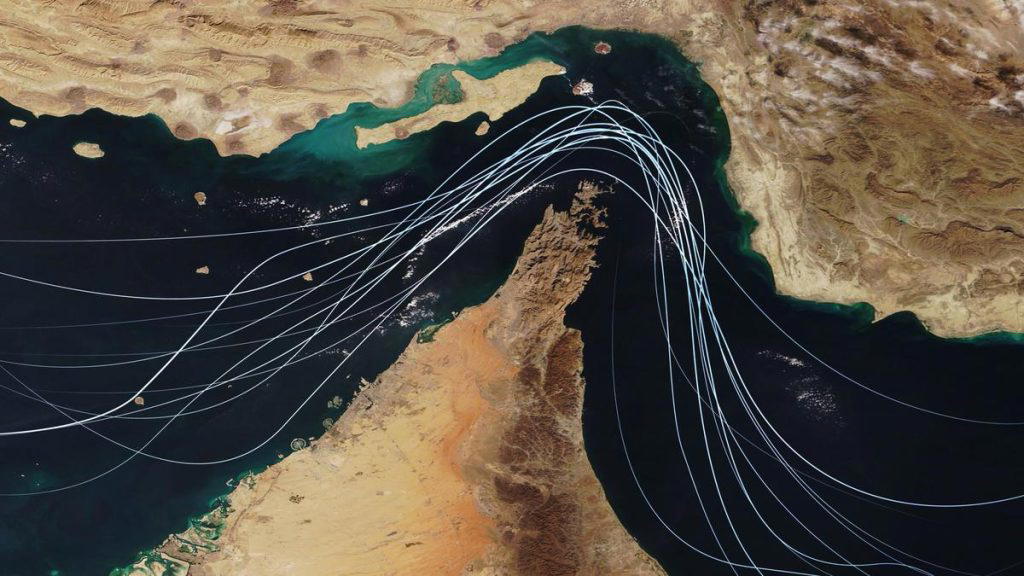
Iran’s retaliatory attacks on commercial ships, and the threat of more, have halted nearly all traffic in the strait that connects the Gulf to the rest of the globe’s oceans, shutting a critical path for the world’s flow of oil and sending petroleum prices soaring.
Some of the countries that participated in the talks including the UK, France, Germany, Italy, Canada, Japan, and the United Arab Emirates, have signed a statement demanding that Iran stop its attempts to block the strait and pledging to “contribute to appropriate efforts to ensure safe passage” through the waterway.
Others, according to Al Jazeera, are the Scandinavian countries (Sweden, Norway and Demark), Baltic countries (Estonia, Lativa and Lithuania), Bahrain, Panama, and Nigeria, among others.
UK Foreign Secretary, Yvette Cooper, who chaired the meeting, condemned “Iranian recklessness” for “hitting global economic security”, adding that the UK is seeking to lead a diplomatic initiative to restore access to the maritime route being targeted by Iran in retaliation for the US-Israeli campaign against it.
She said there were more than 25 attacks on vessels in the strait and 20,000 seafarers trapped on 2,000 ships.
Speaking ahead of the virtual meeting, she said military planners are being convened to look at how to de-mine the strait as past of efforts to secure the vital sea passage, the Press Association news agency reported.
“Alongside today’s discussions, we are also convening military planners to look at how we marshal our collective defensive military capabilities, including looking at issues such as de-mining or reassurance once the conflict eases,” she said.
But Starmer had on Wednesday said that military planners from an unspecified number of countries will meet soon to work on how to ensure security for shipping “after the fighting has stopped”.
Starmer said resuming shipping “will not be easy,” and will require “a united front of military strength and diplomatic activity” alongside partnership with the maritime industry.
French President, Emmanuel Macron, said it was not feasible to launch a military operation to force open the strait.
He said the process would be multi-phased and could not begin until hostilities had calmed or ended and suggested the best way to ensure the strait’s opening would be in coordination with Iran after a ceasefire.
“This was never the option we have supported because it is unrealistic,” he said.
“It can only be done in consultation with Iran,” Macron said during a visit to South Korea.
Iran’s armed forces responded to Trump’s threats of fresh attack on its power plants with a warning for the United States and Israel of “more crushing, broader and more destructive” attacks in store.
The war will continue until the “permanent regret and surrender” of Iran’s enemies, said Ebrahim Zolfaqari, spokesperson for the Iranian military’s Khatam al-Anbiya central headquarters, in a statement carried by Iranian media.
Gulf states seek UN mandate use of force to protect Hormuz
Meanwhile, the secretary-general of the Gulf Cooperation Council, GCC, yesterday, called for the UN Security Council to authorise the use of force to protect the Strait from Iranian attacks.
“Iran has closed the Strait of Hormuz, prevented commercial vessels and oil tankers from transiting, and imposed conditions on some to pass through the Strait,” said Jassem al-Budaiwi, head of the GCC.
He spoke in New York at the first Security Council meeting on cooperation with the GCC, which comprises Saudi Arabia, the United Arab Emirates, Bahrain, Qatar, Kuwait and Oman.
“We call upon the Security Council to assume its full responsibility and take all necessary measures to protect maritime routes and ensure the safe continuation of international navigation,” al-Budaiwi said.
Bahrain has proposed a draft resolution that would greenlight states to use “all necessary measures” to assure free transit through the Strait of Hormuz.
However, the measure has divided the 15-member Security Council.
According to diplomatic sources, Russia, China and France, who each hold veto privileges, have voiced strong objections despite several modifications to the text.
“We want a Security Council decision that addresses the situation comprehensively with the root causes, and not one-sided and unbalanced,” Anna Evstigneeva, Deputy representative of Iran-allied Russia, said Wednesday.
Iran drafting protocol with Oman to monitor traffic in Hormuz – Report
These came as Iran is drafting a protocol with Oman to monitor traffic in the strait of Hormuz, according to IRNA news agency.
Iranian Deputy Foreign Minister, Kazem Gharibabadi, has apparently told Sputnik, the Russian government-owned news agency, that Iran has nearly completed its draft protocol, which would establish a new navigation regime in the strait of Hormuz.
The post M-East war: Nigeria, 39 others meet on Hormuz Strait appeared first on Vanguard News.