Lagos Airport Fire: How NAMA sustained safety of Nigeria’s Airspace
 SKAiF NewsNG SNN

By Okhumeode Momodu
The Lagos airport community woke up Monday, 23rd February, 2026 to witness an uproar following a fire outbreak that engulfed parts of the fourth and fifth floors of Terminal One of the Murtala Muhammed International Airport (MMIA) in Lagos, triggering an emergency response and temporary disruption of flight operations.
While the inferno damaged critical equipment belonging to the Nigerian Airspace Management Agency (NAMA), the swift and coordinated response led by the agency’s Managing Director, Umar Ahmed Farouk, ensured that the safety of Nigeria’s airspace was not compromised.
To close the gap, NAMA immediately activated contingency measures to ensure the uninterrupted provision of air navigation services. As part of these measures, the Agency initiated arrangements for the deployment of a Mobile Control Tower to serve as a temporary operational facility while restoration efforts on the main tower continue.
Although, the mobile tower is yet to be deployed, NAMA had clarified why it is a little bit delayed, maintenaning that the installation of aviation control infrastructure cannot be undertaken in a hurried or improvised manner.
Such facilities, NAMA emphasised must comply with strict engineering and operational standards designed to safeguard aircraft operations.
“First, the location chosen for the Mobile Control Tower must provide optimal visual coverage of the runway, taxiways and other critical portions of the airfield. This requirement is essential to enable air traffic controllers maintain effective situational awareness in managing aircraft movements on the ground and within the aerodrome environment.
“Secondly, the identified location required excavation and structural casting to create a firm and stable foundation capable of supporting the tower infrastructure. Aviation installations demand structural stability to avoid any operational or safety risk.
“Engineering standards further require that the casting be allowed to cure for a minimum of twenty-one days before any heavy structure can be mounted on it. This curing period is a critical technical process intended to prevent cracks, instability or structural failure that could compromise the installation”, NAMA stated in an official statement issued recently, signed by Director of Public Affairs and Consumer Protection, Dr Abdullahi Musa.
A Test for Aviation Safety
Air navigation infrastructure is the backbone of safe aviation operations. Communication systems, air traffic control facilities and navigation equipment form the technical architecture that ensures aircraft move safely through the skies. The fire outbreak, therefore, becomes a serious threat because such incidents can easily disrupt air traffic services and raise immediate concerns about flight safety.
Indeed, records have shown that the damage to NAMA’s Air-To-Ground communication infrastructure was significant. These systems are essential for enabling air traffic controllers to maintain constant communication with pilots approaching or departing the busy Lagos airspace corridor.
One of the things, NAMA did to manage the situation was the temporary arrangements for Air Traffic Controllers (ATCs) who immediately switch over temporary mobile towers to enable operators resume normal flights services
Immediate Leadership Response
Faced with the emergency, the leadership of NAMA moved quickly. According to Engr. Farouk’s during an inspection tour of the airport after the incident, the agency received the report of the fire while management was in session. Recognising the potential risk to aviation operations, he immediately dispatched senior officials—including the Director of Operations and Engineering—to assess the situation on ground.
The early evaluation confirmed that the agency had suffered a major communications loss. As a precautionary measure, inbound flights into Lagos were temporarily suspended to avoid operational risks.
Such a decision reflects standard international aviation safety protocols. When infrastructure that supports air traffic management is compromised, regulators must prioritise safety over operational convenience.
Deploying Backup Systems
However, what could have escalated into a prolonged disruption was quickly stabilised through the deployment of backup systems. NAMA activated contingency arrangements to sustain air traffic services in Lagos.
The agency has also announced plans to deploy a mobile control tower in the coming days to that communication between pilots and air traffic controllers would remain uninterrupted while permanent systems were being restored.
This redundancy—the ability to fall back on backup infrastructure—is a core principle in modern airspace management. Aviation systems around the world are designed with layers of backup to prevent a single failure from grounding operations.
NAMA’s ability to activate these contingencies demonstrates that Nigeria’s airspace management framework has built-in resilience.
Beyond the Damage
The quick response by NAMA’s management demonstrated that while emergencies may be unavoidable, preparedness and decisive action can prevent them from escalating into full-blown crises. Although the exact financial value of the destroyed equipment has yet to be determined, the larger takeaway from the incident is not merely the scale of the loss but the effectiveness of the response.
The fire could have created prolonged operational paralysis at one of West Africa’s busiest aviation hubs. Instead, swift leadership decisions, contingency planning and coordinated action ensured that the situation remained under control. Most importantly, Nigeria’s airspace continued to operate safely.
Stakeholders Commend NAMA
During the inspection of the fire situation, few hours after the fire incident at the airport, the Honourable Minister of Aviation and Aerospace Development, Festus Keyamo appreciated the efforts put up by NAMA and other aviation agencies who made things happen to avert chaos.
He commended NAMA and informed the public about government’s plans to deploy a mobile towers for the Air Traffic Controllers, in order to enable operators continue with all their flight services.
Expert have confirmed that, when fully deployed, the mobile tower has many of the critical systems and lots of capabilities such as voice communication and control system with weather report generating system.
According to them, the mobile towers also have antennae and sensor which picks the weather information in the air from the Nigeria Meteorological Agency (NIMET) system and then feeds this information into the controller’s system.
Also commending NAMA and other agencies are the members of the National Assembly overseeing Nigeria’s aviation sector.
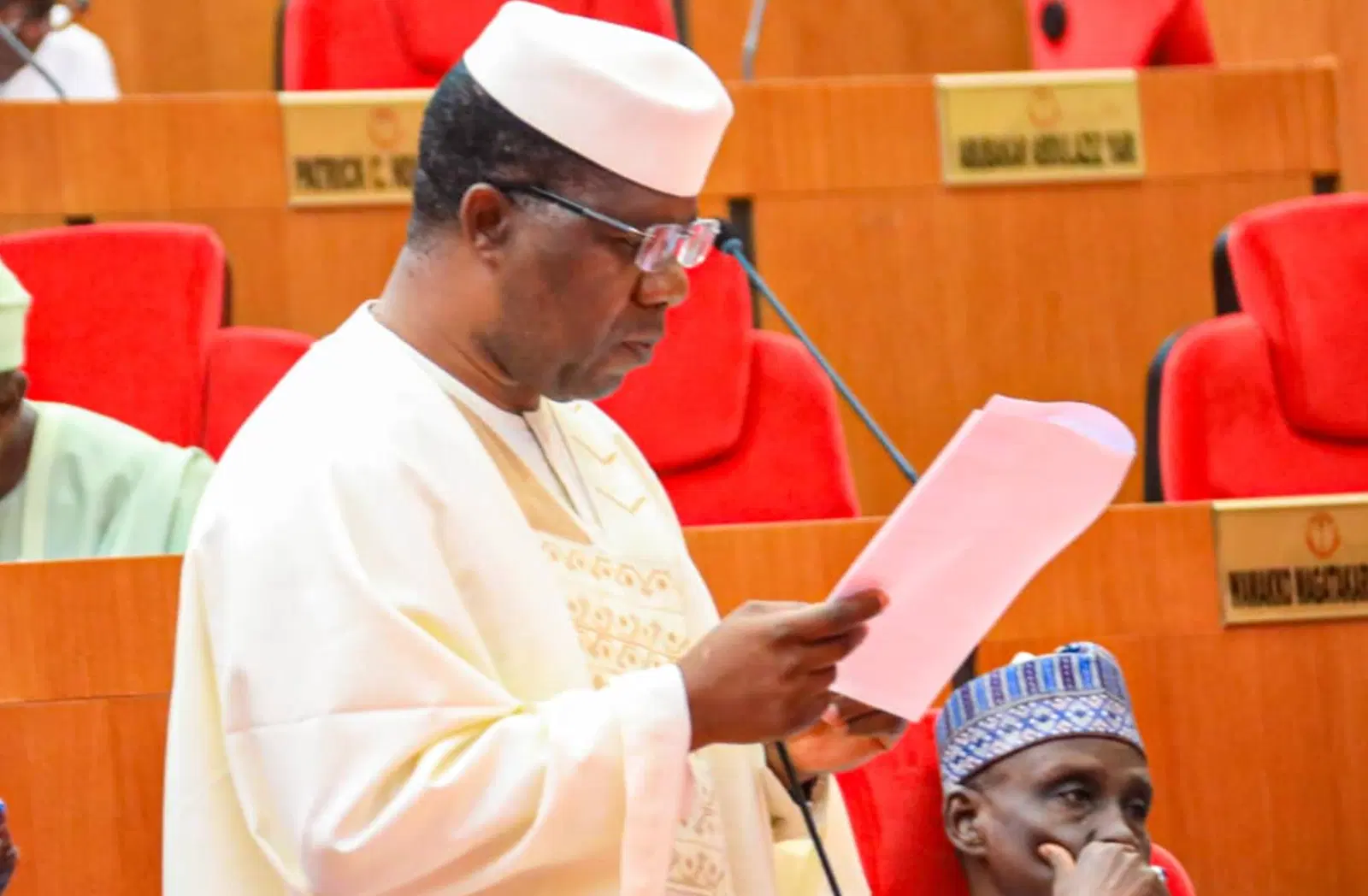
Speaking during an on-the-spot assessment in Lagos, Chairman of the Senate Committee on Aviation, Abdulfatai Buhari, said the aviation agencies met their expectations.
According to him, flights were promptly diverted to alternate destinations, including Malabo and Accra, while international carriers such as Emirates and Lufthansa were still able to land in Lagos shortly after midnight, signalling a high level of operational recovery despite the disruption.
Corroborating Buhari’s position, Chairman of the House Committee on Aviation, Abdullahi Garba, commended NAMA and other agencies for stabilising the situation within few hours, describing the handling of the situation as “a very good one”.
The post Lagos Airport Fire: How NAMA sustained safety of Nigeria’s Airspace appeared first on Vanguard News.