Lack of quality political leadership bane of Nigeria’s devt – Ex-minister, Aganga
 SKAiF NewsNG SNN
By Emmanuel Okogba
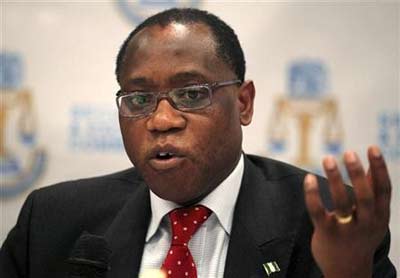
Former Minister of Industry, Trade and Investment, Dr Olusegun Aganga has identified Nigeria’s leadership problem as a of lack of competent political leaders.
He said while Nigeria does not lack competent leaders, a shortage of competent political leaders has been the bane of the country’s growth and development.
Aganga said this while delivering the keynote address at the book launch of Dr. Olu Fasan titled “In the National Interest: The Road to Nigeria’s Political, Economic and Social Transformation”, on Thursday in Lagos.
He noted that Nigeria’s leadership structure is set up in such a way that competent hands are schemed out of holding positions that would help them develop the country.
He pointed out that Nigeria has produced some of the brightest minds globally but these professionals and technocrats become victims of money-politics when they attempt to participate in politics to help develop the nation.
His words, “there is no shortage of competent leaders in Nigeria. What we lack, however, is competent political leadership. The truth is that there is an acute shortage of quality political leadership with the national interest at heart at every level of public life in Nigeria. And I am not just talking about the centre, on which most people often tend to focus, but also the state and local government levels, where competent political leadership is needed to meet the basic needs of our people.
“Here, then, is the critical question on leadership that all of us must address: Why does a nation that has abundant, credible and intellectually robust leaders who excel in the diaspora have poor political leadership at home?
“The simple answer, I would argue, is that our political system does not attract the best talents. But why does the system not attract the best talents? Again, in my view, the answer is simple: the political apparatus is composed so that the best talents are unable to emerge from the existing party structures, which are primarily driven by money and are self-serving. What is more, even when technocrats are brought into government, more often than not, they are constrained by the same political system that prioritises political considerations over economic growth and development.
“Yet, Nigeria needs leaders who are energetic and vibrant, inspirational, intellectually robust, exposed and who demonstrate the ability to understand and effectively manage the affairs of a diverse nation, as well as the ability to deliver a transformative vision to move Nigeria from poverty to prosperity, from disunity to unity.
“What’s more, Nigeria needs leaders who recognise that our biggest and most important asset are our people, and, therefore, who will prioritise the development of our human capital. With the average age in Nigeria being 18.6 years, and with poverty increasing by six people every minute, according to the World Bank, Nigeria needs leaders at all levels who will promote the wellbeing of the citizens and who are accountable to the people.
“Unfortunately, over many decades, the failure of successive governments to invest enough in our most important asset – our people – has led to high levels of illiteracy, poverty, unemployment and underemployment, insecurity, underdevelopment and a relatively small economy. Nigeria’s large and growing population is simply not working for it. The demographic advantage that usually comes from a large population is not accruing to Nigeria because the population is largely unproductive. And it is unproductive because we are not investing enough in human capital.
“Yet, for Nigeria to grow economically, we must turn the quantity advantage into productive advantage. Therefore, more than at any time before, we need leaders in government who will focus on the critical enablers of education, skills and training that are relevant to the economy, health and welfare to advance social progress and human development, and, of course, leaders who will tackle the triple threat of poverty, unemployment and insecurity.
“The shortage of quality political leadership is a bane of Nigerian development. We must tackle it by addressing how we recruit people into political leadership, which means ensuring that our political system is not too monetised and not driven by self-serving motivations and godfatherism. Our political institutions, including the political parties must be strengthened.
“But important as it is, leadership alone is not enough. A society that is not underpinned by the right values, where leadership is not values-based, cannot truly succeed, despite having seemingly effective leadership. History has shown that the most successful companies and nations in the world are built on a set of core values. True leadership is values-based.
“For instance, while a leader must have a clear vision of where he or she wants to take the country, values are critical insetting that vision; they must underpin it. Without the right values, without the right public service ethos, even otherwise technically competent leaders cannot transform a country and move it forward. To serve effectively and successfully, political leaders and other public servants must not only have competence and vision, but they must also live the values of integrity, compassion, empathy and justice.”
The post Lack of quality political leadership bane of Nigeria’s devt – Ex-minister, Aganga appeared first on Vanguard News.