Iraq PM to meet Trump in Washington over Iran ties
 SKAiF NewsNG SNN
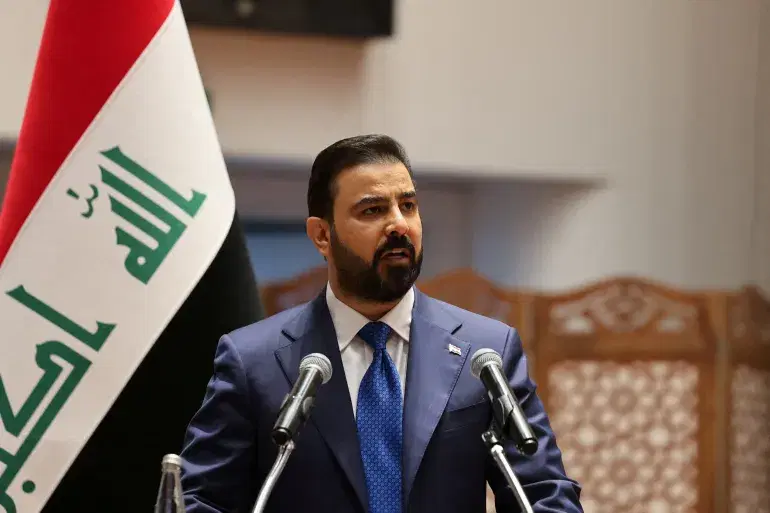
Iraqi Prime Minister Ali al-Zaidi will meet US President Donald Trump in Washington on Tuesday, as the US administration piles pressure on Baghdad to curb Iranian influence.
His visit comes against the backdrop of renewed military escalation between the United States and Iran, Iraq’s main allies.
Washington and Tehran’s enmity has long turned Iraq into a proxy battleground and left successive governments struggling to maintain a delicate balance between the two foes.
Zaidi arrived in Washington on Monday for his first international visit since assuming office — a week-long trip during which he will meet Trump, US officials and representatives of oil companies.
A businessman who came to power this year with US blessing after Trump vetoed another candidate, Zaidi vowed to boost Iraq’s fragile economy and to disarm the pro-Iran armed groups that have targeted US facilities.
In an op-ed in the Washington Post ahead of his visit, Zaidi wrote that he leads “a government committed to ensuring that the state possesses the legitimate monopoly on the use of force”.
His government has given armed groups, which Washington designates as terrorist organisations, until September 30 to disarm, coinciding with the end of the US-led anti-jihadist coalition’s mission.
A senior Iraqi politician told AFP on condition of anonymity that even if the current government adopts a more US-friendly path, prioritising the economy, “it doesn’t mean that Iraq is turning against Iran”.
Iraq “must maintain the long-standing balance” between its allies, he said.
Last week, Iraq’s holy cities, home to Shia Islam’s most sacred shrines, hosted a massive funeral procession for Iran’s late supreme leader Ali Khamenei, who was killed in a US-Israeli strike on Tehran.
– A hard task –
The Iraqi government believes that maintaining a state monopoly over arms is a must to attract investments.
In his op-ed, Zaidi said his message to the United States is that Iraq “stands apart from regional alignments and conflicts, and chooses instead the path of development”.
In a show of support, the United States has resumed cash shipments for Iraq’s oil revenue, which have been handled from the Federal Reserve Bank of New York since 2003.
Washington had suspended the payments earlier this year as it pressured Baghdad to disarm the pro-Iran armed groups.
While some armed groups said they will cooperate with Zaidi, others remain firm in their refusal to disarm.
Iraq’s pro-Iran armed groups have seen their political and financial clout increase over the years, and have long called for the withdrawal of American troops deployed within the anti-jihadist coalition.
During the Middle East war, they intervened in support of Tehran, targeting US facilities in Iraq more than 600 times.
The senior politician said that some groups will likely not disarm “as long as there is a war in the region, neither they nor Iran would agree to it”.
Last week, the Islamic Resistance in Iraq, a loose alliance of Iran-backed armed groups, said they opposed Zaidi’s visit to Washington.
The groups said that they will strengthen their capacities, and warned against “replacing military occupation with an even more dangerous form of economic occupation”.
– Investments –
Oil-rich Iraq has been trying to move past decades of war and unrest, but it still suffers from poor infrastructure, failing public services, mismanagement and endemic corruption.
In his op-ed, Zaidi said that in Washington he will create “opportunities that have a measurable economic impact” and wants “leading American companies to consider opportunities in developing Iraq’s infrastructure”.
In recent months, Iraq has signed several deals with US companies in the oil and gas sector.
In the United States, Zaidi is expected to sign more agreements, including one to establish a fund into which Iraq will deposit half-a-million barrels of oil per day in exchange for help to boost the country’s electricity supply.
Like other oil producers, Iraq, a founding member of OPEC, was greatly affected by the Middle East war.
It is hugely dependent on oil exports, which make up about 90 percent of its budget revenues, and the vast majority of its crude travels via the disputed Strait of Hormuz.
rh/dc/cms
The post Iraq PM to meet Trump in Washington over Iran ties appeared first on Vanguard News.