Iran dealt enemies ‘dizzying blow,’ supreme leader says
 SKAiF NewsNG SNN
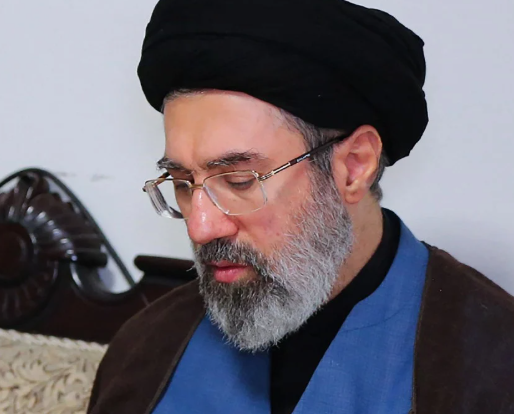
Iran’s Supreme leader Mojtaba Khamenei said Friday the country had dealt its enemies a “dizzying blow” in the war with the United States and Israel, as fresh blasts hit Tehran on the first day of the Persian New Year festival.
Israel accused Tehran of an “attack on the holy sites” of Jerusalem, after a blast blew a crater in the Old CIty a few hundred metres from the Al-Aqsa Mosque, the Western Wall and the Church of the Holy Sepulchre.
Khamenei has not appeared in public since being named to succeed his father Ali Khamenei, who was killed in Israeli airstrikes at the start of the war that has engulfed the region, and has only issued written statements.
Iranians have “dealt him (the enemy) a dizzying blow so that he now starts uttering contradictory words and nonsense,” Khamenei said in a written message for Nowruz, the Persian New Year.
“At the moment, due to the particular unity that has been created between you our compatriots — despite all the differences in religious, intellectual, cultural and political origins — the enemy has been defeated,” Khamenei said in the message.
The statement of defiance came as Iranians marked a muted Nowruz under the shadow of a war now approaching its fourth week.
AFP journalists heard several blasts in Tehran on Friday, from the eastern and northern parts of the city.
In the Iranian capital’s markets, shoppers were out in force buying new clothes and gifts, although sidewalks were less packed than usual for this time of year, with many people having fled north, AFP correspondents said.
– ‘Decimated’ –
Huge banners bearing images of Nowruz, which begins officially in the evening, have replaced portraits of the former leader Ali Khamenei, assassinated on the first day of the war on February 28 by Israel.
Israel said it had confirmed that Ismaeil Ahmadi, the chief of Iran’s Basij paramilitary force, was “eliminated” in a strike earlier this week that also killed its top commander.
Elsewhere in Iran, the Israeli army also targeted a northern region around the Caspian Sea, a popular holiday destination that has so far been largely spared attacks.
And in Jerusalem’s Old City, a blast was caused “Iranian missile fragments”, the Israeli military wrote on X, and drew an angry response from Israel’s foreign ministry.
“The Iranian attack on the holy sites sacred to all three religions reveals the madness of the Iranian regime, which claims to be religious,” the foreign ministry wrote on X, calling it an “Iranian gift” for the Muslim holiday of Eid al-Fitr.
On Thursday Israeli Prime Minister Benjamin Netanyahu indicated that an end to the fighting could be close.
Netanyahu said Iran was “being decimated” and the war was “ending a lot faster than people think”, though he warned a “ground component” may be needed to dislodge the Iranian government.
French Foreign Minister Jean-Noel Barrot said “major concessions — a radical change of stance” would be needed from Iran to secure a lasting political end to the war.
– Trump brands allies ‘cowards’ –
The war has sent global energy markets into turmoil, with Iran all but closing the Strait of Hormuz — a crucial transit route for tankers leaving the Gulf — and strikes on oil and gas infrastructure panicking traders.
Drone attacks hit Kuwait’s giant Mina Al-Ahmadi refinery on Friday, causing a fire later brought under control, a day after a direct hit on Qatar’s vital Ras Laffan facility.
US President Donald Trump renewed his attack on his NATO allies, branding them “cowards” for rebuffing his call to send military hardware to reopen Hormuz, which normally carries a fifth of the world’s oil and liquefied natural gas (LNG).
US allies “don’t want to help open the Strait of Hormuz, a simple military maneuver that is the single reason for the high oil prices,” Trump posted on his Truth Social platform.
“So easy for them to do, with so little risk. COWARDS, and we will REMEMBER!”
Six major international powers, including Britain, France, Germany and Japan said Thursday they were ready to “contribute to appropriate efforts” to secure the strait, without making any specific commitments.
– Energy costs –
Energy analysts and consumers are scrambling to count the cost of Iranian missiles hitting Qatar’s huge Ras Laffan natural gas complex on Thursday.
The attack caused “extensive damage” that Qatar’s state energy company said could cost $20 billion a year in lost revenue and take five years to repair.
That could lead to high energy prices that outlast the conflict, which would increase inflation and lower economic growth.
“Short disruptions create price volatility. Sustained damage creates lasting economic shock,” Robert Pape, a political science and military expert at the University of Chicago, wrote on his Substack.
“This is how a regional war becomes an historic global economic crisis.”
Spain became the latest country to take action to cushion the economic impact of the war, announcing a five-billion-euro package including a VAT cut on petrol to slash pump prices.
The war, which has killed thousands and displaced millions, quickly spread to Lebanon where the Israeli military has carried out regular bombardments in response to rocket fire on Israel by Iran ally Hezbollah.
Lebanon’s health ministry said the death toll from Israeli airstrikes on southern and eastern Lebanon as well as on the capital Beirut and its southern suburbs has surpassed 1,000.
NATO has pulled its mission in iraq back to Europe, the alliance said Friday. The mission was in an Iraqi military base in Baghdad’s Green Zone near the US embassy, which has been targeted several times since the start of the war.
AFP
The post Iran dealt enemies ‘dizzying blow,’ supreme leader says appeared first on Vanguard News.