Insecurity: Scores of schools in 40 LGAs shut down
 SKAiF NewsNG SNN
•Three states worst hit as non-state actors disrupt learning
•Experts warn closures worsening out-of-school crisis, child labour, early marriage, radicalization
By Nnamdi Ojiego, Musa Ubandawaki, Umar Yusuf, Ibrahim Hassan-Wuyo, Peter Duru, Ndahi Marama, Golok Nanmwa, Haruna Aliyu, Yauziyya Lawal & Maryam Usman
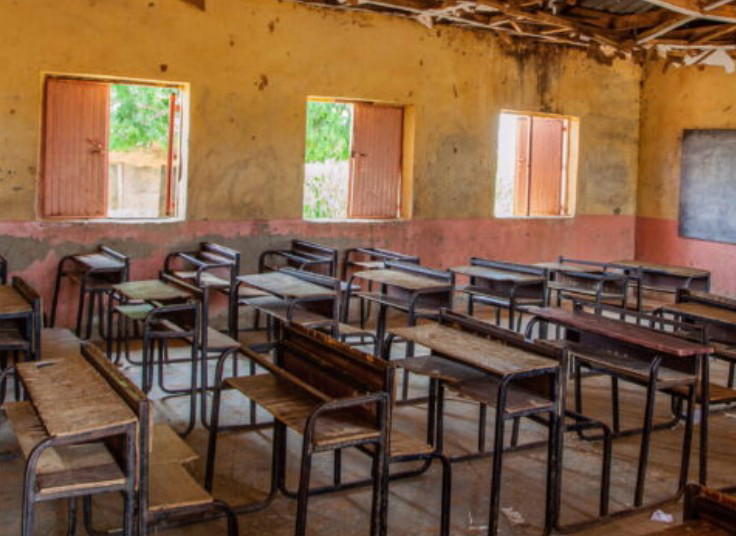
At least 65 secondary and primary schools have been shut or rendered non-functional by insecurity across northern Nigeria, findings by Sunday Vanguard have shown, with the closures cutting across dozens of local government areas and leaving thousands of children without normal access to classroom education.
Affected schools are spread across Sokoto, Benue, Plateau, Borno, Kaduna and Kebbi, while insecurity has also disrupted academic activities in parts of Katsina, Adamawa and other northern states.
The closures have been triggered by terrorist and bandit attacks, abductions, displacement of communities and fears of further attacks on pupils, students and teachers.
In some communities, schools have remained shut for prolonged periods.
In others, authorities have merged affected schools with institutions in safer locations or moved students to alternative centres to keep them in school.
The development has raised fresh concerns over Nigeria’s already severe out-of-school crisis and the long-term consequences of keeping children away from classrooms.
It has also persisted despite years of government and donor-backed interventions aimed at protecting schools from attacks, including the Safe Schools Initiative launched in 2014 after the abduction of 276 schoolgirls from Government Girls Secondary School, Chibok, Borno State.
The initiative was established as a partnership involving the Federal Government, the United Nations and the private sector to protect schools in high-risk communities and ensure that children could continue their education despite insecurity.
More than $30 million has been mobilised for the Safe Schools Initiative since its establishment, according to the Global Business Coalition for Education.
The Federal Government later introduced the National Plan on Financing Safe Schools for 2023 to 2026, with a projected investment of ¦ 144.86 billion.
The plan envisaged ¦ 32.58 billion in 2023, ¦ 36.98 billion in 2024, ¦ 37.15 billion in 2025 and ¦ 38.03 billion in 2026.
Yet, more than a decade after the Safe Schools Initiative was launched, attacks continue to drive children away from schools.
Sokoto shuts schools in 20 LGAs
Sokoto State has recorded one of the most extensive current disruptions. Schools in 20 of the state’s 23 local government areas have been shut following security concerns, according to the state government.
The Commissioner for Basic and Secondary Education, Prof Ahmad Ladan Ala, said the closure followed a directive from the Federal Government.
He said schools across the state, including primary schools, had been closed indefinitely, with schools within Sokoto North, Sokoto South and Wamakko exempted.
The President of the All Nigerian Conference of Principals of Secondary Schools, Muhammad Ikililu, said insecurity had also disrupted boarding education in the state for several years.
According to him, boarding schools were moved to the state capital during the administration of former Governor Aminu Tambuwal because of insecurity in the North-West and Sokoto State in particular.
He said some of the affected schools remained closed.
Sunday Vanguard identified 14 schools affected by the current security situation across the state.
They include Government Secondary School, Tureta; Government Secondary School, Tangaza; Government Girls Secondary School, Bodinga; Government Girls Secondary School, Tambuwal; Government Technical College, Goronyo; Government Secondary School, Gudu; Government Secondary School, Gwadabawa; Government Girls Secondary School, Illela; Government Secondary School, Yabo; Government Girls Secondary School, Rabah; Government Technical College, Binji; Government Secondary School, Kebbe; Government Secondary School, Dange; and Government Secondary School, Shagari.
The governorship candidate of the African Democratic Congress (ADC) in the state, Manir Muhammad Dan’iya, described the situation as a major setback to education and human capital development, saying the closures had deprived thousands of children of access to education.
Benue
In Benue, insecurity has forced the closure of numerous primary schools across Kwande, Gwer West, Guma and Logo local government areas.
Repeated attacks and displacement have made several communities unsafe for teaching and learning, forcing schools to close and families to move to safer locations.
Sunday Vanguard identified 35 affected schools in the state.
They include LGEA NKST Science Primary School, Anyiin; LGEA RCM Primary School, Anyiin; LGEA Primary School, Anyiin; LGEA RCM Primary School, Igbur; LGEA Primary School, Chembe; LGEA Primary School, Iorza; LGEA NKST Primary School, Abeda-Shitile; LGEA RCM Primary School, Abeda-Shitile; LGEA RCM Primary School, Mchia; Shisho Unity Nursery and Primary School, Mchia; LGEA Primary School, Jootar; LGEA Primary School, Abiem; LGEA Primary School, Tyôgbihi; NKST Primary School, Azege; LGEA Primary School, Uzer; and RCM Primary School, Ikyule.
Others are NKST Primary School, Mbakighir; NKST Primary School, Kurungu; NKST Primary School, Audu; NKST Primary School, Annakaa; LGEA Primary School, Abur-Kpera; NKST Primary School, Anungwa; NKST Primary School, Gwatse; LGEA Primary School, Aman; LGEA Primary School, Gbeleve; LGEA Primary School, Ugwe; RCM Primary School, Poovule; RCM Primary School, Ibôr; LGEA Primary School, Kwagh; LGEA Primary School, Vir; LGEA RCM Primary School, Akombo; LGEA Primary School, Ubver; LGEA Primary School, Ageraga; LGEA RCM Primary School, Shausu; and LGEA Primary School, Mou.
Residents said the prolonged closure of schools had denied many children access to education.
Some pupils have moved to safer communities to continue their studies, while others have dropped out completely following the displacement of their families.
Borno
In Borno, renewed attacks have again disrupted schooling in Askira-Uba Local Government Area.
Sunday Vanguard’s correspondent identified two schools recently shut following attacks and abductions in the area.
They are Mussa Junior and Primary School, which was shut after the abduction of more than 40 students and pupils, and Lassa Secondary School, which was also shut following the abduction of more than 30 students.
The closures are a reminder of the long-running threat to education in Borno, where Boko Haram attacks have repeatedly targeted schools, teachers and students.
The state government had previously ordered the temporary closure of schools in Mussa, Dille, Lassa and Chul communities in Askira-Uba for security reasons, while students writing examinations were moved to Government Secondary School, Uba.
The Chairman of Askira-Uba LGA, Mada Saidu, had confirmed that 39 people, including three teaching staff and 36 students, were affected in one of the attacks.
Borno was one of the states at the centre of the Safe Schools Initiative following the Chibok abduction in 2014.
Plateau
In Plateau State, insecurity has disrupted academic activities in Riyom and Barkin Ladi LGAs. Sunday Vanguard identified seven schools in the two LGAs affected by insecurity.
They are Government Secondary School, GSS, Shonong, GSS Lwa, LEA Primary School, Hei-Gwe in Kwi District, GSS Fang, LEA Primary School Fang, all in Riyom LGA, as well as GSS Sho, GSS Barkin Ladi, GSS Ropp, Dogo Primary School, and LEA Primary School Dogo-Gashish in Barkin Ladi LGA.Berom Youth Moulders spokesman, Rwang Tenglong, said schools in affected communities were often shut for more than a week after attacks.
He said insecurity had continued to undermine education in rural communities because schools could not operate effectively when communities were unsafe.
Communities in Riyom where schools have experienced disruptions include Shonong, Lwa, Fang, Bangai, Tanjol, Darwat, Daku-Jol and Hei-Gwe Kwi.
Kaduna
Kaduna has generally maintained academic activities across most of its 23 LGAs, although some communities continue to experience insecurity. Sunday Vanguard identified two institutions in Chikun Local Government Area that have been affected by the security crisis: Bethel High School and Greenfield University.
Their names remain associated with some of the most serious school abduction incidents recorded in the state.
Birnin Gwari, Giwa, Chikun, Kajuru, Kauru and parts of Igabi continue to experience occasional disruptions arising from attacks, displacement and fears among parents and school authorities.
Kebbi
In Kebbi State, Government Girls Secondary School, Maga, in Danko/Wasagu Local Government Area, remains shut because of insecurity. The state government closed the school following a deadly attack and abduction of students by gunmen. The closure has further heightened concerns over the safety of boarding schools in communities vulnerable to attacks.
Katsina
In Katsina State, insecurity has led to prolonged closures of schools in several frontline LGAs. They include Batsari, Jibia, Kankara, Faskari, Sabuwa, Danmusa, Safana, Kurfi and Dandume.
At the height of the crisis, schools in vulnerable communities were closed as a precautionary measure to protect pupils and teachers. Teachers were moved to safer communities while thousands of children were left without regular access to their schools. Education authorities responded by merging many affected schools with neighbouring institutions in safer communities.
The arrangement has allowed thousands of pupils to continue learning, but several schools in frontline communities have yet to fully reopen because of lingering security concerns.
Yobe
Unlike Borno, Sunday Vanguard’s correspondent in Yobe reports that no school is currently shut because of insecurity except the College of Agriculture, Gujba. The state, however, remains deeply affected by the legacy of Boko Haram attacks on education. The College of Agriculture, Gujba, remains a reminder of the devastation caused by the insurgency. More than a decade after Boko Haram attacked the institution and killed students, the incident continues to symbolise the lasting consequences of attacks on educational institutions.
The wider crisis
The current Sunday Vanguard findings come against the background of a much larger national problem.
A 2025 investigation separately documented at least 188 public schools shut because of insecurity across six northern states: Katsina, Benue, Zamfara, Niger, Sokoto and Kaduna.
The breakdown put the number at 52 in Katsina, 55 in Benue, 39 in Zamfara, 30 in Niger, six in Sokoto and six in Kaduna. The investigation did not cover Borno, Yobe and Adamawa and noted that the actual number could be higher because some affected communities were inaccessible.
The figure provides a wider picture of the scale and persistence of the education crisis.
Maximum psychological impact
Security experts said attacks across several states suggest that kidnapping and banditry are evolving, with criminals increasingly targeting schools, public officials and vulnerable communities.
Security analyst, Sam Otoboeze, said the country’s kidnapping crisis was no longer driven solely by ransom payments but had also evolved into a strategy of intimidation designed to spread fear and undermine public confidence in the ability of the state to provide security.
He said the growing frequency of attacks on schools and isolated communities showed that criminal groups were selecting targets capable of generating maximum psychological impact.
Security consultant, Alfred Ononugbo, attributed the pattern partly to weak intelligence coordination and inadequate protection of vulnerable communities.
He said once criminal groups discovered that communities, schools and rural settlements could be attacked with little resistance, they were likely to return to such locations or replicate the tactics elsewhere.
Another security analyst, Masara Kim, described the situation as a major humanitarian and educational crisis, saying repeated attacks had devastated the education sector across the region.
According to him, several schools, particularly LEA primary schools in Plateau, have either been shut down, destroyed or abandoned after their host communities were attacked and displaced.
Kim cited LEA Primary School, Jwak in Mangu Local Government Area, which he said was completely burnt down during an attack on May 16, 2023, adding that the community remains deserted because residents have been unable to return due to insecurity.
He disclosed that terrorists at one point occupied the government secondary school, the primary healthcare clinic and a church in Hawk community after residents fled the area.
Kim further claimed that several children in Bokkos and Mangu were already out of school as of 2024 due to insecurity, warning that recent attacks, particularly in Mushere District where over 25,000 residents from more than 26 communities were displaced, may have pushed the number of out-of-school children in the two LGAs alone to over 40,000.
Education experts warn of long-term damage
The consequences of school closures extend beyond missed lessons, education experts warned. Chairman of the Conference of Polytechnics and Colleges of Technology in Nigeria, COREG, Dr Obini Onuchukwu, described the repeated closure of schools as one of the most damaging developments confronting the education sector.
According to him, prolonged closures disrupt academic calendars and make it difficult for schools and institutions in affected areas to achieve the same educational outcomes as their counterparts in safer communities.
He said students could not adequately compensate for prolonged classroom absence through private study at home, particularly where they lacked learning materials and proper supervision.
Onuchukwu also warned of psychological consequences, saying prolonged exposure to violence and insecurity could produce emotional distress, mental trauma and loss of interest in education.
He said attacks could also damage school facilities and disrupt the livelihoods of teachers, lecturers and other workers whose incomes depend on functioning educational institutions.
He warned that the situation could further encourage young Nigerians to seek opportunities abroad.
‘We will lose a generation’
An educationist at the Delta State Institute of Continuing Education, Eloho Arhogho-Okeren, said school closures could have consequences long after schools reopen.
“The closure of schools does more than halt lessons. It halts futures,” she said adding that some children who leave school temporarily never return, with many becoming involved in hawking, farming and other activities.
She called for alternative learning through radio and community learning centres, alongside school feeding, transport support, financial assistance and accelerated learning programmes.
“If we do not act now, we will not only lose a school year. We will lose a generation,” she said.
‘Out-of-school crisis could worsen’
Professor of Security Governance at the Federal University, Lafia, Dr Al Chukwuma Okoli, warned that prolonged school closures would worsen Nigeria’s already serious out-of-school problem.
Okoli said Nigeria has an estimated 18.3 million out-of-school children and warned that school closures in conflict-affected communities could further increase the number.
He said children who miss foundational learning opportunities face difficulties developing basic literacy and numeracy skills, leaving them vulnerable to functional illiteracy later in life.
He added that prolonged disruption would also reduce the future employability of affected children, increasing their dependence on subsistence livelihoods. The girl-child, he said, faces additional risks, including child labour and early marriage.
Okoli also warned of wider security implications, saying large populations of unschooled young people could become vulnerable to recruitment by terrorist groups, bandits and criminal networks. He described education disruption as a potential “threat multiplier” and called for urgent measures to protect and reopen schools.
The lecturer recommended stronger early-warning systems, rapid response mechanisms, community-based protection, radio and television lessons, digital learning, conditional cash transfers and school feeding for displaced families.
He also called for greater involvement of traditional and religious leaders in protecting schools and encouraging children to return to education.
Psychological and social toll
Speaking on the development, National President of the Association of Child and Learning Psychologists, Dr. Sixtus Unigwe, said effective and qualitative learning can only occur in an environment free from chaos and fear.
He noted that children thrive physically, emotionally, socially and intellectually when they feel safe and loved, stressing that without a sense of security, learning becomes impossible.
Unigwe explained that even when schools eventually reopen, the trauma from the initial closures is likely to linger. According to him, many pupils will struggle to concentrate in class, while others may develop truancy or avoid school entirely because it now feels threatening.
“There is every tendency that the fear that led to the closure of schools will still be haunting some children,” he said, adding that a learning environment built on anxiety undermines academic performance and overall development.
The psychologist further warned of broader societal consequences if the situation persists, saying children denied stable schooling may become vulnerable to gangsterism and other criminal activities including banditry and kidnapping.
He described the potential impact as “devastating on the entire society,” and called for urgent measures to restore safety in schools to protect the future of children in the affected states.
ActionAid seeks stronger implementation
The Country Director of ActionAid Nigeria, Dr Andrew Mamedu, called for practical implementation of the Safe Schools Initiative and stronger protection of children in vulnerable communities.
Mamedu said governments should provide alternative learning spaces for children displaced by insecurity and other emergencies.
He also called for stronger implementation of the Safe Schools Declaration, particularly at community level.
FG restructures Safe Schools Initiative
The Federal Government says it is taking steps to strengthen the Safe Schools Initiative. Minister of Education, Dr Tunji Alausa, told the Senate Ad hoc Committee investigating the programme that the Ministry of Education had established a full-fledged Safe Schools Department.
He said the ministry was working with the Office of the National Security Adviser, Department of State Services, Armed Forces, Nigeria Police Force and other security agencies to develop a comprehensive national framework for school safety.
According to Alausa, the new approach would extend beyond physical security to include perimeter fencing, solar-powered lighting, water and sanitation facilities, school security personnel, technology and monitoring systems.
“Safe Schools is much broader than physical security,” he said, stressing that central coordination was necessary because the initiative involved several agencies and levels of government.
He said the Ministry of Education would provide policy direction, coordinate implementation with states and monitor the programme.
“Today, the Safe Schools Initiative is officially domiciled in the Federal Ministry of Education. We have also established a dedicated Safe Schools Department to coordinate policy, implementation and monitoring,” he said.
N144.8bn plan under scrutiny
The Safe Schools Initiative has received substantial financial commitments since its creation, but continued attacks have raised questions about implementation and effectiveness.
The initiative was launched in 2014 with an initial government commitment of $10 million, alongside private-sector funding. Subsequent fundraising pushed the resources mobilised for the initiative beyond $30 million.
The Federal Government’s National Plan on Financing Safe Schools for 2023 to 2026 envisaged a further ¦ 144.86 billion investment.
But the continued closure of schools has raised questions over how effectively the programme has translated financial commitments into physical protection for schools and communities.
The Senate has consequently opened an investigation into the Safe Schools Initiative to examine its financial and operational performance.
The inquiry comes as attacks continue to disrupt education in communities that remain vulnerable to terrorism and banditry.
Education experts warn, every school forced to close represents another setback to the country’s struggle to build the skilled, educated population needed for economic growth and national security.
The post Insecurity: Scores of schools in 40 LGAs shut down appeared first on Vanguard News.