Increased military deployment for Internal security weakening Police, Buratai warns
 SKAiF NewsNG SNN
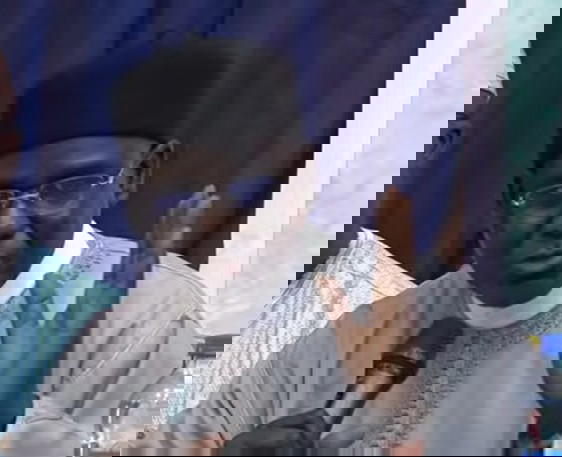
By Kingsley Omonobi
ABUJA — Former Chief of Army Staff, Lt. Gen. Tukur Yusuf Buratai (retd), has cautioned that the growing use of the Armed Forces of Nigeria for internal security operations across the country is undermining the capacity of the Nigeria Police Force and other civilian security agencies, even as it provides short-term stability.
Speaking at the 2026 Armed Forces Celebrations and Remembrance Day lecture in Abuja on Monday, Buratai said the military’s widespread presence across Nigeria’s 36 states is gradually eroding the growth and effectiveness of the police and internal intelligence institutions that should ordinarily lead internal security operations.
“The extensive deployment of the Armed Forces of Nigeria in internal security provides immediate stability, but it also perpetuates a cycle of dependency that weakens civil police capacity and strains defence resources,” Buratai said.
He warned that this approach creates a dangerous imbalance: the military is overstretched, defence budgets are diverted to routine policing, and the Armed Forces’ readiness for conventional threats is compromised. Constitutionally, Buratai stressed, the military’s primary roles are defending the nation against external aggression, protecting territorial integrity, suppressing insurrection, and providing aid to civil authorities when required.
“Internal security should be civil-driven and intelligence-led, primarily by the police and state security services,” he said. “The Armed Forces remains a vital force for national stability, but its expanded internal role must not compromise its core mandate or weaken civilian institutions.”
Buratai called for a clear, time-bound exit strategy to gradually return internal security responsibilities to civilian authorities while preserving the military’s readiness for external defence. He emphasized that Nigeria’s long-term security and democratic stability depend on strong, well-equipped police and intelligence services, with the military reserved for exceptional circumstances.
Speaking at the same event, Minister of Defence, General Christopher Musa (retd), highlighted the importance of community engagement in combating crime. He called for coordinated efforts involving local governments, traditional rulers, religious leaders, and community members to disrupt criminal networks using local transport systems to move weapons, drugs, and other illicit materials.
“Security is a shared responsibility,” Musa said. “Effective community engagement remains essential to long-term security.”
Musa also reaffirmed the federal government’s commitment to building a professional, self-reliant Nigerian Armed Forces. He noted progress in local defence production, aimed at reducing dependence on foreign suppliers, boosting the defence industrial base, and creating jobs.
“Our goal is to develop sustainable, long-term defence capabilities while stimulating economic growth,” Musa said. “Locally manufactured defence equipment now demonstrates the growing strength of our defence industrial base and its contribution to regional security.”
The Defence Minister commended the Chief of Defence Staff, Service Chiefs, and personnel of the Armed Forces for their professionalism and sacrifices, assuring Nigerians that the military has the capacity and resolve to protect the country and its citizens.
“In the maritime domain, enhanced naval operations have curtailed criminal activities, protected critical national assets, and contributed to increased offshore productivity,” Musa added.
The lecture highlighted the delicate balance between using the military for immediate internal security and ensuring the long-term development and independence of civilian policing institutions in Nigeria.
The post Increased military deployment for Internal security weakening Police, Buratai warns appeared first on Vanguard News.