Ibadan Summit: ‘Operation Wetie’ started in Ibadan – Makinde warns
 SKAiF NewsNG SNN
By Adeola Badru
Governor Seyi Makinde of Oyo state drew attention to the “Operation Wetie” violence that rocked the South-West in mid-1960s to caution against one-party domination in the country.
Read Also: Ibadan Summit: Opposition parties plan single candidate for 2027 polls
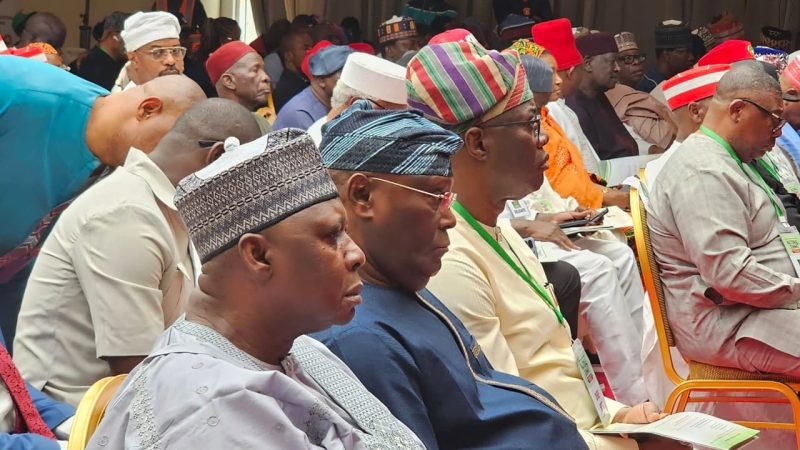
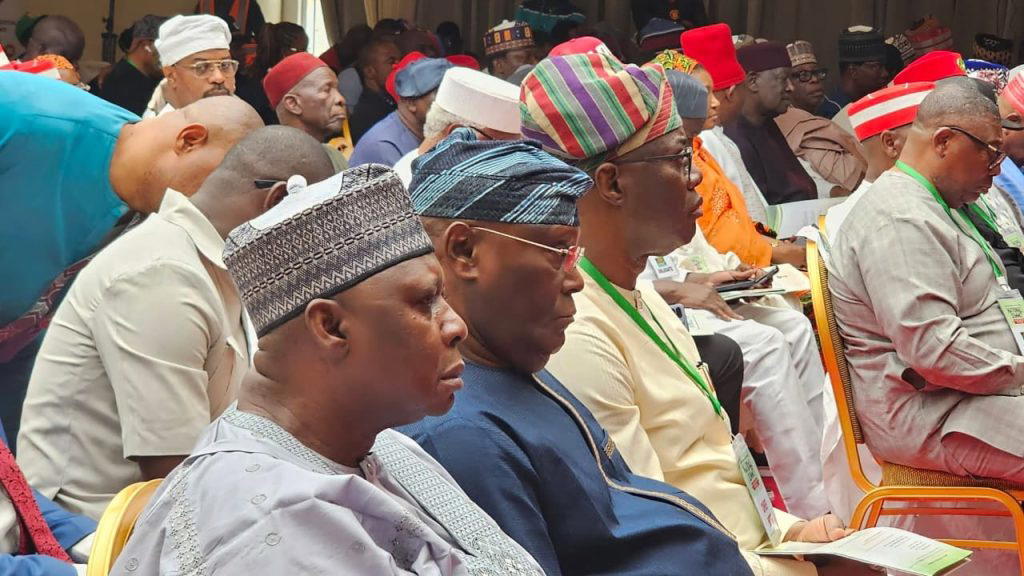
Governor Makinde gave the warning in Ibadan today at the national summit of All Opposition Political Party Leaders that had Atiku Abubakar, Rabiu Musa Kwankwaso, Rotimi Amaechi, Peter Obi and Rauf Aregbesola, in attendance.
Recall that “Operation Wetie” erupted in the western region after the highly disputed 1965 western region elections, alleged to have been rigged in favour of the ruling faction.
The term, meaning “Wet it” in Yoruba, captures the practice of dousing political opponents, their homes and vehicles with petrol, and setting them ablaze.
Same Wild Wild West – Makinde
Makinde warned: “For those that are carrying on as if there’s no tomorrow, they should remember that “operation wetie” started from here. This is the same Wild Wild West.
“Back in 1950, this city hosted a conversation that helped shape Nigeria’s constitutional future. Those discussions were not perfect but necessary. They were driven by a recognition that the structure of the nation was a deliberately built, protected and well necessary debated. In many ways, this gathering carries the same responsibility.
“There are open efforts to consolidate legislative control under one party. At the same time, opposition parties are increasingly entangled in internal crises and legal battles that raise serious questions about their ability to function effectively.
“This is not something that we should treat lightly. I don’t want to think saboteurs are here. Because democracy is not destroyed overnight, it is weakened step by step until people begin to feel it no longer works for them,” he said.
“When opposition becomes ineffective, democracy itself loses meaning. Democracy is not defined by the success of one party, it is defined by the existence of real alternatives. By the ability of citizens to choose.”
Pat Utomi
In his intervention, political economist and strategist, Pat Utomi, painted a stark picture of the country’s economic hardship, using a personal experience to illustrate the widening gap between living costs and citizens’ income.
He said: “Let me begin with a simple experience from yesterday. I set out to buy fuel, and by the time I was done, I had spent nearly 250,000 naira just to fill my tank.“
“At the same time, I came across a report showing that a large percentage of Nigerians live on less than 100,000 naira a month. That contrast is not just troubling, it is absurd. If that doesn’t reveal something fundamentally broken in our system, then nothing will.”
Utomi noted that the crisis extended beyond fuel prices, stressing: “Food prices are rising, insecurity continues to disrupt agriculture, and ordinary people are struggling to survive.“
“Yet we are often told to ‘be patient,’ that things will improve with time. But patience means very little to those who are hungry today.”
Reflecting on Nigeria’s past, he added: “In the years leading up to independence, Nigeria was not industrialised, but there was a clear vision. Within a few years, manufacturing began to grow significantly. There was direction, there was purpose.”
He argued that the country’s challenges were not only economic but moral, stating: “Leadership without character cannot build a nation. The crisis we face today is not only economic—it is moral.”
The post Ibadan Summit: ‘Operation Wetie’ started in Ibadan – Makinde warns appeared first on Vanguard News.