How to empower female talent in agriculture – Ogboh, VP at Sunbeth
 SKAiF NewsNG SNN
By Matilda Ikediobi
As the agro-commodities industry continues to evolve, pushed by global market pressures and the need for more resilient, inclusive supply chains, women leaders are stepping forward to redefine what effective transformation looks like.
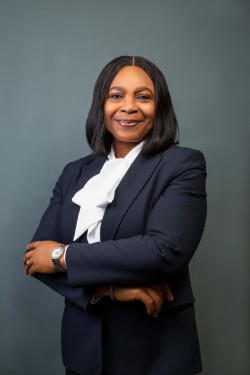
Among these extraordinary women is the Vice President of Business Growth & Enterprise Optimization at Sunbeth Global Concepts, Helen Ogboh.
As a woman leading business strategy in a sector long dominated by men, Ogboh brings a grounded and pragmatic approach to talent development and gender inclusion. Drawing on 17 years in banking and commodity finance, Ogboh, in this interview, reflects on leadership, building diverse teams and why companies must treat inclusion as a core business growth driver rather than a CSR gesture. Excerpts:
After 17 years in banking and commodity finance, what motivated you to step directly into the commodities sector, and how different has the experience been so far?
It is a completely different world from banking. As a relationship manager, you sit between the bank and the customer balancing targets with the tools to build lasting relationships. Over time, those relationships become personal, built on trust, shared wins and everyday problem-solving. Now, being on the “other side of the table” as the customer, I see business through a much broader lens. I am part of conversations that shape the company’s strategy and performance, not just its financials. My banking experience helps me bring discipline, structure, and a strong value-creation mindset. At the end of the day, it is always about results, how much impact you create with the resources available and how your work contributes to growth. That is the mindset I bring every day.
Looking back, what lessons from banking are you applying to workforce transformation in agro-commodities?
Experience travels with you. The principles of leadership, execution and accountability never change, they just meet new realities. One key lesson is that leaders must lead by doing. You set the tone not by delegating everything, but by being involved.
At Sunbeth, that is essential. Agro-commodities involve real-time end-to-end operations that you cannot manage from a distance. From funding, to sourcing, logistics, payments, and compliance, you must understand how every part connects. It is humbling and exciting because you are not just analysing performance you are part of the process that creates it.
Banking, like commodities, is often male dominated. How would you compare the gender dynamics you experienced in finance versus agro-commodities?
Both sectors have their challenges, but for different reasons. In banking, the issue is more institutional tradition and a shortage of female mentors at the top. In agro-commodities, the barriers are often cultural. Society still views agriculture, sourcing and logistics as “men’s work.”
But things are shifting. Companies are making more deliberate investments in inclusion and diversity, even if progress is uneven. It is a reminder that every organisation and every leader plays a role in making gender balance real.
Why does the pipeline of women in trading, logistics, and agro-production remain thin, despite women playing strong roles in farming and informal agribusiness?
Stereotypes, honestly. Society unconsciously labels certain jobs as male spaces, and that alone discourages women from trying. The lack of visible role models reinforces those perceptions.
We must be intentional about breaking these barriers through training, mentorship, and showcasing women already doing exceptional work. When young women see others thriving, it shifts what they believe is possible. That is how we rebuild the pipeline.
Why must companies like Sunbeth treat gender inclusion as a business growth lever rather than a CSR initiative?
Because inclusion drives performance. Diversity is not charity, it is strategy. When you have varied perspectives at the table, decision-making improves, innovation grows and teams become stronger.
At Sunbeth, we view gender inclusion as a growth driver. It is tied to competitiveness, market relevance, and sustainability. The more diverse your team, the better equipped you are to scale responsibly.
What steps is Sunbeth taking to attract and retain more women, especially in technical and leadership roles?
We are very deliberate about it. Sunbeth is an equal-opportunity employer, but we go further by intentionally identifying and attracting female talent. We partner with professional networks, invest in leadership programs, and create mentorship spaces that help women grow.
We also assess our internal systems. Are there hidden barriers limiting women? Are we flexible enough to support work-life balance? Inclusion does not end at hiring; it’s something you nurture daily.
Nigeria and other African markets are pushing gender-inclusive agribusiness policies. Which do you find most promising, and how does that align with Sunbeth’s strategy?
The most impactful policies are those that strengthen access: access to finance, training, and value-chain integration for women. When women have the right tools, they uplift entire communities.
At Sunbeth, our work aligns with this: supporting cooperatives, funding programs, and building capacity across the value chain. The goal is to ensure women have equal opportunity not just in theory, but in practice.
You have mentored young professionals in both banking and commodities. What differences do you observe in how women navigate the two sectors?
In banking, the structures for mentorship and career progression are clearer. You see more women in leadership and established support systems. In commodities, things are more fluid; there are fewer formal frameworks, so women often rely on grit, networks, and self-advocacy.
But the women who thrive in commodities are incredibly resilient and innovative. They break barriers quietly, often without realising it. That is why mentorship is so important to make the journey less lonely for the next generation.
What advice would you give young women looking to enter agro-commodities, especially those who find it intimidating or out of reach?
Start with confidence and curiosity. This industry rewards fast learners and adaptable thinkers. Find mentors, ask questions, and take on tough assignments that build your credibility.
Most importantly, do not underestimate the value you bring. The sector is changing, and there is space for new ideas and diverse voices. If you stay focused and consistent, you will not only succeed, you will inspire others as well.
If you project 10 years ahead, what would a truly inclusive agro-commodities workforce look like, and how can today’s leaders accelerate that vision?
It would be a sector where diversity is normal, not an exception. Women and underrepresented groups would be visible at every level from the field to management to the boardroom.
Leaders today can accelerate this by building talent pipelines, being accountable for inclusion goals, and leading by example. The future we want will not happen by chance. It will happen by choice.
The post How to empower female talent in agriculture – Ogboh, VP at Sunbeth appeared first on Vanguard News.