How the quest for free fuel turned Cross River hillside into funeral pyre
 SKAiF NewsNG SNN
*20 dead, several others suffered severe burns
By Emma Una
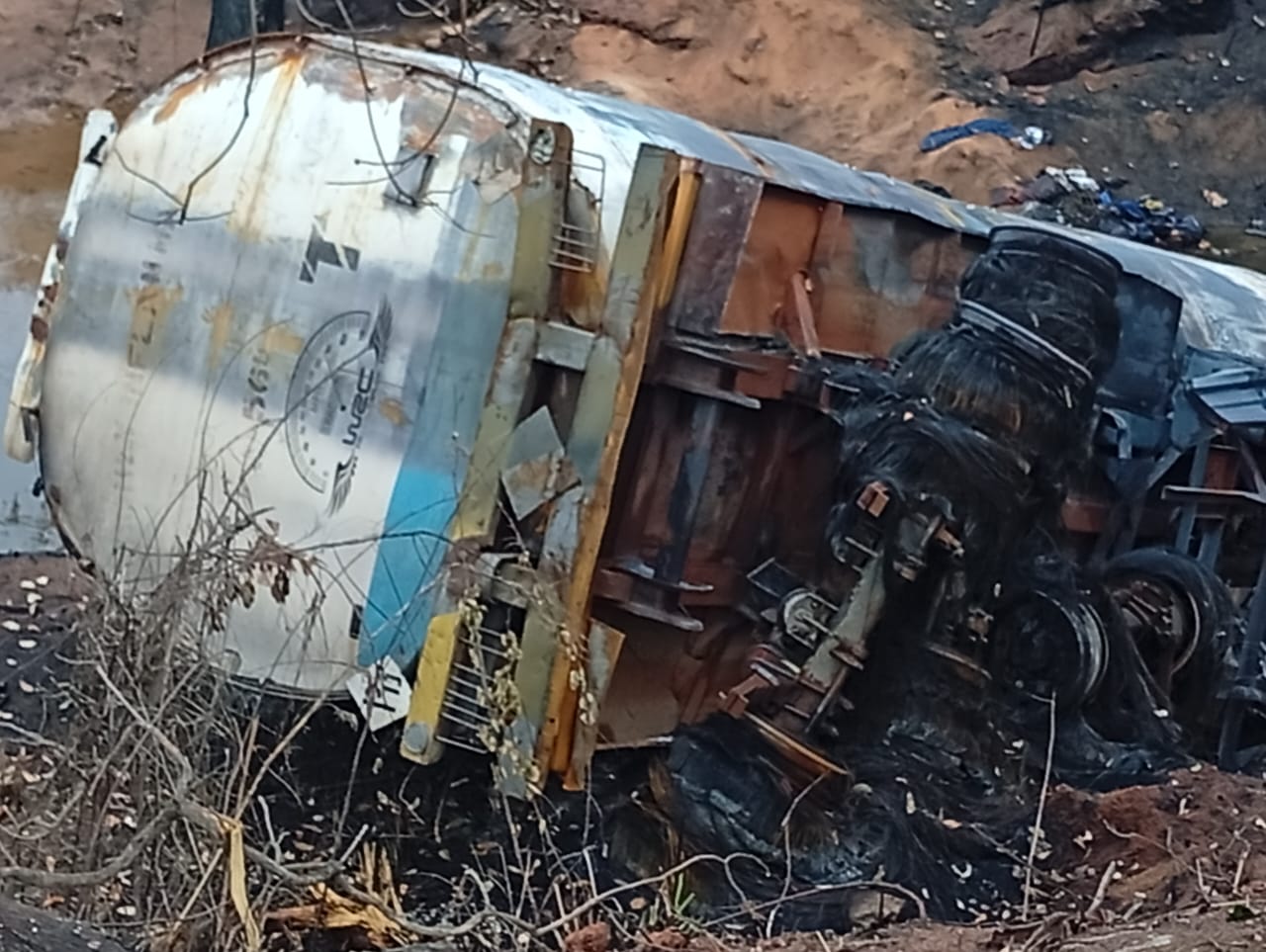
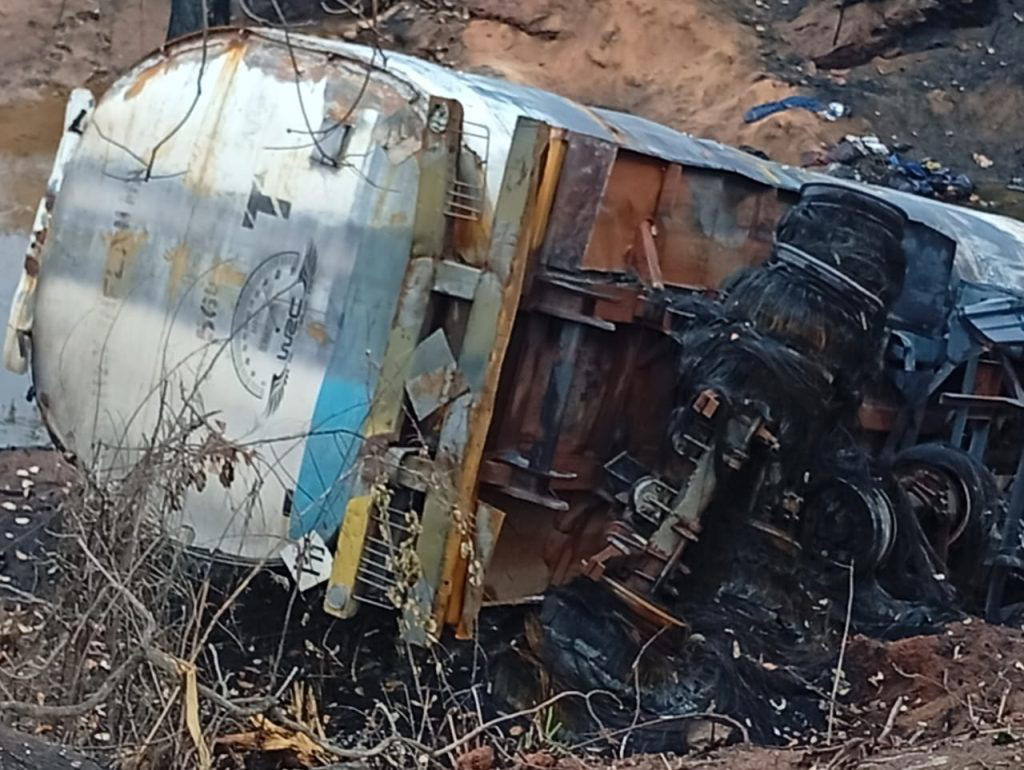
OGOJA- What started as a stroke of desperate luck for the poverty-strapped residents of Ogoja Ndep in Ogoja Local Government Area, Cross River State, last week, ended as a mass cremation when a fuel truck, carrying premium motor spirit from the Calabar NNPC depot, crashed on a steep hill about 20 kilometres from Ogoja town.
Though the cause of accident could not be immediately ascertained, the driver NDV learned either lost control or the brakes failed and the long tanker veered off the road, plunged into the base of a stream where two hills meet, and split open.
The driver and his assistant died on impact. Petrol from the perforated tanker gushed into the water like lifeblood leaving a fallen giant and the village came running.
The villagers with every container they owned, men, women, children and policemen, Christians and Muslims, soldiers still in uniform. A housewife named Maria came with a 20-litre can filled it and went back for a second. Filled it went back for a third.
A physically challenged man from the village, one of the few young men still alive to tell the story, told NDV, “She (Maria) was pregnant.”
He asked that his name be withheld: “She left her other children at home and went to scoop fuel. She had scooped two cans of twenty litres each and went for the third. Then the explosion came, razed her and her husband alongside.” He paused, his hands trembled and continued: “If I could walk to that place, I would not be here speaking to you. My bad legs, the legs I have cried about all my life became my salvation. If I were healthy like others, by now I would be dead.”
The spark that ended everything
For hours, the villagers scooped. Poverty had taught them to see opportunity in disaster. Fifty litres wasn’t enough. They went back for more. Some reportedly filled multiple drums, dreaming of the money they would make.
Then someone brought a generator to transload the remaining fuel into another truck. But the generator was faulty. “It was backfiring,” said Miss Ejen, a young woman who had come from a neighbouring village to help a friend on her farm. “That backfire caused a spark. It engulfed the fallen truck.”
She had seen this before. Two years ago, a truck spilled diesel near her home. She remembered the warning: run far away. So when the fuel started flowing into the stream on that hill in Ogoja Ndep, she stood back, watched her friend and the others scramble.
“When the truck exploded, I took off to the top of the hill,” she said. She survived and her friend? She does not know. “No one has been able to account for everyone.” She added.
The village head, Chief Lucky Orep, was away when the tragic incident occurred. “There is no family here that has no one involved in this tragedy,” he said. “Many of our young men perished there. Others have burns and some are completely maimed.”
Among the dead include the Chairman of the Ogoja Truck Drivers Association and a recently promoted Assistant Superintendent of Police serving in Ogoja. Both consumed by a fire that did not ask for rank or title. More than 20 bodies have been recovered so far. Over 15 people are being treated for severe burns. But the village knows the count will rise.
We keep telling them, but they won’t hear- Mr. Abbey Edet
The soldiers stationed at a nearby checkpoint arrived quickly. They waved their arms. They shouted. They physically pushed people back. The disabled man who watched from a distance said: “But for the soldiers warding people off, the casualty rate would have been over a hundred. Even so, the inferno was merciless.”
Mr. Abbey Edet, Public Enlightenment Officer for the Federal Road Safety Commission in Ogoja, noted with regret: “We have had similar situations like this in the past. We go on the radio. We do public enlightenment programmes. We tell people, do not go near a fallen fuel truck. It is very dangerous. But they won’t hear.”
“The soldiers had a hectic time warding off scavengers. You can imagine someone burning alive, and there is nothing anyone can do to help,” he added.
A hillside of ghosts
By nightfall, the stream was still smouldering and the villagers, who survived, walked home in a daze. Some carried empty jerry cans they never got to fill. Others carried only the smell of smoke and the faces of neighbours who will not return.
At the crash site, clothing, scorched buckets, and other tools used to scoop fuel litter the blackened earth – mute testimony to a desperate gamble that turned a hillside into a mass grave.
In a corner of the village, the man who cannot walk sits on his veranda, alive because of the very thing he once cursed. “I have been crying about my bad legs all my life,” he said quietly. “Today, I am crying because they saved me.”
The post How the quest for free fuel turned Cross River hillside into funeral pyre appeared first on Vanguard News.