How GTCO, HabariPay discover young talents building Nigeria’s tech future
 SKAiF NewsNG SNN
By Prince Osuagwu In a country where thousands of brilliant technology ideas die quietly in classrooms and hostels for lack of support, Guaranty Trust Holding Company and its fintech subsidiary HabariPay may have stumbled on something far bigger than a student coding contest.
At the Squad Hackathon 3.0 finale, what emerged was not just another showcase of youthful brilliance, but a glimpse into a future generation of Nigerian innovators building homegrown technologies capable of tackling unemployment, financial exclusion, fraud and inefficient labour systems.
With over 1,600 applications from universities across the country, the hackathon became a national hunt for hidden digital talents young Nigerians quietly developing sophisticated artificial intelligence solutions that could reshape the country’s innovation ecosystem in the coming years.
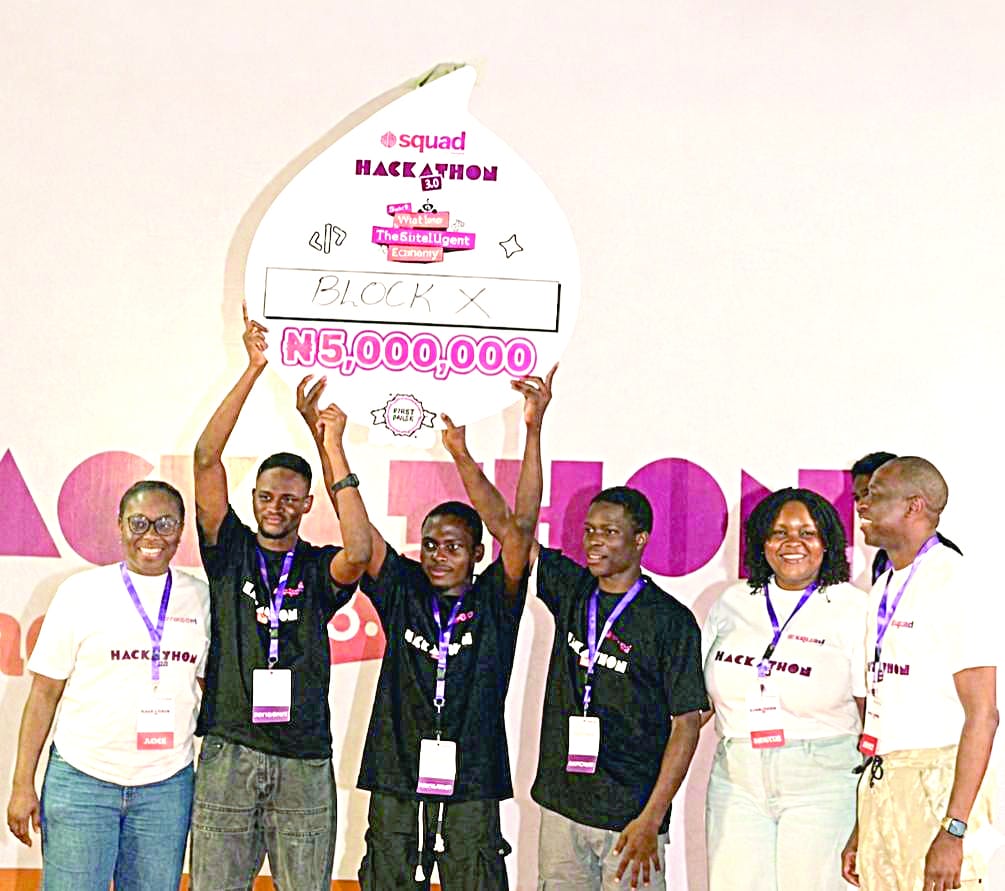
The strongest signal came from Team Block X of Obafemi Awolowo University, whose AI-powered platform, “Guild,” earned them the overall victory after judges described the innovation as one of the competition’s most practical and scalable solutions.
The students developed a technology aimed squarely at one of Nigeria’s biggest economic blind spots, the informal workforce.
Their platform uses an AI voice assistant called “Tola” to connect artisans, labourers and other informal workers directly to job opportunities while simultaneously integrating them into the formal financial ecosystem.
For millions of Nigerians operating outside banking visibility, the implications could be transformational.
A bricklayer, plumber or carpenter can use the platform to secure jobs, receive payments digitally through Squad by HabariPay, and gradually build transaction histories strong enough to qualify for loans and other financial services previously beyond their reach.
In essence, the students designed a system capable of attacking unemployment, poor access to credit and financial exclusion simultaneously, using artificial intelligence built around local realities.
What stood out throughout the competition was how deeply the students understood Nigeria’s peculiar challenges and how intentionally they designed technology around those problems instead of creating abstract solutions disconnected from society.
Several participating teams focused on AI-driven fraud prevention systems, smart identity verification tools, employment matching platforms and security technologies tailored to the Nigerian environment.
For GTCO and HabariPay, the hackathon appears to be evolving into something more strategic than corporate social responsibility. It is increasingly becoming an innovation pipeline for discovering and grooming future African tech leaders before the global market notices them.
Group Chief Executive Officer of GTCO, Segun Agbaje, told participants they should see themselves as competitors on the global stage, insisting that innovation and resilience would define the future.
“You are among the best anywhere in the world,” he said, while encouraging participants to embrace teamwork, discipline and integrity.
Beyond the motivational speeches, however, the real investment lies in what happens after the competition.
Managing Director of HabariPay, Eduofon Japhet, disclosed that selected participants would enter long-term mentorship and workforce development programmes lasting up to three years.
The programme includes tuition support, technical training, practical industry exposure and career opportunities within the organisation.
That level of commitment signals a growing recognition within Nigeria’s financial and technology sectors that the country’s next wave of innovation may not come from imported solutions, but from local talents who understand the nation’s complexities firsthand.
For years, Nigeria’s technology ecosystem has largely been dominated by fintech startups focused on payments and digital banking. But events like Squad Hackathon 3.0 suggest the next frontier could be AI-driven solutions addressing labour inefficiencies, financial identity gaps, fraud management and social inclusion.
Industry analysts say one of Nigeria’s biggest untapped resources remains its youthful technical talent pool comprising brilliant students with ideas but little access to funding, mentorship or commercial infrastructure.
Hackathons like this are beginning to close that gap.
By identifying talents early and exposing them to real-world problem solving, GTCO and HabariPay are effectively building a grassroots innovation engine that could feed Nigeria’s digital economy for years.
More importantly, they are helping prove that some of Nigeria’s most powerful technological solutions may already be sitting inside university classrooms, waiting for the right platform, investment and mentorship to come alive.
The post How GTCO, HabariPay discover young talents building Nigeria’s tech future appeared first on Vanguard News.