Gowon’s book of barefaced lies
 SKAiF NewsNG SNN
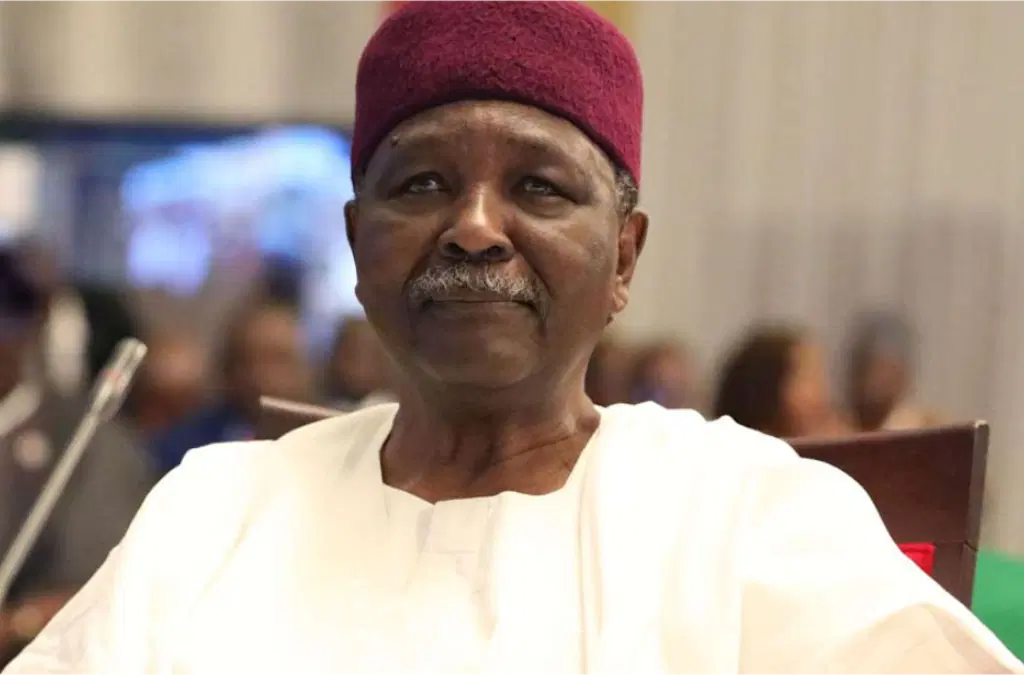
This is General Yakubu Gowon, PhD, (91), on page 201 of his autobiography titled My Life of Duty & Allegiance: “On impulse, I called the airport at Ikeja to instruct Major Paul Dickson who oversaw the airport to send a helicopter to Ibadan to evacuate the Supreme Commander.” This was hours after the countercoup of July 29, 1966, was underway. According to this storyteller, “My immediate worry was that General Ironsi’s life might be in danger if I did not make effort to reach him as quickly as possible to give him a situation report.” The striking thing about Gowon’s fable is not this lie per se, but the artlessness of the man’s mendacity.
As of July 29, 1966, there was no Major Paul Dickson anywhere in the Nigerian Armed Forces. The only Paul Dickson in existence on that date was an Air Force staff sergeant whose official assignment at the Ikeja Airport pertained only to controlling other ranks on sentry duty within the facility’s perimetres. This was the man Gowon claimed to have instructed to carry out the evacuation of a besieged General Aguiyi-Ironsi from Ibadan, a city 113 kilometres away from Lagos as the crow flies! Once Nigerians behold a Sandhurst-trained officer, they automatically ascribe omniscience to them. General Gowon was, of course, Sandhurst-trained. But he knows that, placed on the crucibles of logicality and credulity, his Dickson story is impudent fiction.
Take logicality. In 1980, Danjuma: The Making of a General, the biography of Lieutenant General Theophilus Yakubu Danjuma, was published by Fourth Dimension Publishers, Enugu. Its author is Lindsay Barrett, the Jamaican-Nigerian. On page 55 of the book, Barrett reports a telephone conversation between Lieutenant Colonel Yakubu Gowon and Major Theophilus Danjuma moments before General Aguiyi-Ironsi’s abduction and assassination:
Lt. Col Gowon: Who is that?
Major Danjuma: Yakubu, Yakubu Danjuma.
Gowon: Yakubu, have you heard what happened in Abeokuta?
Danjuma: Yes Sir. That is why I am here. (He changes to Hausa) We want to arrest the Supreme Commander.
Gowon: (After a long silence) Can you do it?
Danjuma: We’ve got the house surrounded and sealed off Sir. We can do it.
Gowon: (After another long pause) Alright but please make sure there is no bloodshed. We have had enough bloodshed. When you have done it ring me at this number…
Now, 45 years after this conversation, neither General Danjuma nor Mr. Barrett has retracted it. So, was it an Ironsi already in Danjuma’s captivity that Sergeant Dickson was to helicopter from Lagos to Ibadan to rescue? After four and a half decades, Gowon redressed his conversation with Danjuma: “I suggested that he should quickly move Ironsi out of Ibadan to a safe place like Bida or somewhere closer like Ilorin, as these were the nearest safe places I could think of at the time. Besides, I thought it would take a lot of effort before anyone was able to trace the Supreme Commander to those locations. I kept my phone line open after the brief conversation with Danjuma in the hope that there would be follow-up calls from him.” (p 203).
Colonel Gowon, the Chief of Army Staff, made no further attempts to determine Ironsi’s fate but kept his “phone line open after the brief conversation with Danjuma in the hope that there would be follow-up calls from him.” If Gowon’s recollection of events reads like a fairy tale, that is precisely what it is. How could a superior officer be suggesting to his subordinate in a situation of grave emergency? Why were Bida or Ilorin better options for Ironsi’s safety than the Letmauk Barracks in Mokola, Ibadan? Danjuma assured Gowon that Ironsi was in the bag. Gowon sanctioned the treasonous act, only to later change his fib to read that he wanted Ironsi evacuated to somewhere “safe”! Yet, Gowon hadn’t arranged anything at the supposed point of the imminent airborne operation.
Gowon’s tale is a tall one. Take credulity. Was Sergeant Dickson going to evacuate Ironsi from Ibadan or from Ilorin (290 kilometres away) or from Bida (525 kilometres away)? How was he going to orchestrate this incredible feat? Paul Dickson was a non-commissioned Air Force officer. He was not a pilot. He was not a test pilot. If he ever flew anything, it could not have been more sophisticated than a four-sided kite made of discarded newspaper, broomsticks and gum, a toy.
As of January 1966, the head of the Nigerian Air Force was Lieutenant Colonel George Kurobo. Gowon didn’t contact him for the fabulous mission. The man had commissioned subordinates. Gowon saw no reason to contact any of them. Rather, he appointed an NCO with no control over any aspect of the country’s air fleet to fly commando-style to heaven-knows where to salvage Ironsi! Gowon probably assumed that once Ironsi’s abductors saw a copter hovering above Government House, Agodi, Ibadan, or over the thickets of Bida and Ilorin, they would be hypnotised into bowing, trembling, and delivering their captive to Dickson to soar away in jubilation.
Yes, Paul Dickson was the “master of ceremonies” at the Ikeja Airport during the July 1966 countercoup. But he was there as the head of Gowon’s armed marauders, seizing and executing Igbo officers and men delivered into his murderous lair by fate. Dickson led the men who seized and executed Captain P. C. O. Okoye as he arrived at the airport to take an Australia-bound flight for a course. Dickson even had the airport’s Air Traffic Control (ATC) in his pocket. Admiral Alison Madueke corroborated the man’s unchallenged position in Riding The Storms With God In My Sails, his autobiography, published in 2019 by Eminent Biographies Limited. On the book’s blurb, Madueke, who was on his way to a course in Britain, wrote thus: “After the usual announcements and preliminaries, the aircraft started taxiing for take-off. But midway, as it gathered speed, the attempt was aborted. The pilot’s voice came through the intercom. ‘This is the Captain speaking. Will the three naval officers flying to London please alight. They are wanted by the military authorities.’” Down from the aircraft, Madueke was delivered like a lamb to Dickson, the slaughterer. Providence saved him. He had been born and bred in Oturkpo, Dickson’s hometown, and his elder sister and Dickson had been classmates. Moreover, their families lived on the same street. Other Igbo officers and men about the airport in that season of anomie got butchered.
Admiral Madueke noted that Dickson, whom he knew as a sergeant, was wearing a Major’s pips during the murderous spree. He had proclaimed himself the Military Commandant of the Ikeja Airport. Like all those who went killing Ndigbo from July 29, 1966, Gowon rewarded Dickson handsomely, but in the man’s case, the recompense was spectacular. Without Dickson, Gowon would never have smelt the position of Head of State. Dickson led the platoon of Middle Belt NCOs, who “adjudicated” the Gowon-Murtala Muhammed tussle for the headship of Nigeria. Dickson ordered Murtala at gunpoint to back off, or face katakata. For his gallantry and effrontery, Gowon sustained Dickson’s self-appointment as Major and Commandant of the Ikeja Airport. According to The Federal Republic of Nigeria Gazette of March 23, 1967, Paul Dickson (NAF 172) was elevated by “Executive Commission” to the rank of Major on November 15, 1966, and his seniority in that rank backdated to January 5, 1966. Dickson retained both his Majority and command of the Ikeja Airport until Brigadier Murtala Muhammed dislodged Gowon to become Head of State in July 1975. The foregoing demonstrates beyond equivocation that Gowon never considered any airborne rescue operation for his Supreme Commander.
Turning to the military action of January 15, 1966, Gowon’s account enhances his fabulist credentials. He wrote thus on page 168 of his thriller: “That was when I asked questions about our response and timing and requested that at least a combat-ready platoon or company be made available for me within 30 minutes so I could lead the unit into town.” For the next 24 pages, he regaled his gullible readers with the extraordinary episodes of his unrivalled gallantry that crushed the January 15 coup d’état. In his odyssey, he extinguished the role of General Aguiyi-Ironsi in putting down the mutiny and spectacularly failed to mention two officers – Lieutenant Colonel Hilary Njoku and Major Hans Anagha – who had also played significant roles on the day. Please compare Gowon’s phantasmagoria with Colonel Njoku’s account, which is taken from A Tragedy Without Heroes: The Nigeria-Biafra War, his biography published by Fourth Dimension Publishers, Enugu, in 1987. From page 19, Colonel Njoku writes thus:
Having got the battalion in motion, I turned to the General Officer Commanding to spell out the task he had for us. The General Officer Commanding is not normally the person to give orders to a battalion. It should come through the proper channel, i.e. via Brigade headquarters. In that emergency situation, the General Officer Commanding was acting in order. Whatever the situation, he was my superior officer and military discipline demands that I must obey the most senior officer present. Who knew the extent of the kidnapping? By this time Jack Gown had arrived at the Battalion Headquarters and was with us…
The General Officer Commanding asked for paper and pen. These I provided. He wrote down the key points (KPs) and the very important personalities (VIPs) to which troops were to be sent for protection. These included the Nigerian Broadcasting Corporation (NBC), the Parliament House, the Post and Telecommunications (P&T) the Prime Minister, the Inspector General of Police (IG), the Brigade Commander – No 11 Thompson Avenue, etc. In addition, he listed some of the officers he wanted apprehended. These included Major Ifeajuna, Captain Ogbo Orji and Lieutenant Nwokocha. He had lost his nerves, his hands were shaking, his writing could not be read without difficulty. I asked him to have some coffee, he was grateful and coffee was ordered for him…
My Order Group (‘OGp) was ready in my room. I had moved apart to prepare my orders, leaving him and Jack behind, although all of us were still in my office. As soon as I was ready, I moved to my conference room. They both followed me. The adjutant called all to attention. I stood them at ease and went straight into my orders. At the end, the General Officer Commanding said nothing but Jack said a few words emphasising what I had already told the officers. “B” Company under the command of Captain Hans Anagho, the Cameroonian, was ordered to move to the Parliament building, Nigerian Broadcasting Corporation (NBC) and Police Headquarters. Jack decided to accompany them…
General Gowon’s autobiography recalls none of Njoku’s account. Neither did it mention Hans Anagho. The following is Major Anagho’s account as recorded from page 147 of Chuks Iloegbunam’s biography of General Ironsi published in 2019 by Eminent Biographies Limited:
Early morning of 15th January 1966, an officer knocked at my door to announce that I was wanted at the 2nd Battalion Commander’s office. I had just returned that night 14/15 January 1966 from Enugu where I presided over the hand/take over of equipment between Lieutenant Colonel Francis Fajuyi (outgoing) and Lieutenant Colonel David Ejoor (incoming) of the 1st Battalion Nigerian Army. On the night of 14/15 January, we slept late because my wife and I went to cinema to watch 007, James Bond. I had spent weeks with my company and troops picked up from other units, maintaining law and order in Ondo Province – Akure and Lagos State. In fact, I was absent for more than seven months from my family and my Battalion Headquarters, Ikeja. So, I was not at all happy to be woken up so early on that fateful day 15th January 1966 morning that General Ironsi was in my commanding officer’s office – Lieutenant Colonel Hilary Njoku, with Lieutenant Colonel Yakubu Gowon and the rest of the officers of the 2nd Battalion NA waiting to operate. Lieutenant Colonel Jack Gowon (a very nice man) had just returned from Staff College, Camberly, England, to take over command as the new Battalion Commander. My company was already ready to move to Lagos; General Ironsi briefed us that Majors Ifeajuna, Okafor, Anuforo and Chukwuka were about to make a coup d’etat. He himself had luckily escaped and that we should crush the coup. My company “D” Company, the best commanded, was chosen to move to Lagos from Ikeja. Because of logistics, I left late and trapped in the Ikeja-Ikorodu-Lagos traffic. I was given the mission by Ironsi himself to install my headquarters in Lagos Island, hold the radio station, arrest and detain any coup plotters and wait for further orders. I held Parliament building which became my own headquarters from where I prepared the next building for Ironsi’s first press conference. When the coup plotters discovered that Lagos was in the hands of loyal troops, they fled. Lieutenant Colonel Gowon followed my company to Lagos and was in contact with me all the time…Gowon knows very well that it was my company, “D” Company, 2nd Battalion, Nigerian Army which occupied Lagos from Ikeja, as the spearhead of loyal troops. Records show and history will tell that I was the commander of that Company.
Colonel Njoku tagged their anti-coup action, Operation Immediate. The Njoku and Anagho accounts show clearly that Gowon’s story on January 15 is fabricated. Why has Gowon continued to sustain a 60-year-old falsehood? Because if he acknowledged that Ironsi and Njoku, two ranking Igbo officers, had foiled the January 15, 1966 coup, it would obliterate the groundless tag of the action as an Igbo coup. There are other narratives to show that the principal reason why January 15 failed was Aguiyi-Ironsi.
This was Major Emmanuel Ifeajuna, one of the coup leaders, in his forever unpublished manuscript: “News came to us that our General had left Ikoyi in Lagos and was on his way to Ikeja twelve miles away. He had started mobilising, and he was mobilising against us. We had hoped to go to him after our activities to tell him what we had done. We wanted to tell him that we had acted not for ourselves but for the nation. But he had gone before we went to him. Now events had taken a new turn…once our General’s moves were reported, we decided that we were to leave Lagos for him. Let him who had the stature to handle the situation take the task over. So we left…”
This was Major Adewale Ademoyega, another of the coup leaders, on pages 75/76 of his Why We Struck: The Story of the First Nigerian Coup (Evans Brothers (Nigeria Publishers) Limited, Ibadan, 1981. “Major Donatus Okafor came along with his bad news that General Aguiyi-Ironsi had not been found at home when he went there. He was said to have gone to another party after Maimalari’s. But he had since surfaced at the Dodan Barracks and succeeded in raising troops against us, claiming that he did not know what was happening. After that, he was said to have driven to the 2nd Battalion barracks at Ikeja to raise more troops against us. The news of Ironsi’s escape came as a shock to all of us. If the Federal Guards were already made hostile, then the Officers’ Mess was no longer tenable to us. It could no longer be our tactical headquarters. What was our answer to this new development?”
The coup makers decided to vote with their feet, thus:
“After all these, Ifeajuna, Okafor and a few young officers left the Officers’ Mess for the place of our scheduled rendezvous. They still had the arrested Prime Minister with them. They were soon followed by Anuforo, who carried a few young officers with him in two private cars. Chukwuka followed in a Land Rover. I trailed behind them in a Land Rover, followed by a three-tonner.”
A question arises. How did Ironsi know that there was fire on the mountain? At about 3 a.m, desperate phone calls from Prime Minister Tafawa Balewa and Lieutenant Colonel James Pam alerted him that soldiers were attacking them. If this were an Igbo coup – or if Ironsi were pulling the strings – he would have stayed in the shadows of his official quarters, orchestrating the chaos from afar, much like Gowon did during the bloody July 29 “rematch.” Now, by the time Ironsi hurried from Ikoyi to Ikeja, rallying troops against the coup makers, Yakubu Gowon was still luxuriating in his bedchamber with Edith Ike, his Igbo girlfriend, oblivious of the calamity that had befallen the nation. He would later expunge the heroic accounts of Ironsi, Njoku, and Anagho and canonise himself as the eternal hero who had crushed every opposition on January 15, 1966. Without question, General Yakubu Gowon’s problem is pathological. His January 15 and July 29, 1966, lies had previously appeared in such hagiographies as Isawa Elaigwu’s Gowon: The Biography of a Soldier-Statesman (West Book Publishers, 1986) and John D. Clarke’s Yakubu Gowon: Faith In A United Nigeria (Frank Cass, 1987). The volumes copiously regurgitated his fabrications. Ironside/Ironsi, published in 1999 and 2019, thoroughly refuted and debunked his tissue of lies. Yet, four decades later, Gowon decided to repeat his mendacity with significant embellishments.
At the Abuja presentation of Gowon’s book, General T. Y. Danjuma launched it with the world-record sum of N3 billion, money presumably realised, wholly or partly, from oil blocs located in his hometown of Takum in Taraba State. Alhaji Aliko Dangote launched it with N500 million. It was a day of heavy Naira downpour and thunderclaps. Yet this 859-page tome of conjectures, fantasies, fibs, falsity, half-truths, and outright lies is selling at N75,000 (soft) and N100,000 (cased), meaning that it is way out of the reach of most Nigerians. Thus, the majority of those who have reacted to the book have yet to read it. Their comments have largely been indexed on published excerpts and the off-handed “punditry” of armchair critics.
The first two reviewers of Gowon’s book were Bishop Matthew Hassan Kukah and Olusegun Adeniyi, the Chairman of ThisDay’s Editorial Board. Both gentlemen are friends of mine. I found their reviews bereft of rigour and studiously skipping known historical facts that are antithetical to Gowon’s fabrications. Without question, Kukah and Adeniyi read my Ironsi biography. In fact, it was the bishop who reviewed the first edition of the book at its Abuja launch in 1999. As a man of God privileged to have read the manuscript of Gowon’s book, he should have reminded the General of the importance of fidelity in historicism. Instead, and to my dumbfounderment, he wrote that Gowon’s book “is a personal story told with sincerity and deep passion.” Not even in my wildest dream could it have occurred to me that a respected prelate would invest a compilation of lies and spite, the epitome of literary quackery, with the laudation of verity.
As for Mr. Adeniyi, he wrote the following: “The details of the second coup, how he (Gowon) tried to save Ironsi and the roles played by the actors are quite revealing. So is how he was made the Head of State (at age 31 and a bachelor) against his wish…” Adeniyi knows or ought to know that Gowon never tried to save Ironsi’s life. He knows or ought to know that Gowon was at the cutting edge of the conspiracy that cost Ironsi his life and his regime. Besides, it flies in the face of documented facts and reason to amplify the illusion that Gowon became Head of State against his wishes. He coveted the office. And he engaged in a slugfest with Lieutenant Colonel Murtala Muhammed for it. He ultimately won because of the support of rifle-wielding NCOs and privates.
One cardinal point! Even if the Supreme Pontiff endorsed Gowon’s dishonest tome and it was launched with the Nigerian national budget, its unflattering essence as a stain on the author’s name, as a deeply flawed narrative, and as a disservice to the annals of contemporary Nigerian history will remain forever inerasable. Take further examples of Gowon’s avoidable concoctions. He was among the officers who agreed that, in the light of the gravity of January 15, and the unprecedented political and army fatalities that had spread to Kaduna, the military needed to assume political leadership to restore order. But he denied it on page 188 of his suspenser. Match his blatant denial with Colonel Njoku’s account:
A conference of senior military officers was called at the Police Headquarters Joint Operations Room. According to Colonel Njoku on page 25 of his book, “The GOC could not say much; not much time was taken by him in his opening statement. Officers present were: Major General J. T. U. Aguiyi-Ironsi, Lt.-Col Francis Fajuyi, Lt-Col Victor Banjo, Lt.-Col Jack Gowon, Lt-Col George Kurobo, Major Patrick Anwunah, Commodore Wey of the Navy and Lt-Col Njoku.” The GOC sought the opinion of each and every one of the officers in the critical situation. It was at this meeting that the full list of the fatalities of the coup was released…In so far as the situation was concerned, it was grave indeed. The officers, therefore, concluded that the Armed Forces had to take over political power if there was a chance that the situation could be controlled and contained. They mandated Ironsi to proceed in this new direction, which was why the Army boss had a second meeting with Dr. Nwafor Orizu who then invited the Council of Ministers to a fresh meeting at the Cabinet Office.” (See page 12 of Ironsi.)
After Ironsi’s and Fajuyi’s assassinations, as well as the murder of about 128 Igbo officers and men, including Colonels Gabriel Okonweze and Israel Okoro, Majors Theo Nzegwu, C. C. Emelifonwu, B. Nnamani, J. O. C. Ihedigbo, John K. Obienu, Ibanga Ekanem, P. C. Obi, A. D. Ogunro, O. U. Isong, 11 Captains, 15 Lieutenants, and 120 other ranks, Lieutenant Colonel Yakubu Gowon moved to declare the Republic of Northern Nigeria. Obdurately, he continues to deny this fact to this day. Gowon and his men had sought revenge for January 15. They had more than achieved it. What remained was for them to go up north, to a new republic of their own.
According to Alhaji Ahmadu Kurfi, a former Permanent Secretary at the Ministry of Defence, on pages 38-39 of his The Nigerian General Elections 1959 and 1979 and the aftermath (Macmillan Nigerian Publishers Limited, Lagos, 1983), “The original intention of the July 29 counter-coup leaders was to seize the reins of government and then announce the secession of Northern Nigeria from the rest of the country. This was in line with the general mood of the people of the North whose clarion call during the May disturbances in the North which claimed many Igbo lives was Araba or Aware (Hausa word for ‘secede’) …After a long discussion, the civilians managed to convince the soldiers to change their minds about secession…The original draft speech declaring secession was therefore modified by the civilians attending the meeting.”
As first reported in my Ironsi biography, “The minutes of the Cabinet meeting of August 2, 1966, released by the British government after the mandatory thirty-year period of moratorium, confirms that Gowon was dissuaded from secession: ‘The Commonwealth Secretary (The Rt. Hon. Arthur Bottomley, MP) said that there had been a further mutiny in Nigeria and that Major General Aguiyi-Ironsi, the Head of State, had been kidnapped and possibly killed. A L-Col Yakubu Gowon, who was Hausa from the Northern Region, had assumed charge of the Government with the support of the Supreme Military Council. He had been strongly advised by our own High Commissioner and the United States Ambassador against promoting the secession of the North from the Federation.” (See the document marked CAB/128/41 deposited at the British Public Records Office in London.)
Sir Francis Cumming-Bruce, the British envoy at the time, confirmed the story 21 years later, when he said, “I sometimes wonder whether I did the right thing in keeping Nigeria together.” Sir Francis died as Lord Thurlow in 2013. In his obituary written by Kaye Whiteman in The Guardian of April 16, 2013, Mr. Whiteman said that he and Michael Gould had interviewed Cumming-Bruce in 2007 who said that “he had written to northern emirs to stress how unwise it would be for the north to secede, but he also told of his own two-hour face-to-face discussion with Gowon that may have been decisive in ending the three-day power vacuum that July.”
Against his curious denial of the planned secession, here is a portion of his maiden nationwide broadcast of August 1, 1966: “I have now come to the most difficult part of this statement. I am doing it conscious of the great disappointment and heartbreak it will cause all true and sincere lovers of Nigeria and Nigerian unity, both at home and abroad, especially our brothers in the Commonwealth.” What was going to shatter the hearts of lovers of Nigeria and Commonwealth member nations? That, in his inexperience, Gowon was stepping into the oversized boots left by the man he had betrayed? It was in that same speech that Gowon announced that “Suffice it to say that putting all considerations to the test, political, economic as well as social, the basis of unity is not there…”
So, what is the difference between General Yakubu Gowon and General Chukwuemeka Odumegwu-Ojukwu? January 15 happened. Gowon lost four senior military officers – Brigadier Maimalari, Colonel Kur Mohammed, Lieutenant Colonel Abogo Largema, and Lieutenant Colonel James Yakubu Pam, and two key politicians, the Prime Minister, Sir Abubakar Tafawa-Balewa, and the Premier of Northern Nigeria, Sir Ahmadu Bello, the Sardauna of Sokoto. On account of these grave losses, his faction of the military organised a vengeful bloodbath and co-authored a script to declare the Republic of Northern Nigeria, but was stopped by British and American persuasion. July 29 happened. Ojukwu lost a General, two Lieutenant Colonels, about 150 officers and men, plus 50,000 Igbo civilians, massacred in orchestrated pogrom waves across Nigeria. For that, he declared Biafra but was forcefully stopped essentially by the British. Why has Gowon remained in asinine denial about this reality?
He announced with fanfare that, upon mounting the leadership saddle, he immediately abrogated the Unification Decree (Decree No 34) promulgated by Ironsi’s Supreme Military Council on May 24, 1966. That shows that, officially, the decree was in effect for only 68 days. But, apart from the four existing Regions relinquishing Decree 34’s tag of Group of Provinces, Gowon’s nine-year dictatorship cruised on the impetus of the same Decree 34. Was it not the instrument he employed to carve Nigeria into 12 states on May 27, 1967? Does that not underscore the inevitability of unitarism in military dictatorships? Why, then, is Gowon leading the damnation of Decree 34 that lasted for just over two months under Ironsi but undergirded every minute of his junta’s existence?
Gowon’s self-inflicted superhero status calls to mind the writers J. P. Clark and Wole Soyinka standing at antipodal zones during the civil war, and Clark charging that Soyinka was “a perpetual dramatist who insists on playing the starring role in every drama of his own manufacture.” That is why Gowon, in his perpetual political stardom, told General Ironsi and Colonel Njoku to arrange for him “within 30 minutes” a platoon or company of soldiers with which to storm Lagos Island and nail the January 15 boys. That also explain why, without a command himself, he telephoned Colonel Ojukwu, his superior officer, and Commander of the 5th Battalion in Kano, an Oxford University Masters degree holder to boot, and a former Assistant District Officer, and said, “from now on, you will bloody well take orders from me at Army HQ not from the 1st Brigade HQ Kaduna.” (p183). Further, that was why he not only took the credit for an Ironsi-suppressed coup but also advertised the political acumen that informed his release of Chief Obafemi Awolowo and other imprisoned politicians (p296), forgetting that the instrument of the prisoners’ freedom was signed by his Supreme Commander.
To his credit, Gowon demonstrated occasional empathy. He lamented the desecration of his late daughter’s grave in Wusasa, which came in the wake of his overthrow, and called on God to judge those responsible for the vile act. Ndigbo say that when the hearse of another man’s son is bound for the cemetery, it looks like what it bears is a log. Otherwise, General Gowon should also have shed a tear for the scores of pregnant Igbo women disembowelled during the 1966 pogroms while their unborn babies were quartered. Indeed, who bears responsibility for the avoidable sea of innocent blood of all ethnic groups needlessly shed across Nigeria in the name of politics? Perhaps Major Ibanga Ekanem, the Provost Marshal of the Nigerian Army, who was shot dead on Carter Bridge on July 29, 1966, was to blame?
To this day, Gowon disgustingly continues to deny knowledge of the planning and execution of July 29, 1966. If the revulsion stoked by Gowon’s revisionism allows, a deeper look would be taken at other aspects of his fairy tales – like Aburi, the civil war, abandoned properties, the Indigenisation Decree, the Bakassi Peninsula, and the lamentation that currently passes for Nigeria. Gowon said in his Preface that his autobiography was not intended to reopen old wounds. But that is precisely what it has done. The options before him were absolute: Nigeria or his ego. Gowon settled for the latter. By that unfortunate choice, his book missed the golden opportunity to foster genuine reconciliation and bring the bloodiest and most traumatic chapters of Nigerian life to deserved closure. While readers consider this point, General Yakubu Gowon may wish to contemplate the ramifications of these closing paragraphs:
General M. C. Alli, a former Chief of Army Staff, wrote thus:
The 15 January 1966 coup was staged to pre-empt a Northern Peoples Congress (NPC)-inspired coup, ‘Operation No Mercy’ designed to eliminate the critics of Prime Minister, Sir Tafawa Balewa’s administration. Earlier, the opposition leader Chief Obafemi Awolowo, was in 1962 rusticated and incarcerated for masterminding a civilian coup for what has been claimed were trumped-up charges. The alleged ‘Operation No Mercy’ was to put paid to all opposition movements in the country. The stage was set when the Prime Minister warned that “no responsible government would fold its arms and allow certain elements to disturb the peace and stability in our young nation”, in a bid to assert “our authority and deal with miscreants.” Colonel Zakari Maimalari was to lead the northern group of officers to restore the dignity of the northern-led Federal Government. The D-Day was 17 January 1966. Majors Nzeogwu/Ifeajuna’s “Operation Damisa” upstaged them by spilling into the strategic areas of Nigeria on 15 January 1966. The table was turned on the planners of “Operation No Mercy.” (See M. C. Alli’s The Federal Republic of Nigerian Army, Malthouse Press Limited, Lagos 2001.)
Trevor Clark, a former colonial officer, wrote:
However federal action was at last being envisaged as unavoidable. Spurred by rumours of a coup, passed by Nupe northern minister Ahman Pategi to his countryman the army minister, galadima of Bida Ibrahim Tako, cabinet ministers gave covering approval of a contingency plan, which would allow Brigadier Zakari Maimalari’s 2 Bde to execute an operation crudely named No Mercy to restore order in the west. 1 January 1966 seems to have been the original preferred date, but jumpy nerves at the prospect of the Commonwealth and the world press having a grandstand view of military operations put the likely date back to 0001 hours on 17 January. (See Clark’s A Right Honourable Gentleman: Abubakar from the Black Rock, Edward Arnold, London, 1985. Pp 305-306.)
* Iloegbunam is the author of Ironsi: Nigeria, The Army, Power And Politics.
The post Gowon’s book of barefaced lies appeared first on Vanguard News.