Flooding: Shettima directs early activation of action
 SKAiF NewsNG SNN
By Johnbosco Agbakwuru
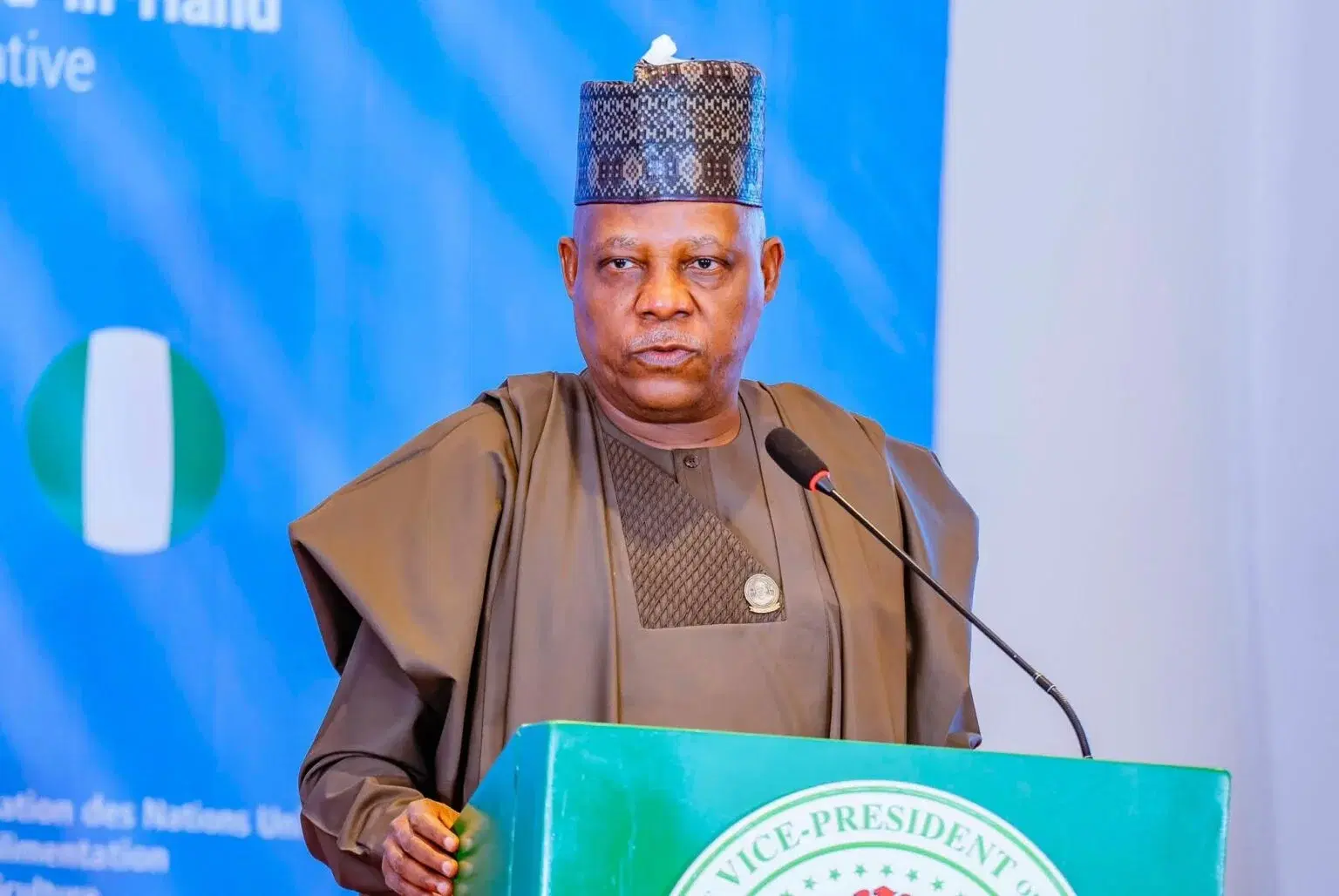
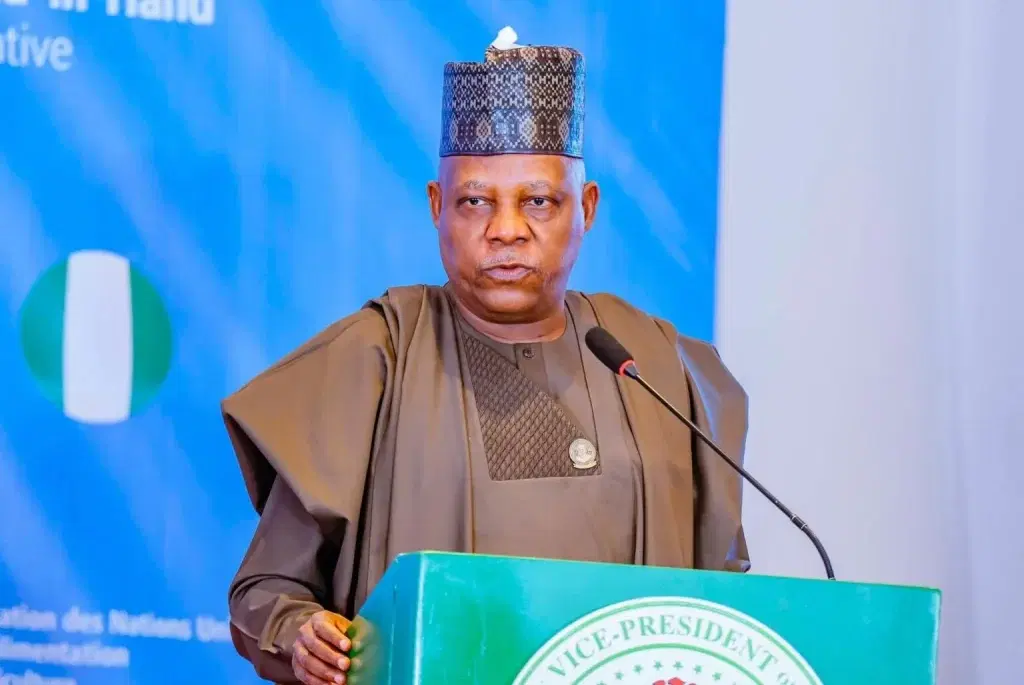
As the rainy season peaks, Vice President Kashim Shettima has directed the activation of the Fusion and Trigger Room concept to coordinate and enable early action to combat flooding in Nigeria.
Accordingly, he asked the Anticipatory Action Task Force (AATF), National Emergency Management Agency (NEMA), and other relevant agencies to immediately review and update the budget in line with approved allocations, and establish clear priorities for implementation.
Senator Shettima, who gave the directive on Thursday during a meeting of the AATF at the Presidential Villa, Abuja, insisted on a shift from reactive response to proactive preparedness, saying the direction of the administration of President Bola Ahmed Tinubu leaves no room for ambiguity in combating flood and other climate-related disasters.
According to him, preparedness, coordination, and early action must become the standard practice for governing risk in the country.
VP Shettima, who is also Chairman of the AATF, observed that while climate and disaster risks are becoming more frequent and more severe every passing season, government’s responsibility should no longer be confined to responding only when emergencies arrive.
“We are called to act early, to reduce losses before they multiply, and to protect vulnerable communities before crises unfold around them,” he stated.
Senator Shettima maintained that Nigeria needs an institutional mechanism that enables the nation “to anticipate hazards, consolidate data, coordinate decisions, and activate action before emergencies escalate beyond our reach.
“I am directing that technical consultations begin at once to operationalise the Fusion and Trigger Room concept within NEMA as a national platform for coordination and early action. This platform should anchor our monitoring, our forecasting, the activation of triggers, the coordination across agencies, and the decisions that follow from them,” he added.
The Vice President also asked NEMA and other relevant agencies, as well as technical teams, “to review and update the budget immediately in line with approved allocations, and to establish clear priorities for implementation.”
He also implored them to “work closely together to expedite the release and deployment of approved resources, and to ensure that implementation timelines are never held hostage by administrative delay.”
Insisting on proactive preparedness, the VP said, “Anticipatory Action, therefore, rises or falls on speed and readiness. Resources intended for preparedness and early response must be available at the precise moment they are required.
“To wait until disaster strikes before releasing what we have already approved is to defeat the very purpose of acting early. I am therefore directing the relevant institutions to work closely together to expedite the release and deployment of approved resources, and to ensure that implementation timelines are never held hostage by administrative delay,” he maintained.
Addressing the issue of political support and state participation, the Vice President implored the state governments to participate actively, noting that preparedness cannot succeed without ownership at the subnational level.
“I call on our State Governors and state institutions to participate actively and to lead implementation within their jurisdictions. Federal coordination on its own will never be sufficient.
“As Chairman of the national coordination effort, I will continue to engage with stakeholders to ensure that political leadership is translated into practical outcomes and into preparedness that can be measured on the ground,” he stated.
Earlier, Minister of Humanitarian Affairs and Poverty Reduction, Dr Bernard Doro, said the approval of funds by the government for the anticipatory action on floods was a timely and bold step in the right direction.
He also emphasised the need for the implementation of proposed programmes and activities under the anticipatory action on floods to be centrally coordinated, leveraging existing national social register and digital payment platforms, working in collaboration with the subnational.
For his part, the United Nations Resident and Humanitarian Coordinator, Mr Mohamed Fall, commended President Tinubu and the Nigerian government for the approval of funds for the anticipatory action on floods, noting that it was a demonstration of political commitment, national ownership and practical action by Nigeria.
He added that investing in anticipatory action is both a smart move and an investment for the future, noting that several communities, lives and livelihoods have been saved in instances where preventive actions were taken.
His words: “On behalf of development partners, I want to express our gratitude to Nigeria for always showing the way. I always say that whenever Nigeria does something of this magnitude, it serves as a blueprint for the rest of the continent; that is why the approval for this anticipatory action is so significant to us all.”
On her part, the Director General (DG) of the National Emergency Management Agency (NEMA), Mrs. Zubaida Abubakar Umar, said the funds approved by NEC will not only prevent loss of lives but also safeguard livelihoods.
She said NEMA is prioritising affected areas and has earlier issued early warning signals.
It will be recalled that the National Economic Council (NEC) had, in its last meeting, approved a ₦83.2 billion intervention fund for the task.
The post Flooding: Shettima directs early activation of action appeared first on Vanguard News.