‘End digital repression now’, Falana tells FG, governors, first ladies
 SKAiF NewsNG SNN
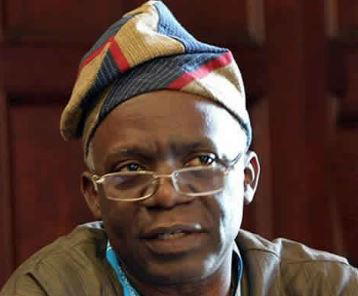
Human rights lawyer and Senior Advocate of Nigeria Femi Falana has urged the Federal Government, the country’s 36 governors and first ladies to “immediately end digital repression and embrace digital democracy, uphold human rights and media freedom.”
Falana said this today in a paper titled “Press Freedom and Cybercrime Law in Nigeria: Bridging the Justice Gaps” delivered at the plenary session of Nigeria Bar Association-Section on Public Interest and Development Law (NBA-SPIDEL).
According to Falana, “Across Nigeria, serving and former public officers and increasingly their spouses, have systematically weaponised law enforcement agencies to silence journalists, students, activists, whistleblowers, and political opponents.”
Falana said, “This pattern persists despite clear constitutional guarantees under Sections 35, 36, and 39, and judicial pronouncements prohibiting the misuse of the criminal law for personal grievances.
The paper, read in part: “This conduct mirrors the tactics of the British colonial administrators who used sedition and criminal libel to suppress dissent.”
“In many cases today, ‘cyberstalking’ complaints are filed not to protect public order, but to punish criticism, expose corruption, or intimidate perceived opponents. These abuses violate the rule of law and constitute misapplication of state power.”
“Press freedom remains a constitutional and democratic imperative in Nigeria. Yet cyber‑security legislation, particularly the former Section 24 of the Cybercrime (Prohibition, Prevention, etc.) Act 2015 has been systematically weaponized by public officials and their spouses to silence dissent, intimidate journalists, and criminalise legitimate criticism.”
“Despite clear judicial guidance from Nigerian courts and binding decisions of the ECOWAS Court of Justice, security agencies continue to arrest journalists and citizens for offences that no longer exist under Nigerian law.”
“Although Nigeria returned to civil rule in 1999, the residue of military culture continues to shape law enforcement conduct. Public officers and their spouses frequently deploy the police against journalists and critics, invoking repealed offences such as ‘cyberstalking,’ ‘insult,’ ‘annoyance,’ and ‘offensive messages.’”
“This contradicts both the Constitution, particularly Sections 22 and 39, and binding ECOWAS Court rulings.”
“The criminal offence of cyberstalking has been limited to sending messages via computer systems that are pornographic or known to be false for the specific purpose of causing a breakdown of law and order or posing a threat to life.”
“But journalists and critics are routinely charged with sending messages that are alleged to be false, even though it is not for the specific purpose of causing a breakdown of law and order.”
“For instance, how can the criticism of a governor for appointing a chief judge be said to be false for the purpose of causing a breakdown of law and order?”
“The provision is vague and ought to be further amended. The police or the prosecutor should not be the determinant of a message whose falsity may lead to a breakdown of law and order.”
“There is no controversy over messages via computer that are pornographic or posing a threat to life. However, a message that is false for the specific purpose of causing a breakdown of law and order is subjective and dangerous.”
“The judicial foundation for protecting criticism of public officials was laid to rest long ago in Arthur Nwankwo v State, where the Court of Appeal condemned sedition as a colonial relic incompatible with democracy and warned that its retention would provide a ‘deadly weapon’ for corrupt governments.”
“Public officers were directed to resort to civil libel rather than criminal prosecution. These principles remain binding.”
“The colonial Sedition Ordinance of 1909 criminalised publications that brought the British Crown into ‘hatred or contempt.’ Early journalists such as Ernest Ikoli, Herbert Macaulay, and Nnamdi Azikiwe were routinely surveilled, prosecuted, or banned from publishing. These colonial controls set the template for later authoritarian restrictions.”
“Sedition, as defined under the Criminal Code introduced by the British, became a powerful mechanism for suppressing anti-colonial agitation. Publications exposing colonial inequity were labelled ‘seditious,’ and printers were fined or jailed.”
“This practice of criminalising criticism directly contradicts democratic values and is incompatible with modern constitutional standards.”
“Following independence and the first military coup of 1966, Nigeria entered an era of harsh press regulation. Military regimes such as Yakubu Gowon, Buhari/Idiagbon, Babangida, and Abacha introduced sweeping decrees that eliminated press freedom.”
“The most infamous was the Public Officers (Protection Against False Accusation) Decree No. 4 of 1984, under which Tunde Thompson and Nduka Irabor of The Guardian were imprisoned for publishing ‘true but embarrassing’ information.”
“The State Security (Detention of Persons) Decree No. 2 authorised detention without trial, often used against journalists and students.”
“Nigeria also witnessed brutal attacks on journalists: the 1986 assassination of Dele Giwa via parcel bomb; the 1995 imprisonment of Chris Anyanwu, Kunle Ajibade, George Mbah, and Ben Charles‑Obi; and the intimidation of pro‑democracy media houses across the country.”
“These incidents illustrate how sedition and ‘false news’ offences were weaponised to shield the powerful and silence dissent.”
“The framers of the 1999 Constitution, mindful of the abuses suffered under colonial and military regimes, inserted strong protections for freedom of expression.”
“These provisions recognise the press as a constitutional watchdog and not merely a private actor. They reflect the democratic shift away from criminalising dissent and toward protecting public scrutiny of government decisions.”
“It must be noted that three states in Nigeria have repealed criminal libel: Lagos (2011), Edo (2018), and Ekiti (2021), while we hope that other states will toll this part of advancing free speech in the coming days.”
“The leading Nigerian authority affirming the constitutional right to criticise public officials is Arthur Nwankwo v State, where the Court of Appeal denounced the sedition law as incompatible with democracy. Olajide Olatawura JCA (as he then was) warned that retaining sedition ‘is a deadly weapon to be used at will by a corrupt government or a tyrant.’”
“The court held that public officers must tolerate scrutiny and that any remedy for reputational harm lies in civil libel, not criminal prosecution.”
“This decision aligns with later jurisprudence, including Tony Momoh v Senate of the National Assembly and Innocent Ukoha v State, which emphasise robust protection for journalists and the necessity of criticism in a democratic society.”
“Section 24 of the Cybercrime (Prohibition, Prevention, etc.) Act 2015 was enacted ostensibly to tackle cyber‑bullying, malicious communication, and online harassment.”
“However, its language mirrored colonial sedition laws and post‑colonial ‘false news’ offences. It criminalised online messages deemed ‘grossly offensive,’ ‘indecent,’ ‘obscene,’ or ‘menacing,’ and messages known to be false sent for the purpose of causing ‘annoyance,’ ‘insult,’ ‘hatred,’ ‘ill‑will,’ ‘needless anxiety,’ or ‘enmity.’”
“These terms were hopelessly vague, subjective, and overbroad. In practice, Section 24 became a tool for political retaliation. Public officials, governors, ministers, and their spouses used the police and security services to arrest journalists, bloggers, students, and lawyers for posts on Facebook, WhatsApp, X (Twitter), and online publications.”
“The misuse of the section effectively criminalised criticism and undermined Section 39 of the Constitution, which guarantees freedom of expression. It also contradicted the binding decisions of Nigerian courts prohibiting colonial sedition offences.”
“In Incorporated Trustees of Laws and Rights Awareness Initiative v FRN, the Applicant argued that Section 24 violated Article 9 of the African Charter on Human and Peoples’ Rights. The ECOWAS Court agreed, holding that the section was incompatible with the Charter and Article 19 of the ICCPR.”
“It declared the section unlawful to the extent of its inconsistency.”
“Also, in SERAP v Nigeria, the ECOWAS Court again held that Nigeria could not criminalise ‘insulting’ or ‘annoying’ expression, ruling that such vague categories fail the tests of legality, necessity, and proportionality required under international human rights law.”
“These judgments are binding on Nigeria under Article 15 of the ECOWAS Revised Treaty. Hence, Nigeria amended section 24 of the Cybercrime Act, 2015.”
“Despite the amendment of Section 24 in February 2024, Nigeria continues to witness arrests, detentions, and prosecutions under the repealed version of the law. This contradiction exposes a profound justice gap: legal reform has occurred, but enforcement culture remains unchanged.”
“Security agencies, especially the Nigeria Police Force (NPF), DSS, EFCC, and state-controlled task forces, still operate with a military-era mindset that sees criticism as a threat rather than a democratic function.”
“The repression is not limited to isolated individuals. The government’s response to the #EndBadGovernance protests of August 2025 reflects an alarming escalation of punitive state action. Seventy-five protesters, including twenty-eight minors, were remanded by the Federal High Court for sixty days on allegations of terrorism and treason.”
“In Inspector-General of Police v. Chizorom Harrison Ofoegbu, we appeared for the defendant. The Federal High Court upheld our preliminary objection and ruled that it lacked jurisdiction to try the offence of criminal defamation, resulting in the dismissal of two of the three cybercrime charges against the defendant.”
“The police brought the charges on behalf of Evangelist Ebuka Obi, leader of the Zion Prayer Ministry Movement Outreach.”
“Despite the amendment, security agencies across Nigeria continue to arrest journalists and citizens under the repealed Section 24. This illegality is contrary to the principle in Aoko v Fagbemi that ‘a person cannot be convicted for an offence unknown to law.’”
The post ‘End digital repression now’, Falana tells FG, governors, first ladies appeared first on Vanguard News.