Ebola outbreak will get worse as cases rise in DRC, Uganda – WHO
 SKAiF NewsNG SNN
By Chioma Obinna
The World Health Organisation, WHO, on Monday raised fresh alarm over the rapidly spreading Bundibugyo Ebola outbreak in the Democratic Republic of Congo, DRC, and neighbouring Uganda, warning that the epidemic is outpacing response efforts and could worsen in the coming weeks.
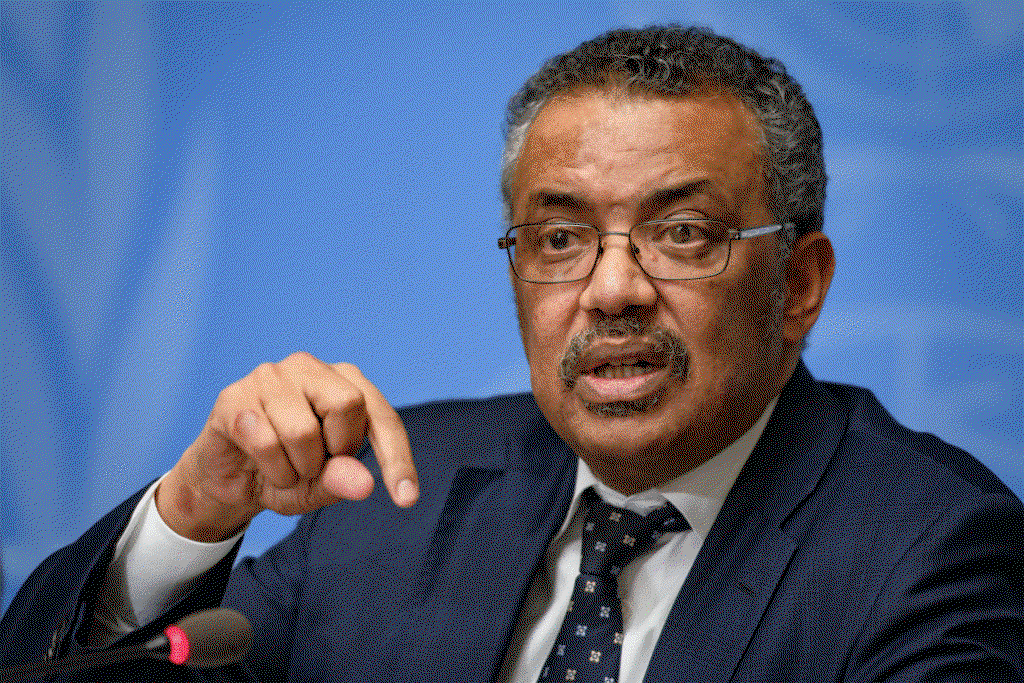
Speaking at a virtual ministerial briefing convened by the Africa Centres for Disease Control and Prevention, WHO Director-General Tedros Ghebreyesus described the outbreak as extremely serious and difficult, revealing that more than 900 suspected cases and 220 suspected deaths have already been recorded in DRC.
“So far, 101 cases have been confirmed in DRC, with 10 confirmed deaths. But we know the epidemic in DRC is much larger. In the early hours of Sunday, May 17, I declared the Ebola outbreak in DRC a Public Health Emergency of International Concern after consulting the Ministers of Health of both DRC and Uganda, and following Africa CDC’s notification,” Tedros said.
He disclosed that WHO had upgraded the national risk assessment in DRC from “high” to “very high,” while maintaining regional risk at “high.”
Countries bordering DRC, he warned, are particularly vulnerable and must take immediate preventive action.
“In Uganda, there are five confirmed cases and one death,” he said, commending President Yoweri Museveni for cancelling this year’s Martyrs’ Day celebrations, an annual religious event that attracts nearly two million people.
“I appreciate the leadership of President Museveni in cancelling the Martyrs’ Day commemoration to prevent further spread of the virus,” he added.
Tedros noted that insecurity and public distrust in eastern DRC are worsening the crisis.
“The delay in detecting the outbreak means that we are now playing catch-up with a very fast-moving epidemic. We are urgently scaling up operations, but at the moment, the epidemic is outpacing us.”
According to him, intensified fighting in the provinces of Ituri and North Kivu has displaced more than 100,000 people in recent months, complicating surveillance and response operations.
“There is also significant distrust of outside authorities among the local population. In the past week, there have been two security incidents at health facilities,” he stated.
“Building trust in affected communities is critical to a successful response and is one of our highest priorities.”
The WHO chief further disclosed that there are currently no approved vaccines or therapeutics specifically for the Bundibugyo strain of Ebola, which has only caused two previous outbreaks — in Uganda in 2007 and DRC in 2012.
“Last week, WHO convened leaders of several partner organisations to review the pipeline of vaccines, therapeutics and diagnostics,” he said.
“WHO has recommended prioritising two monoclonal antibodies to advance in clinical trials. We are also recommending evaluation of the antiviral obeldesivir in a clinical trial as post-exposure prophylaxis for high-risk contacts.”
He added that the clinical trial is being jointly developed with Africa CDC and the Collaborative Open Research Consortium on Filoviruses.
Tedros said WHO had already released $3.9 million from its Contingency Fund for Emergencies to support response efforts and announced plans to travel to DRC alongside Chikwe Ihekweazu.
He stressed that unity among African nations and international partners would determine how quickly the outbreak could be contained.
“We are facing an extremely serious and difficult outbreak. It will get worse before it gets better. But we know this virus, and we know how to stop it. We have stopped every previous Ebola outbreak, and we will stop this one too.
“The question is just how quickly we can do it, and how many more lives will be lost before we do,” he said.
The post Ebola outbreak will get worse as cases rise in DRC, Uganda – WHO appeared first on Vanguard News.