Doctors hunted for saving lives! Chilling stories of arrests, detention, extortion
 SKAiF NewsNG SNN
•‘VICTIM: I treated a patient, ended up in cell
•POLICE: Complaints would be reviewed
•Lagos CP may meet doctors
By Chioma Obinna
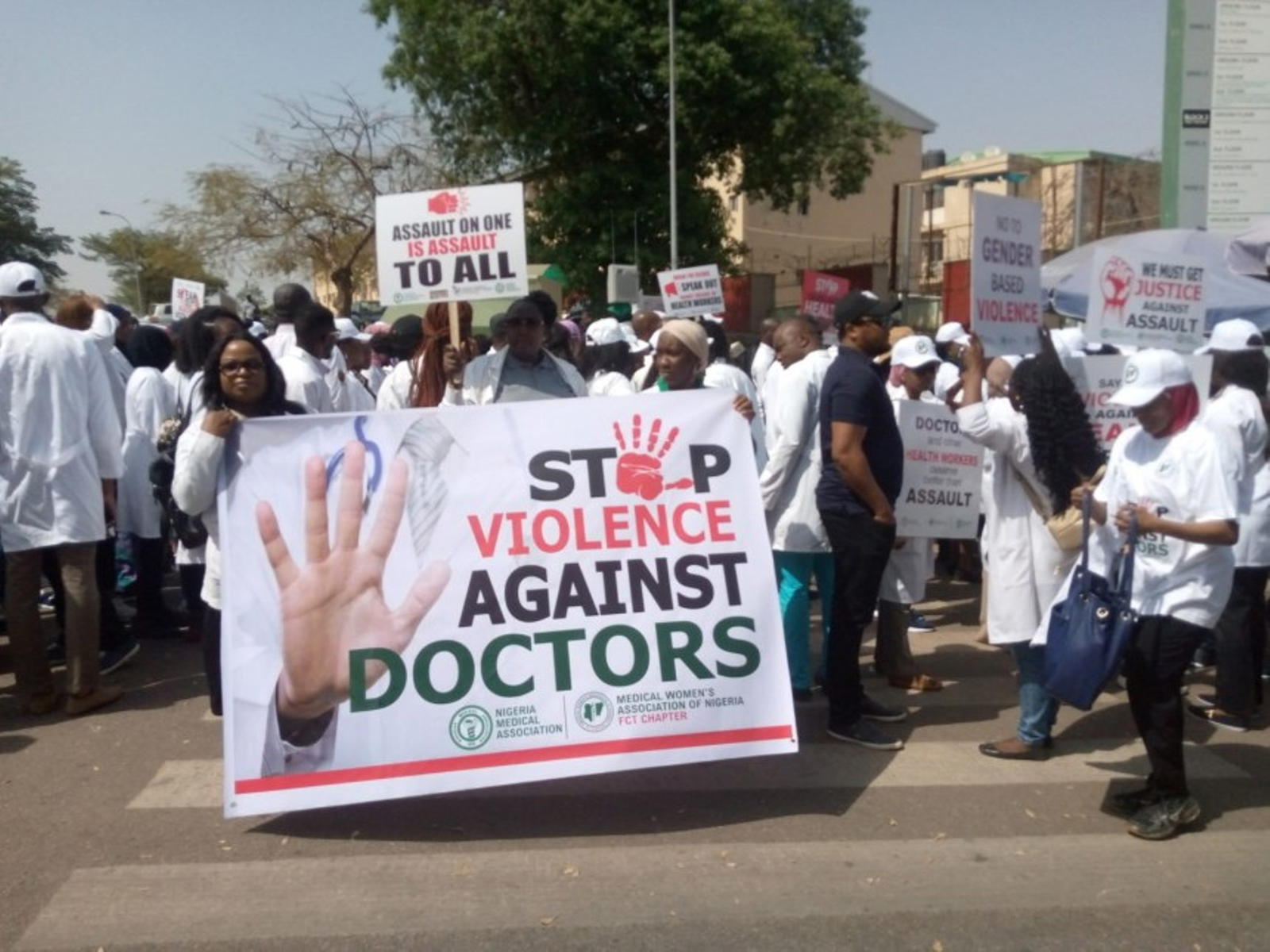
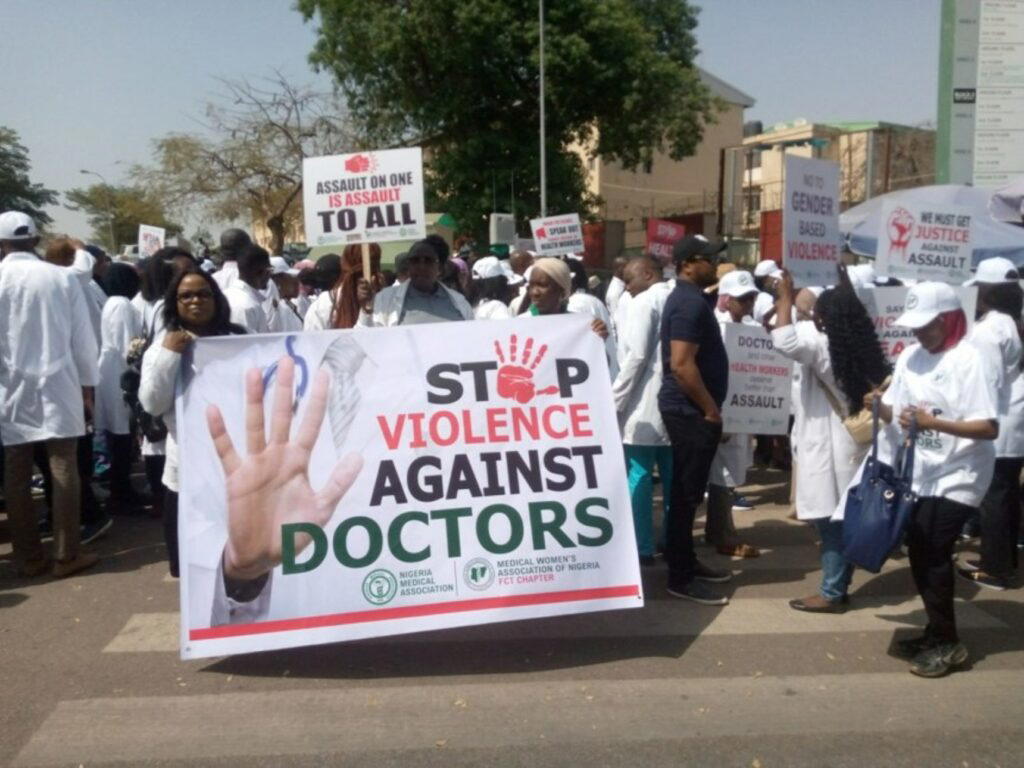
About a week ago, hundreds of doctors in Lagos protested what they described as police harassment. Sunday Vanguard chronicles the stories of the doctors whose experiences reveal a disturbing pattern: Arrests, detention, intimidation, and alleged extortion following medical emergencies and patient deaths.
The accounts, drawn from private hospitals, emergency units, and referral cases, cut across different years and institutions.
Yet, they converge on one troubling reality: Doctors who act in emergencies often find themselves treated not as professionals responding to crises, but as suspects in criminal investigations.
From surgical theatres to police cells, from referral decisions to morgue cases, the line between clinical outcome and criminal liability appears increasingly blurred.
Spokesperson for the Lagos State Police Command could not be reached. However, sources at the Command told Sunday Vanguard that the Commissioner of Police, CP, Titanic Fatai, may meet with doctors on the matter.
‘They detained me overnight, demanded N500,000′
One of the affected doctors, a surgeon, recounted to Sunday Vanguard how a routine emergency operation escalated into arrest and detention.
“It was in July last year. A patient’s relative called the police after a complicated appendectomy I performed”, he said.
“Before I knew it, officers came into my facility, arrested me, and even took away my surgical equipment and medications.”
The doctor, who spoke under anonymity, said he was taken to the station and detained overnight.
“They kept me in their cell until the next evening. Then they started making demands. They insisted I must pay ¦ 500,000. They even threatened to extend my detention if I didn’t pay.” He eventually paid.
“I was released only after I paid under pressure. I went home feeling humiliated. I had done my job, yet I was treated like a criminal.”
‘I was accused of manslaughter after referring a child’
Another doctor narrated a case involving a critically ill five-year-old.
“I admitted the child on a Sunday evening. The child was unconscious, but I resuscitated him, and he regained consciousness after about 45 minutes,” he said.
However, the child’s condition failed to improve the following day.
“I referred him immediately to a tertiary hospital and gave the mother a referral letter. As a locum doctor, I had no control over administrative or financial delays.”
By evening, he handed over to the night doctor.
“Later that night, I received a message that the child had died.”
Days later, the police came calling.
“I was told to report to the station. That was where everything changed. I was accused of manslaughter.”
He was detained and later made to pay about N1.5 million in bail and compensation.
“I kept asking myself, what exactly did I do wrong?”
‘Death within 90 minutes, then police arrived’
A medical director described a case involving a patient with no relatives.
“He was brought in around 8 p.m. in severe distress. We assessed him as an acute abdomen and started resuscitation immediately,” she said.
The patient was stabilised briefly, but deteriorated rapidly.
“Before he could be transferred, he died within about 90 minutes of arrival.”
Because there were no relatives, the employer reported the case to the police before taking the body to the morgue.
“The next morning, the police came and took the body away”, she narrated
Days later, she was summoned to Panti Police Station.
“We spent hours there. At some point, there were discussions about detaining the medical officer on duty. I kept asking, what exactly is the offence?”
The matter dragged on through repeated police invitations until intervention by medical association lawyers.
Raids on hospitals, allegations of fake practice
Several doctors also described repeated police raids unrelated to patient deaths. “They came to my hospital twice,” one said.
“First time they said we used expired drugs. Another time they said I was not a qualified doctor.”
He said officers entered the pharmacy area and began searching.
“They were looking for anything that could incriminate us. It was humiliating.”
Nine days in detention after surgical death
A more severe case involved a surgical complication in a police officer.
“The patient had a fracture and came for corrective surgery. During anaesthesia, he went into cardiac arrest and died despite resuscitation efforts,” the doctor said.
The response was immediate.
“We were all arrested. Our case file was labelled murder.”
He spent nine days in detention.
“We were kept with hardened criminals. Extortion started from day one and continued throughout our detention.”
Even after appearing before a magistrate, he said the ordeal persisted until eventual release.
‘They watched while hoodlums destroyed my hospital’
Another doctor recounted a disturbing incident involving an accident victim.
“The patient was referred after two weeks. Unfortunately, she later died.”
Soon after, hoodlums attacked his hospital.
“They destroyed our signpost and glass doors and beat staff members while policemen stood and watched.”
He was later arrested and accused of negligence.
“At the station, I was told the patient died because I did not give tetanus toxoid. But our records showed it was given.”
He was released only after senior police intervention.
‘They called me fake doctor’
Another doctor told Sunday Vanguard that he was picked up without a warrant as a fake doctor.
“Five officers came to my hospital and said there was a petition that I was a fake doctor,” he said.
Despite presenting valid credentials, he was taken to Zone 2 in Onikan.
“They threatened me with detention. They also demanded money for bail.”
He said he was only released after legal intervention.
‘I was charged with murder after eclampsia case’
Another doctor recalled being arrested after a pregnant woman in coma died.
“She came in with eclampsia and a very poor prognosis. Despite resuscitation, she did not survive.”
He was arrested and taken to Panti.
“I was charged with murder. I had to bail myself with N500,000.”
“I paid for burial and release of nurses”
A female practitioner shared multiple traumatic incidents.
“I treated an accident victim who later died. I was arrested and accused of collusion with the driver,” she said.
She was detained overnight.
“They even made me pay for burial.”
In another antenatal case: “The patient improved and was discharged, but returned dead the next day. The husband accused us of killing her.”
She was detained again.
“I paid N500,000 for release, but they still detained my nurses. I had to pay more to free them.”
Young doctor detained during Easter
Another case involved two children with severe gastroenteritis.
“They were critically dehydrated and septic. Despite treatment, both died,” a colleague said.
The doctor and nurse were detained for nearly a week.
“It happened during Easter. We tried everything to secure their release.”
They were eventually released after sustained intervention.
Medical associations react: Doctors hunted — ANPMP
Speaking to journalists during the protests, the Chairman of the Association of Nigerian Private Medical Practitioners, Dr. Esegine Jonathan, said the situation has moved beyond isolated incidents.
“This harassment has been going on for quite some time. Each time it happens, we mobilise to secure the release of our members,” he said.
“But what we are seeing now is escalation, doctors are being picked up at will and labelled criminals without proper investigation.”
He warned that the consequences extend beyond the profession.
“A doctor who fears arrest will hesitate. That hesitation in an emergency can cost lives.”
He described the situation as the rise of defensive medicine.
“Doctors begin to ask themselves, if this goes wrong, will I end up in a cell?”
He stressed that medicine is not an exact science.
“No doctor goes to work intending harm. Even in the best hospitals, patients still die. That is the reality.”
He criticised what he described as overreach by law enforcement.
“They have become investigator, prosecutor, and judge. That is not justice.”
He added that doctors already operate under heavy infrastructural burdens.
“They provide their own electricity, water, security, yet still carry legal risks alone.”
His warned: “If this continues, doctors will leave. Those who remain will avoid high-risk cases. And patients will suffer.”
Doctors are being criminalized — Dr Saheed Babajide
Also speaking, the Lagos State Chairman, Nigeria Medical Association, NMA, Babajide Saheed, said doctors are being unfairly targeted.
“We are not happy. Doctors are being harassed by police and other agencies, and even tried on social media without proper investigation,” he said.
He stressed: “We can only care; we cannot guarantee life.”
He warned that emigration is accelerating.
“Young doctors are leaving. Some refuse to work in private hospitals. Not every death is negligence. Medicine is not perfect,” Saheed stated.
The Nigerian Medical Association and ANPMP called for urgent reforms.
They insisted that medical cases should first be reviewed by regulatory bodies such as the Medical and Dental Council of Nigeria before criminal processes are initiated.
Police response
Responding during the protest,Divisional Police Officer of Ikeja Division, CSP Akinwunmi Oke, assured that complaints submitted through proper channels would be reviewed.
“We have received your submissions and your complaints will be looked into”, he said.
Across all interviews, one emotion that dominated the crisis was fear of arrest, detention and fear of doing the right thing with the wrong outcome.
One of the doctors said: “We go to save lives. But now we also have to think about saving ourselves.”
What these accounts lay bare is not a series of isolated encounters, but a pattern that many in the medical profession now describe as a slow erosion of professional dignity and clinical courage.
Behind every case file is a doctor who attempted resuscitation, made referrals, followed protocols, and still ended up in a police cell answering questions that blur the line between clinical outcome and criminal intent. Between the emergency room and the station house, the fragile space where life-and-death decisions are made is increasingly being replaced by fear, paperwork, and informal payments.
Yet, despite the bitterness, most of the doctors insist they are not calling for impunity, but for clarity, fairness, and proper institutional process.
As they argue, the answer is not in shielding bad practice, but in ensuring that medical outcomes are reviewed by the right regulatory and forensic authorities, not criminalised at first contact. Until that balance is restored, stakeholders warned, Nigeria risks not only losing more of its doctors to migration and burnout, but also weakening the very emergency care system that millions depend on in their most vulnerable moments.
The post Doctors hunted for saving lives! Chilling stories of arrests, detention, extortion appeared first on Vanguard News.