
Digital security command centres – for fancy?
 SKAiF NewsNG SNN
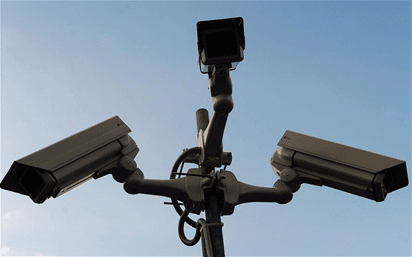
Across Nigeria, governors have unveiled security command and control centres with fanfare. Enugu, Akwa Ibom, Plateau, Oyo, Gombe and Edo have invested, or announced investments, in facilities built around CCTV surveillance, drones, communications links, control rooms, data analysis and response coordination. Enugu’s centre is linked to AI-enabled cameras and long-range drones with day-and-night vision; Edo’s system was designed for round-the-clock monitoring and citizen reporting, while Oyo’s network feeds cameras at security bases into a control room. Plateau says it already operates drones and a command centre and plans about 5,000 cameras. Akwa Ibom is building a centre intended to integrate information and communications for real-time response.
These systems are supposed to detect suspicious movements, identify and track criminals, monitor forests and highways, provide early warning, coordinate security agencies and guide intervention against kidnapping for ransom, banditry, insurgency and attacks involving jihadist Fulani “herders”. They should give government eyes where conventional patrols cannot easily go. Yet the uncomfortable question remains: where are the results? Plateau continues to record deadly herder-related attacks. Enugu keeps experiencing kidnapping and killings linked to forest-based Fulani herdsmen militias and other criminal groups. Oyo still confronts kidnapping and insecurity, while Edo has not escaped the same. Gombe and other northern states remain exposed to banditry and terrorism. This does not prove that the centres have failed, because security operations also prevent attacks that never become headlines.
But governments have offered too little independently verifiable evidence showing that these systems have substantially improved detection, interception, rescue or prosecution. The danger is that gadgets could become museum pieces: impressive screens, idle drones and sophisticated cameras without the courage and capacity to act on what they reveal. The weakness is political and operational will. Authorities frequently claim to know where kidnappers, bandits and armed groups are hiding. But intelligence is useless if forces cannot be mobilised swiftly and safely to reach the location. State governments also lack constitutional command over the military and federal police needed for operations. Without adequate backing from Abuja, a command centre can become a glorified cinema hall.
Other countries show what is possible. London’s Metropolitan Police is integrating drones, live facial recognition and artificial-intelligence analysis into investigations. Hong Kong uses drones for high-altitude and automated patrols. INTERPOL operates a 24-hour command centre that shares intelligence, checks databases and coordinates responses. Nigeria should learn the lesson. Every alert must trigger a defined response chain with armed units, transport and communications. Every state must establish its own digital intelligence coverage. It should not be optional. Federal and state forces must establish secure joint command arrangements for cross-border pursuit and defence. Technology becomes security only when intelligence is converted into action. These command centres must therefore leave the showroom, enter the battlefield of crime prevention and prove their worth.
The post Digital security command centres – for fancy? appeared first on Vanguard News.